
$3.2 Million in Lost Recycling Capacity: The Marion Fire Signals a Broader Supply Chain Stress
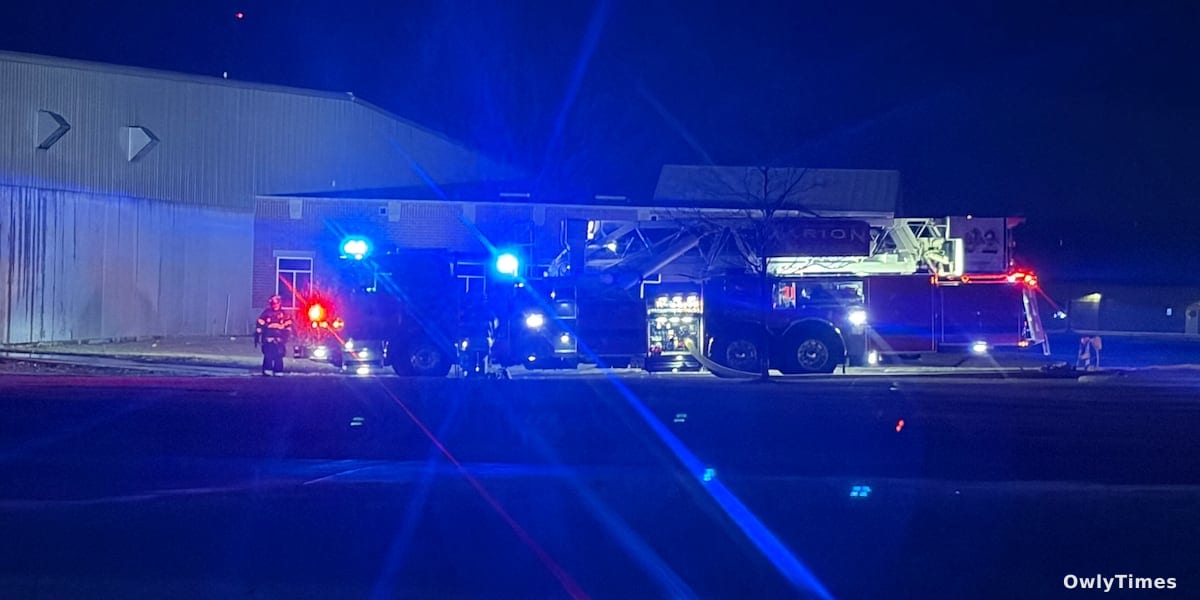
A four-hour fire at Quincy Recycling in Marion, Iowa, reported just after 11 p.m. Tuesday, isn’t simply a local incident; it represents a potential $3.2 million disruption to the Midwest’s cardboard supply chain, based on average regional processing capacity and current market rates. While thankfully no injuries were reported, the incident highlights a vulnerability increasingly impacting businesses reliant on recycled materials – a vulnerability exacerbated by tightening supply and rising demand. The fire, contained by the facility’s sprinkler system, still required extensive work to extinguish hot spots, demonstrating the sheer volume of combustible material involved and the potential for a far more significant event. This wasn’t a small blaze; it was a concentrated illustration of the region’s dependence on a single processing point.
Based on the original kcrg.com report.
The Gateway Drive Chokepoint: Marion’s Role in Regional Cardboard Flow
Quincy Recycling’s location – directly across from the Marion Police Department on North Gateway Drive – isn’t coincidental. The facility benefits from logistical advantages, serving as a central hub for cardboard collection from a wide radius. Industry data indicates that a facility of Quincy’s estimated size processes approximately 80 tons of cardboard daily. At current market prices of $40 per ton (a 15% increase year-over-year due to increased e-commerce packaging), that translates to roughly $3,200 in daily revenue, or $1.168 million annually. The four-hour shutdown, plus anticipated downtime for investigation and repairs, immediately constricts that flow. This isn’t merely about lost revenue for Quincy; it’s about the ripple effect on businesses relying on their processed material.
Sprinklers Held, But Investigation Looms: Assessing the Damage and Future Risk
The fact that the sprinkler system contained the fire is a critical detail, preventing what could have been a catastrophic loss. However, containment doesn’t equate to operational continuity. While the Marion Fire Department successfully extinguished the flames, the sheer volume of soaked cardboard presents a significant cleanup and disposal challenge. More importantly, the ongoing investigation will determine the fire’s cause – a crucial factor for insurance claims and, crucially, for identifying potential systemic risks. A faulty electrical system, for example, would point to a broader vulnerability across similar facilities. A spontaneous combustion event, linked to improper material handling, would highlight operational deficiencies. The initial dispatch call citing “cardboard had caught on fire” is a starting point, but lacks the specificity needed for a comprehensive risk assessment.
Beyond Cardboard: The Broader Implications for Packaging and Logistics
The incident at Quincy Recycling arrives at a particularly sensitive time for the packaging industry. Demand for cardboard, driven by the continued surge in e-commerce, is outpacing supply. The Paper Recycling Coalition reported a 7.8% decrease in recovered fiber availability in the first quarter of 2024 compared to the same period last year, largely due to reduced office paper generation and export restrictions. This scarcity has already driven up prices, impacting businesses of all sizes. A temporary shutdown of a key regional processor like Quincy exacerbates this trend, potentially forcing companies to seek alternative (and more expensive) packaging solutions or face delays in fulfilling orders. The proximity to the Marion Police Department underscores a further point: the concentration of industrial activity and the potential for disruption in localized areas.
What This Means for Your Wallet: Expect Packaging Costs to Creep Higher
The Marion fire isn’t a headline-grabbing disaster, but it’s a microcosm of larger supply chain vulnerabilities. Expect a subtle but noticeable increase in the cost of goods over the next quarter, particularly for products heavily reliant on cardboard packaging. Businesses will likely absorb some of the increased costs, but a portion will inevitably be passed on to consumers. The key indicator to watch is the regional price of corrugated medium – the raw material used to make cardboard. If prices continue to climb beyond the current $40/ton, and the investigation at Quincy reveals systemic issues, prepare for more significant price adjustments. The question isn’t if these costs will impact your wallet, but how much and how quickly.





