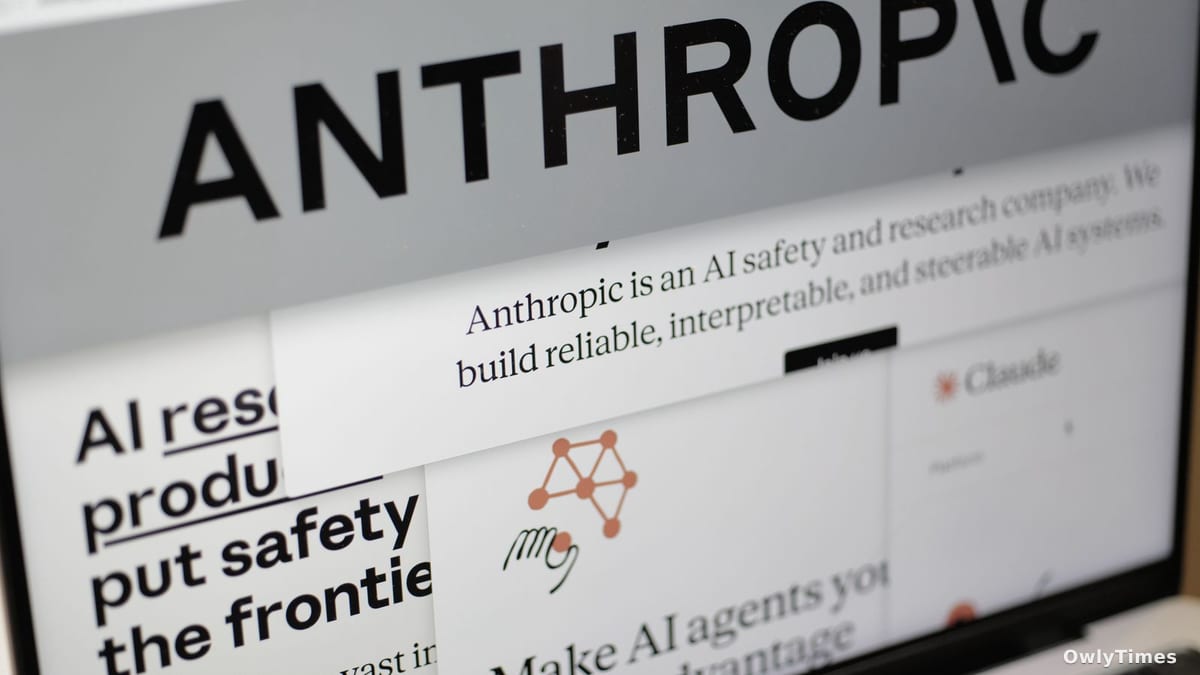

Can we truly own a piece of software once it becomes the digital backbone of the nation’s most sensitive military infrastructure? We like to think of AI as a tool we can simply plug in or pull out of a socket, but the ongoing legal brawl between Anthropic and the Trump administration proves that in the eyes of the federal government, code is no longer just code—it’s a geopolitical liability.
The real story here isn’t just a contract dispute over the Claude AI tool; it’s the emergence of a new, dangerous precedent where the government can effectively "blacklist" a technology provider by labeling them a supply chain risk. On Wednesday, in a 96-page filing with the U.S. Court of Appeals in Washington D.C., the San Francisco-based company argued that it cannot manipulate its own product once it is deployed in classified Pentagon networks. They are essentially telling the court that their software is a "black box" that operates independently of their own influence once it hits the field.
The Pentagon’s Cold Shoulder
This technical argument is Anthropic’s attempt to strip away the government’s justification for sidelining them. The Pentagon’s designation was intended to guard against foreign sabotage, but Anthropic contends this is nothing more than illegal retaliation. The stakes are high: following a disagreement over the use of AI in fully autonomous weapons and the potential surveillance of American citizens, the Pentagon canceled a $200 million contract with the firm.
In the fast-paced world of Silicon Valley, losing a deal of that size is a headline-grabber, but the industry fallout is more significant. OpenAI has already stepped in to fill the void, striking its own deal to provide technology to the U.S. military. For the average user, this means the AI models powering our future defense systems are being swapped out as easily as a brand of office software, raising questions about whether these tools are truly vetted or merely politically convenient.
A Tale of Two Courthouses
The legal landscape remains messy. While Anthropic previously prevailed in a separate case in San Francisco federal court—a win that forced the administration to temporarily remove its stigmatizing labels—the Washington D.C. panel has been far less accommodating. Earlier this month, the appeals court rejected Anthropic’s request to block the Pentagon’s actions, leaving the company under a cloud of uncertainty while the court collects evidence.
This creates a bizarre contradiction where a company can be considered a "safe" partner in one jurisdiction while remaining a "risk" in the capital. It highlights a growing tension between the agility of tech developers and the rigid, often opaque security requirements of national defense. If the government can simply pivot from one AI provider to the next based on a "risk" designation, the long-term stability of the tech sector’s relationship with the military becomes highly suspect.
The Clock is Ticking for AI Oversight
We are watching a high-stakes tug-of-war where the prize is not just a government check, but the legitimacy of being a defense-approved AI provider. The next reading of the court’s stance will come on May 19, when oral arguments are scheduled to take place. The Trump administration is expected to file its formal response before that hearing, providing the next major signal as to whether the judiciary will allow the Pentagon to unilaterally decide which AI companies are "safe" for the future of national security.