
The $3.2 Billion Question: Why Orlando’s Plastic Fire Signals Broader Supply Chain Risks
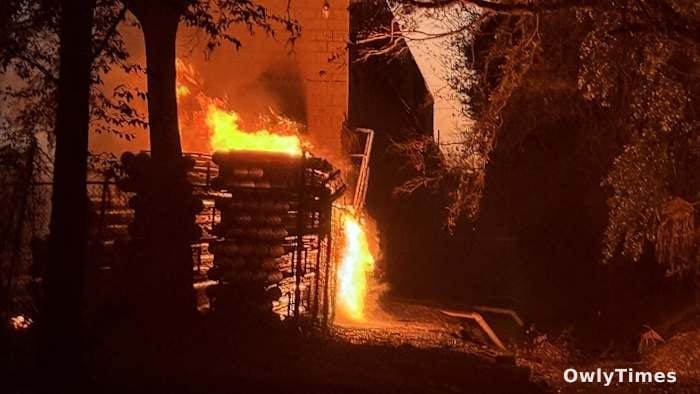
A single “plastic fire” extinguished outside Hughes Supply in Orlando on February 21, 2026, might seem like a localized incident. However, viewed through a financial lens, this event underscores a growing vulnerability in the region’s manufacturing and construction sectors – and a potential harbinger of escalating costs. The incident, while thankfully reporting no injuries, occurred amidst a record eight weather watches across eight regions of Florida, a climate reality that directly impacts the storage and handling of temperature-sensitive materials like plastics, and ultimately, their price. Follow the money: this fire isn’t just about burned inventory; it’s about the potential disruption to a $3.2 billion supply chain supporting Central Florida’s booming construction market.
This article draws on reporting from clickorlando.com.
The fire, reported in the 500 block of Ferguson Drive, involved a significant quantity of plastic materials stored outside the Hughes Supply building. While the Orlando Fire Department successfully contained the blaze, preventing it from spreading to the structure itself, the incident highlights the inherent risks associated with outdoor storage, particularly in a region increasingly prone to extreme weather events. Florida’s construction industry, which accounted for 14.7% of the state’s total economic output in 2024, relies heavily on a steady supply of plastic components – from PVC piping and electrical conduits to insulation and roofing materials. Any disruption, even temporary, can translate into project delays and increased material costs. The timing is particularly sensitive, as the industry is already grappling with lingering supply chain bottlenecks from the pandemic era and inflationary pressures.
Hughes Supply’s Exposure and the Ripple Effect on Construction Costs
Hughes Supply, a regional distributor specializing in plumbing, electrical, and HVAC products, serves a broad customer base across Central Florida. While the exact value of the destroyed plastic inventory remains undisclosed, industry benchmarks suggest that a fire of this scale could easily represent a loss in the six-figure range for the company. More importantly, the incident raises questions about the adequacy of storage protocols for flammable materials, especially given the escalating frequency of severe weather. Insurance claims related to weather-related damage in Florida surged 42% year-over-year in 2025, according to data from the Florida Office of Insurance Regulation, indicating a clear trend of increasing risk. This translates directly into higher insurance premiums for businesses like Hughes Supply, costs that are inevitably passed on to consumers.
The immediate impact will likely be felt by contractors and developers reliant on Hughes Supply for timely deliveries. Even a short-term disruption could force them to source materials from alternative suppliers, potentially at higher prices. Consider the cost of PVC piping, a staple in Florida construction. Prices have already increased by 8.5% since the beginning of 2025, driven by rising raw material costs and transportation expenses. A localized supply shock, like the one caused by the fire, could exacerbate this trend, adding further strain to project budgets. The eight active weather watches across the state further complicate the situation, potentially hindering transportation and increasing the risk of further disruptions.
Beyond the Flames: A Climate-Driven Insurance Crisis?
The incident at Hughes Supply isn’t an isolated event. Across Florida, businesses are facing mounting challenges related to climate change and the associated increase in extreme weather. The state’s vulnerability to hurricanes, flooding, and increasingly frequent wildfires is driving up insurance costs and making it more difficult for businesses to secure coverage. According to a recent report by the Insurance Information Institute, Florida accounts for 90% of all homeowners insurance litigation in the United States, a statistic directly linked to the state’s high exposure to natural disasters. This escalating insurance crisis is not only impacting homeowners but also businesses, creating a ripple effect throughout the economy.
The long-term implications are significant. If insurance becomes prohibitively expensive or unavailable, it could stifle economic growth and discourage investment in the region. Businesses may be forced to relocate to less risky areas, leading to job losses and a decline in tax revenue. The fire at Hughes Supply serves as a stark reminder of the interconnectedness of these challenges. It’s not just about a single fire; it’s about a systemic vulnerability that threatens the long-term economic health of Central Florida.
What This Means for Your Wallet
The Orlando Fire Department’s swift response prevented a potentially catastrophic outcome, but the incident at Hughes Supply is a warning sign. Expect to see incremental increases in construction costs over the next quarter, driven by potential supply chain disruptions and rising insurance premiums. For homeowners, this translates into higher renovation costs and potentially slower project timelines. For developers, it means tighter margins and increased risk. The key takeaway is this: Florida’s climate vulnerability is no longer a future threat; it’s a present-day economic reality. Watch for a potential increase in material surcharges from suppliers in the coming weeks, and more importantly, monitor the legislative response to the state’s escalating insurance crisis. Will lawmakers enact meaningful reforms to stabilize the market, or will Florida continue down a path of increasing risk and economic uncertainty?