
Marquette’s Expanding Influence: A Strategic Power Consolidation in Milwaukee
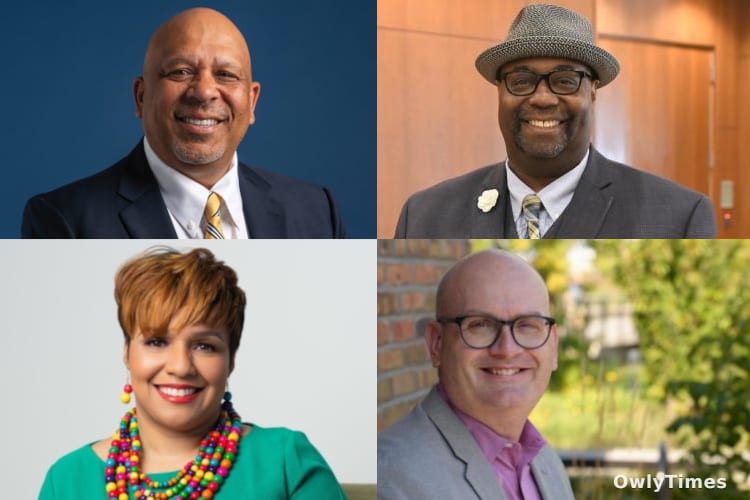
The sheer volume of Marquette University affiliates named to the Milwaukee Business Journal’s “Power Players” list isn’t simply a recognition of individual achievement; it’s a calculated demonstration of institutional influence. The publication’s spotlight on ten individuals connected to the university – including President Kimo Ah Yun, trustees, faculty, and alumni – reveals a deliberate strategy to embed Marquette’s leadership within the core networks shaping southeast Wisconsin’s economic and social landscape. This isn’t about prestige, it’s about access and the ability to steer regional priorities. The timing is particularly noteworthy, coming just months after Ah Yun’s election as the university’s 25th president in November 2024, signaling a proactive effort to leverage his ascent and the university’s broader connections.
Based on the original today.marquette.edu report.
The composition of those recognized reveals the specific areas where Marquette is aiming to exert control. Ah Yun’s own extensive board memberships – spanning organizations like the Greater Milwaukee Committee, Children’s Wisconsin, and The Water Council – demonstrate a focus on key sectors: business leadership, healthcare, and environmental sustainability. These aren’t random affiliations; they represent the pillars of Milwaukee’s economy and the areas where significant public and private investment are flowing. The inclusion of Tammy Belton-Davis, a strategic communications expert, and Derek Mosley, director of the Lubar Center for Public Policy Research and Civic Education, further underscores Marquette’s intention to not only participate in these conversations but to actively shape the narrative. Mosley’s recent expansion of the Lubar Center’s programming to include discussions on racial equity and unconscious bias, alongside community-focused “Heritage Dinners,” suggests a deliberate attempt to position the university as a thought leader on sensitive social issues.
Historically, universities have functioned as both engines of economic development and arbiters of social norms. The University of Wisconsin-Madison, for example, has long wielded considerable influence over state policy through its research output and alumni network. However, Marquette’s approach appears more focused on direct engagement with existing power structures. The presence of trustees like Nancy Hernandez, president of the Hispanic Collaborative, and Derek Tyus, CFO of Versiti, indicates a strategy of diversifying representation within those structures, rather than challenging them outright. This is a subtle but crucial distinction. It’s less about radical change and more about ensuring Marquette’s interests are represented at the table when decisions are made. The inclusion of trustee emeritus Jon Hammes, managing principal of Hammes Partners, a healthcare consulting firm, further solidifies this focus on maintaining influence within established industries.
Who benefits and who loses from this consolidation of power? Marquette, undoubtedly, benefits from increased access to funding, partnerships, and political capital. Its graduates, as evidenced by the 13 additional alumni named to the list, benefit from enhanced networking opportunities and career prospects. However, organizations and individuals outside of Marquette’s orbit may find themselves increasingly marginalized. The risk is a closed loop of influence, where decisions are made within a relatively homogenous network, potentially overlooking the needs and perspectives of broader communities. The Milwaukee Business Journal’s recognition, while seemingly neutral, inadvertently reinforces this dynamic by legitimizing Marquette’s position as a central player in the region.
The naming of “Power Player Pillars” – individuals consistently recognized over the past decade, including Linda Gorens-Levey and trustee emeritae Mary Ellen Stanek and Anne Zizzo – is the most telling aspect of this trend. It demonstrates a sustained, long-term commitment to cultivating influence, not a fleeting moment of recognition. The question now is not if Marquette will continue to expand its reach, but how. The next political chess move to watch is Ah Yun’s strategy for leveraging the university’s growing influence to secure funding for a major capital project – potentially a new research facility or expansion of the Diederich College of Communication – that will further cement Marquette’s position as a regional powerhouse. Will he successfully navigate the competing interests of state legislators, philanthropic organizations, and private donors, or will resistance emerge from those who perceive Marquette’s ambitions as exceeding its mandate?





