
The Long Game in Wisconsin: Beyond Ideology, Securing Future Control
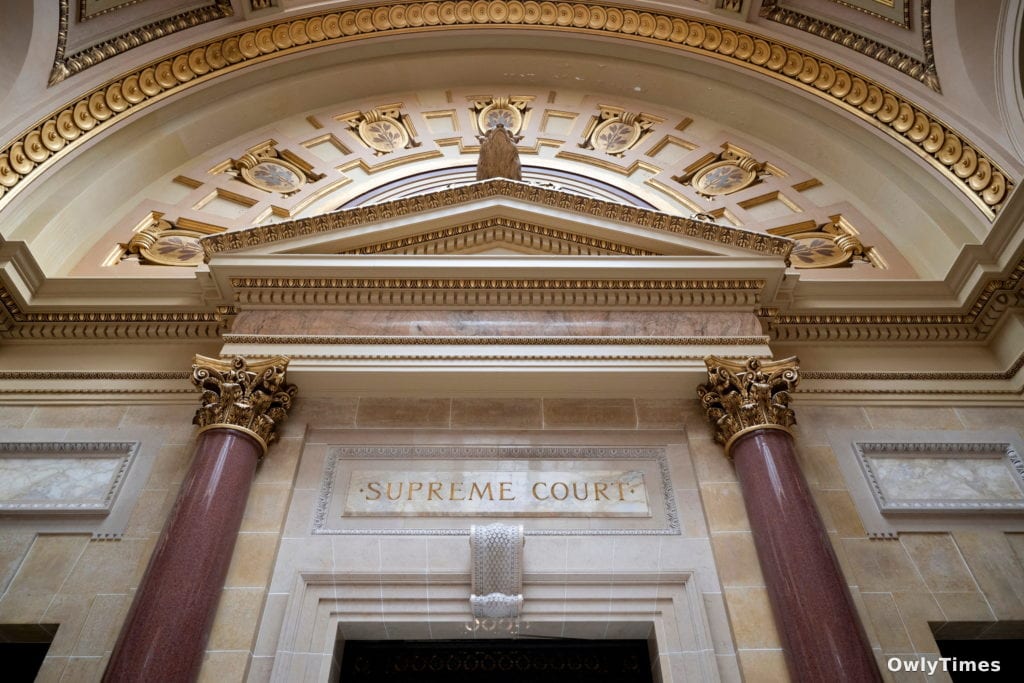
The Wisconsin Supreme Court election isn’t about shifting the ideological balance right now – that much is clear. The strategic calculation at play is far more forward-looking: securing control over the mechanisms of power for the next decade. While national attention fixates on presidential races, the contest between Chris Taylor and Maria Lazar is a quiet but critical maneuver to position the court for the 2028 presidential election fallout and, crucially, the redrawing of Wisconsin’s congressional map in the early 2030s. This isn’t a battle for today’s headlines, but for who draws the lines of tomorrow’s political landscape.
A Court Already Leaning Left, But Vulnerable to Future Shifts
Wisconsin’s judiciary has undergone a dramatic transformation in recent years. The election of Janet Protasiewicz in 2023 broke a 15-year conservative hold on the court, establishing a 4-3 liberal majority. Susan Crawford’s subsequent win in 2025 solidified that advantage, despite a significant financial intervention by Elon Musk and aligned groups attempting to sway the outcome. The $2.5 million spent by these entities – a figure dwarfing previous Wisconsin judicial race spending – underscores the national awareness of the court’s potential impact. However, the upcoming retirement of Justice Rebecca Bradley, a conservative, presents a unique scenario. Unlike previous races where the ideological balance was directly at stake, this election allows either side to deepen its existing advantage. A Taylor win expands the liberal buffer, while a Lazar victory merely maintains the status quo.
Based on the original PBS report.
Waukesha’s Mayoral Race: A Local Story Reflecting Broader Trends
The concurrent mayoral race in Waukesha, the first open-seat contest in two decades, offers a microcosm of the broader political currents. While seemingly disconnected from the Supreme Court battle, Waukesha’s shift from a reliably Republican stronghold to a more competitive environment reflects a statewide trend. The city’s demographic changes and increasing suburban dissatisfaction with hardline conservative positions are mirrored in other areas of Wisconsin. This local dynamic highlights a key tension: the Republican party’s reliance on rural voters is increasingly offset by losses in traditionally conservative suburban areas. The Waukesha mayoral outcome will signal whether this trend is accelerating or represents a temporary anomaly.
The Historical Echo of Redistricting Battles
Wisconsin’s upcoming redistricting cycle is the true prize at stake. The state’s current congressional map, widely considered gerrymandered to favor Republicans, has been the subject of intense legal challenges. The court’s composition will determine whether those challenges succeed and whether a fairer map is drawn. This echoes the national struggle over redistricting that followed the 2020 census, where states like North Carolina and Ohio saw protracted legal battles over map manipulation. The Wisconsin Supreme Court, unlike federal courts, has direct authority over the state’s congressional districts, making its role uniquely powerful. The historical precedent is clear: control of the judiciary often translates to control of the political map.
Who Benefits and Who Loses?
A Taylor victory benefits the Democratic party and progressive advocacy groups, solidifying their control over a court that will likely shape policy for the next decade. It also empowers groups challenging the existing congressional map. Conversely, a Lazar win benefits Republicans and conservative organizations, preserving their ability to defend the current map and potentially influence future legislation. The real losers, regardless of the outcome, are voters who lack fair representation due to gerrymandered districts. The Waukesha mayoral race presents a similar dynamic: a win for the Republican candidate maintains the status quo, while a victory for a more moderate or Democratic candidate signals a potential shift in the city’s political alignment.
The Next Chess Move: Justice Ziegler’s Future Plans
The most critical political chess move to watch isn’t the immediate outcome of Tuesday’s election, but the future intentions of Justice Annette Ziegler. Her announcement that she will not seek a third term in 2027 creates another pivotal moment. Will she actively campaign for a successor, attempting to restore the conservative balance? Or will she remain on the sidelines, allowing the court to continue its current trajectory? Ziegler’s actions in the coming years will be a crucial indicator of the Republican party’s long-term strategy for regaining control of Wisconsin’s judiciary. The question isn’t simply who wins in 2028 or 2030, but who is positioning themselves to influence the selection of the next generation of Wisconsin Supreme Court justices.