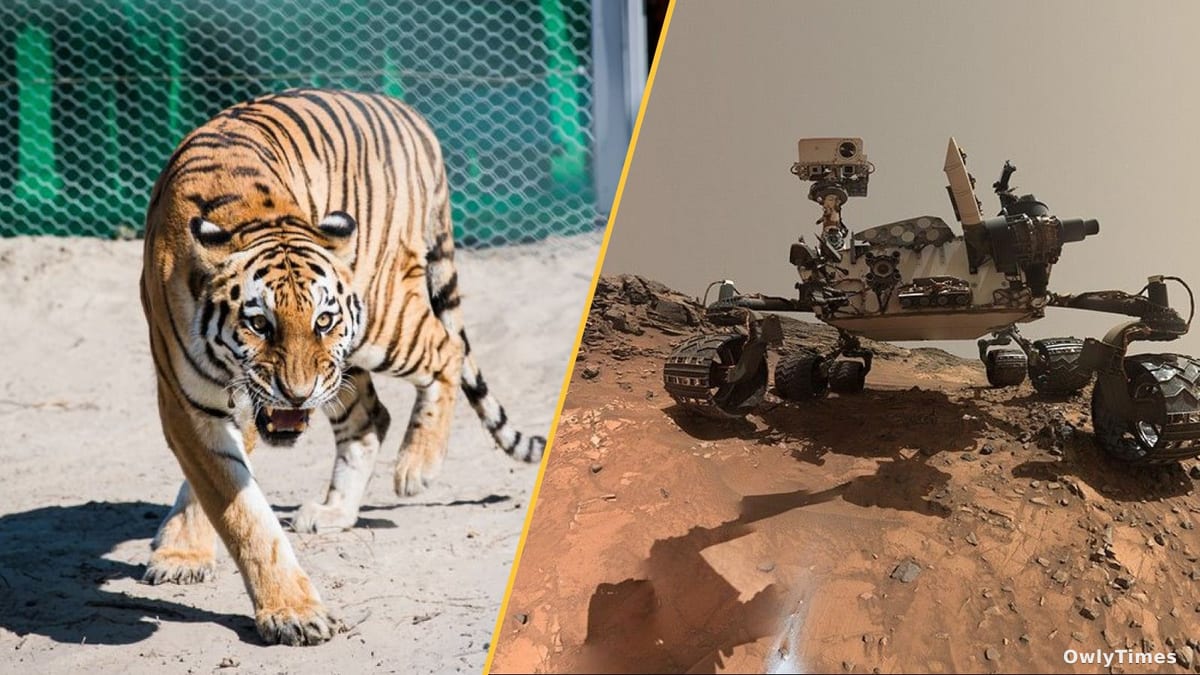

This week’s headlines presented a fascinating juxtaposition: breathtaking images of galactic structures alongside ambitious, terrestrial restoration projects. While “spiderwebs” on Mars and a NASA program shakeup understandably grab attention, the simultaneous announcement of tiger reintroduction to Kazakhstan speaks to a more fundamental, and perhaps more urgent, scientific question – how do we measure, and ultimately reverse, ecological damage? The news isn’t simply about bringing back a charismatic megafauna; it’s a complex experiment in ecosystem engineering, and a test case for similar initiatives globally.
The images from the Atacama Large Millimeter/submillimeter Array (ALMA) reveal 650 light-years of gas structures surrounding the Milky Way’s central black hole, a region previously obscured from detailed observation. This isn’t a “discovery” in the sense of finding something entirely new, but a significant leap in resolution. Previous maps offered a blurry impression; ALMA’s data provides a detailed architectural blueprint of the galactic core. Dr. Amy Hughes, an astrophysicist at the University of Cambridge not involved in the study, explained to OwlyTimes that this level of detail allows scientists to test existing models of galactic evolution. “We’ve long theorized about the interplay between star formation, gas dynamics, and the black hole’s influence. Now, we have the data to rigorously evaluate those theories.” The images aren’t just aesthetically striking; they’re a crucial dataset for refining our understanding of how galaxies, including our own, are formed and sustained. It’s important to note, however, that interpreting these structures will require extensive computational modeling – the images themselves are a starting point, not a complete answer.
Source material: Live Science.
The Kazakhstan tiger reintroduction program, spearheaded by the government and supported by organizations like WWF Central Asia, is a far more direct intervention. After over 70 years of local extinction, tigers are poised to return to Lake Balkhash, thanks to the planting of nearly 100,000 tree seedlings. This isn’t simply about providing habitat; it’s about rebuilding an entire trophic cascade. The seedlings are intended to support populations of boar and Bactrian deer, providing a sustainable food source for the reintroduced Siberian tigers – a subspecies closely related to the tigers that historically inhabited Kazakhstan. The program’s success hinges on a delicate balance. As the article points out, unchecked herbivore populations can destabilize a restored ecosystem, highlighting the need for a predator to regulate their numbers. This is a calculated risk, and a departure from some conservation strategies that prioritize habitat preservation before reintroducing apex predators.
However, the narrative of a straightforward ecological triumph is complicated by the logistical challenges of sourcing the tigers. Importing them from Russia, while genetically sensible given their shared ancestry with Kazakhstan’s former Amur tiger population, introduces potential risks. Disease transmission, genetic bottlenecks resulting from a limited founder population, and the potential for human-wildlife conflict are all factors that require careful management. The program’s long-term success isn’t guaranteed simply by providing habitat and importing animals; it demands ongoing monitoring, adaptive management, and a commitment to mitigating potential negative consequences. The program’s reliance on a single source population also raises concerns about maintaining genetic diversity, a crucial factor for the long-term health of the reintroduced population.
It’s also worth noting the broader context of these announcements. While the ALMA images represent a triumph of international scientific collaboration, the Kazakhstan tiger program is a national initiative, driven by a government seeking to demonstrate environmental stewardship. This raises questions about the potential for political influence on scientific monitoring and adaptive management. Will data indicating challenges to the program’s success be transparently reported, or will political pressures lead to a biased assessment? This isn’t to suggest any wrongdoing, but rather to acknowledge the inherent complexities of conservation efforts embedded within political landscapes.
Limitations to consider extend beyond these practical concerns. The ALMA data, while detailed, is still limited by the resolution of the telescope and the inherent challenges of observing through interstellar gas and dust. Similarly, the Kazakhstan program is a relatively small-scale intervention, and its success may not be directly transferable to other ecosystems. The specific ecological conditions of Lake Balkhash, and the cultural context of Kazakhstan, are unique.
Looking ahead, the next steps for the ALMA team involve developing sophisticated models to interpret the observed gas structures and test hypotheses about galactic evolution. For the Kazakhstan program, the immediate focus will be on monitoring the reintroduced tigers, assessing their impact on the ecosystem, and mitigating human-wildlife conflict. But a crucial, and often overlooked, question remains: how will these interventions be evaluated holistically? Will the success of the tiger program be measured solely by tiger population numbers, or will it also consider the health of the entire ecosystem, the well-being of local communities, and the long-term sustainability of the restored habitat? The answer to that question will determine whether these ambitious projects represent genuine ecological restoration, or simply a temporary reprieve from the consequences of environmental degradation. We should watch for independent, peer-reviewed assessments of both projects in the coming years, paying close attention to the methodologies used and the transparency of the data.