
The ambitious undertaking to return tigers to Kazakhstan isn’t simply a feel-good conservation story; it’s a complex experiment in ecological restoration demanding a careful look beyond celebratory headlines. While recent reports focus on the arrival of the first Amur tigers in 2024 and the impressive scale of tree-planting efforts – 1.4 billion trees planted since 2021, with a goal of 2 billion by 2027 – the true challenge lies in rebuilding an entire ecosystem capable of supporting a viable tiger population, and navigating the inevitable tensions between wildlife recovery and human livelihoods. The story isn’t just about if tigers can return, but how their return will reshape the landscape and the lives of those who inhabit it.
The disappearance of the Caspian tiger from Kazakhstan in the late 1940s wasn’t a singular event, but the culmination of decades of pressures. Hunting, driven by a desire to eliminate perceived threats to livestock and a demand for tiger parts, combined with widespread habitat loss and a decline in prey species, ultimately pushed the population past a point of no return. Now, the Kazakhstan tiger reintroduction program, a collaboration between the government, the World Wildlife Fund (WWF), and the United Nations Development Programme, is attempting to reverse this history. The strategy centers on restoring the South Balkhash region, a former tiger habitat, through large-scale reforestation. Last year alone, 37,000 seedlings and cuttings were planted, adding to the 50,000 planted between 2021 and 2024. This isn’t simply about planting trees, however; it’s about recreating a functional ecosystem. WWF Central Asia reports that the newly planted areas are already attracting wild ungulates – boar and Bactrian deer – a crucial sign that the habitat is beginning to recover and provide sustenance for potential tiger prey.
Drawn from Live Science.
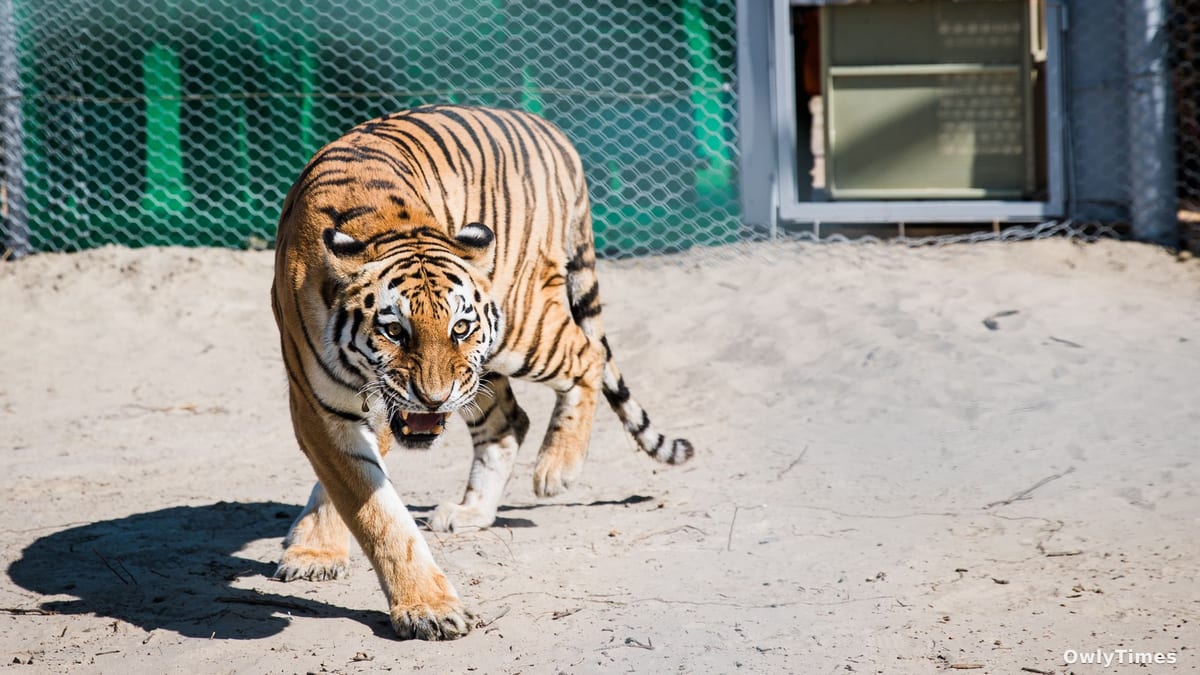
The choice to utilize Amur tigers, rather than attempting to “revive” the extinct Caspian tiger, is rooted in genetic evidence. A 2009 study published in PLOS One demonstrated that Caspian and Amur tigers were likely part of the same population, geographically separated by human activity in the 19th century. This finding justifies using Amur tigers as a genetically suitable substitute. Currently, two captive Amur tigers, a female named Bodhana and a male named Kuma, reside within the Ile-Balkhash Nature Reserve. While they won’t be released into the wild, the program hopes they will breed, providing a founder population for future generations of Kazakh tigers. However, the program acknowledges that relying solely on captive breeding is risky, and plans are underway to import wild tigers from Russia in the coming months. The exact origin of these Russian tigers remains unconfirmed, but reports suggest they will be sourced directly from the wild.
This reliance on wild-caught tigers introduces a new layer of complexity. Reintroducing large predators is inherently risky, as demonstrated by a 2024 study in The Journal of Wildlife Management detailing a Russian tiger reintroduction program. While the study deemed the effort largely successful – rehabilitated cubs survived and hunted independently – it also highlighted the potential for conflict. One tiger killed over 13 goats and exhibited a lack of fear towards humans, ultimately requiring recapture and relocation to a zoo. WWF Central Asia emphasizes that Kazakhstan’s program is prepared for such scenarios, establishing a dedicated team to monitor released tigers via satellite collars, respond to human-wildlife conflicts, and compensate local residents for livestock losses. This proactive approach is essential, but the success of these mitigation strategies remains to be seen.
It’s crucial to understand that the 1.4 billion trees planted represent more than just a reforestation effort. The vegetation, including narrow-leaf oleaster, willow, and turanga poplar, is strategically designed to stabilize shorelines along Lake Balkhash – the 15th-largest lake in the world – and regulate water flow, mitigating floods and overflows. The increased planting in 2025 is attributed to improved techniques and expanded partnerships, but the long-term success hinges on factors like climate stability and consistent water resources. The program’s commitment to sustainable development within local communities, offering grants for agriculture and ecotourism, is also a vital component, aiming to foster coexistence rather than conflict. However, the scale of these grants and their actual impact on local livelihoods require further scrutiny.
The Kazakhstan tiger reintroduction program is a bold and ambitious undertaking, but it’s not without its inherent uncertainties. The program’s success won’t be measured solely by the number of tigers released, but by the long-term viability of the population and the ability to integrate tigers back into a landscape shared with humans. The next few years will be critical. We should be watching for data on tiger breeding success within the reserve, the frequency and nature of human-wildlife conflicts, and – perhaps most importantly – the demonstrable economic benefits experienced by local communities participating in the program. Will the promise of ecotourism and sustainable agriculture outweigh the potential costs of living alongside a reintroduced predator? That’s the question that will ultimately determine whether this ambitious restoration effort truly succeeds.





