
Beyond the Headlines: Why Mary Roach’s Visit Speaks to Our Evolving Relationship with the Body
The upcoming appearance of Mary Roach in Lawrence isn’t simply a book talk; it’s a timely reflection of a cultural shift in how we perceive and interact with the human body. While headlines announce a humorous evening with the author of “Replaceable You,” the underlying subject matter – the accelerating pace of medical breakthroughs in human replacement – demands a more nuanced consideration. We’ve moved beyond simply treating disease to actively replacing failing parts, and this transition isn’t purely a scientific one. It’s a deeply ethical, philosophical, and increasingly accessible reality that deserves public discussion, and Roach’s unique ability to blend scientific rigor with accessible prose makes her the ideal guide.
Based on the original lawrencekstimes.com report.
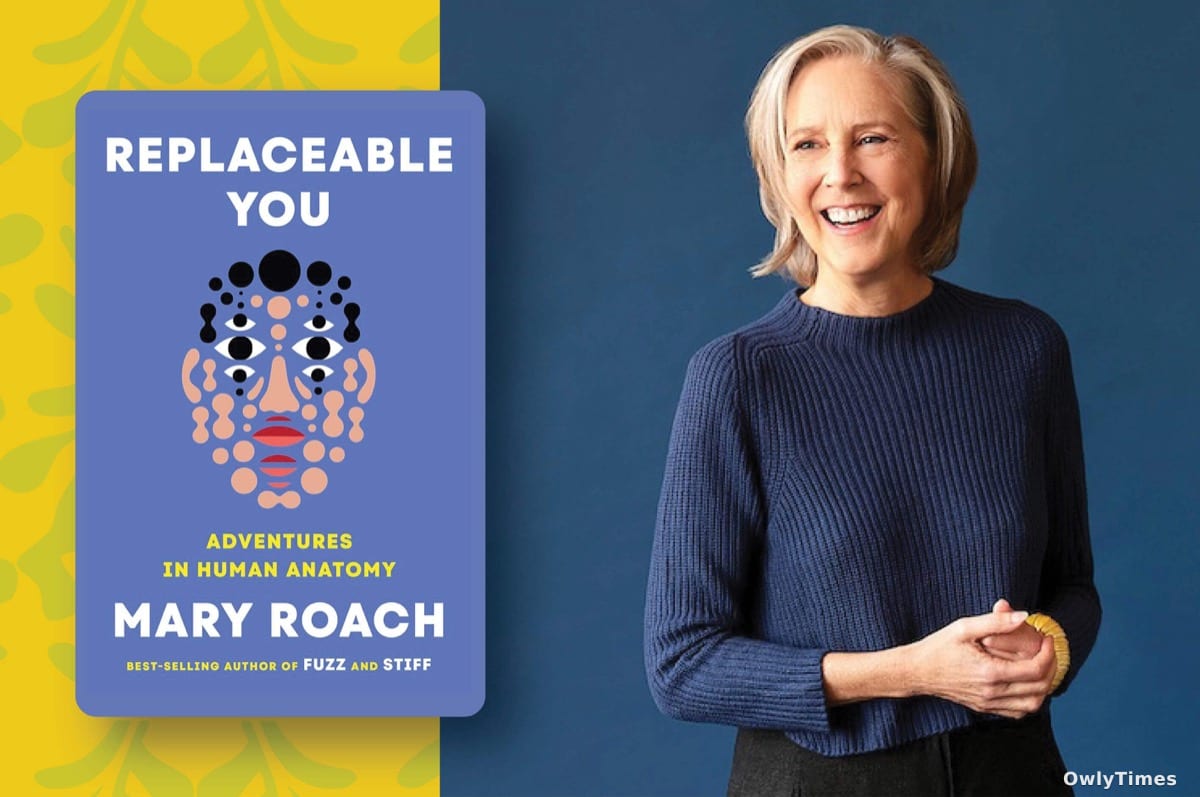
Roach’s latest book, as the library news release states, delves into “medical breakthroughs, ethical dilemmas, and the scientists, surgeons, and patients shaping the future of human replacement.” But the phrase “human replacement” often conjures images of science fiction, of fully artificial beings. The reality, as Roach meticulously details in her work – and as evidenced by her previous titles like “STIFF” and “GULP” – is far more complex. It’s about bioengineering, tissue regeneration, and the increasingly blurred lines between natural and artificial components. This isn’t about building robots; it’s about leveraging our understanding of biology to repair and restore function, and the speed of these advancements is what’s truly remarkable. Consider that just a decade ago, widespread 3D printing of functional organs was largely confined to research labs. Now, bioprinting is moving toward clinical trials, offering potential solutions for organ shortages that currently claim thousands of lives annually.
The event, hosted by the Lawrence Public Library as part of the Ross and Marianna Beach reading series – a program running since 2014 – highlights the library’s commitment to bringing complex scientific topics to a wider audience. Library Director Brad Allen emphasized that the program aims to “bring some of the greatest living writers to Lawrence,” and that Roach is “well known for her ability to explore scientific topics in a fun and humorous way.” This is a crucial point. Science communication isn’t simply about disseminating facts; it’s about fostering engagement and critical thinking. The humor isn’t a distraction from the science, but a tool to make it approachable, to dismantle the intimidation factor that often prevents people from engaging with these important issues.
However, it’s vital to understand what this event isn’t. It’s not a presentation of finalized solutions. The ethical dilemmas surrounding human replacement – questions of access, affordability, and the very definition of “human” – remain largely unresolved. The potential for exacerbating existing health disparities is significant. If these technologies become available only to the wealthy, the gap between the haves and have-nots will widen dramatically, creating a future where biological enhancement becomes another marker of privilege. This is a tension that Roach consistently addresses in her work, and it’s likely to be a central theme of her talk.
Accessibility and the Ongoing Conversation
The Lawrence Public Library’s proactive approach to accessibility – offering accommodations for those who need them via a dedicated form, phone number (785-843-3833), and email address ([email protected]) – underscores the importance of inclusivity in these discussions. These technologies, if they are to benefit society as a whole, must be accessible to everyone, regardless of physical ability or socioeconomic status. The library’s commitment to providing resources and support for individuals with disabilities is a model for how public institutions can facilitate meaningful engagement with complex scientific advancements.
What Comes After April 23rd?
Roach’s talk on Thursday, April 23rd, at Liberty Hall (644 Massachusetts St., doors open at 6 p.m., program runs 7-9 p.m.) is a starting point, not a conclusion. The real work begins after the last question is answered and the books are signed. The crucial next step is to continue the conversation, to move beyond the initial fascination with technological possibility and grapple with the ethical and societal implications. We need to ask ourselves: how do we ensure equitable access to these technologies? How do we regulate their development and deployment to prevent unintended consequences? And, perhaps most importantly, how do we redefine our understanding of what it means to be human in an age of increasingly sophisticated biological engineering? The future of our bodies, and the future of our society, depends on our ability to answer these questions thoughtfully and proactively. Watch for upcoming town hall discussions hosted by the library, and consider contacting your local representatives to advocate for policies that prioritize ethical and equitable access to these emerging technologies.