
The Surgeon General Nominee and a Chemical Divide
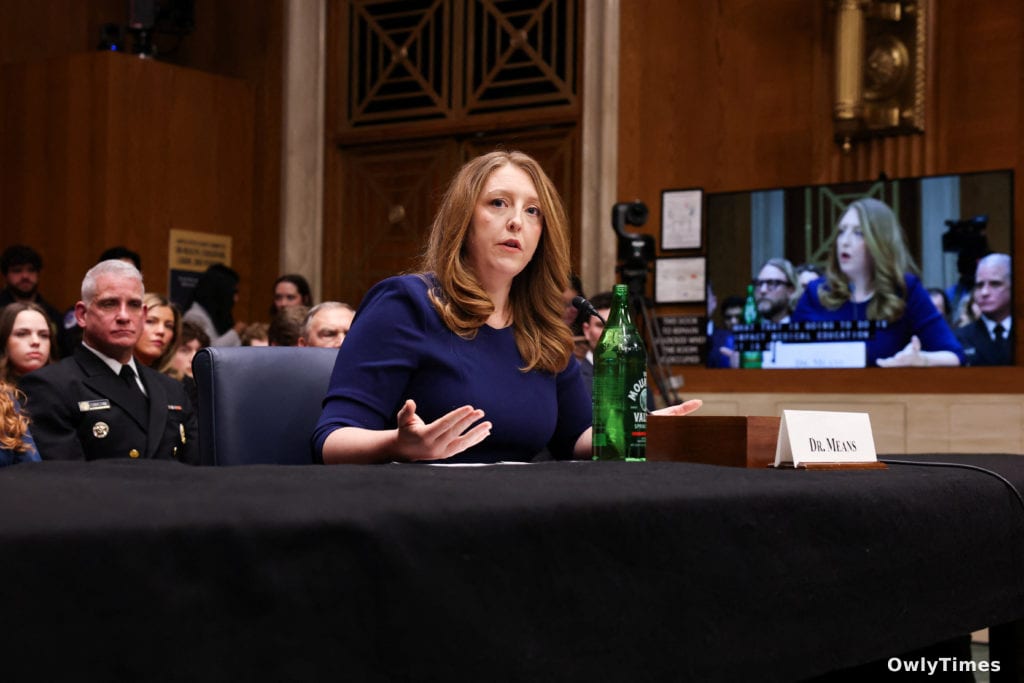
The confirmation hearing for Dr. Casey Means, President Donald Trump’s nominee for surgeon general, wasn’t focused on typical public health concerns like vaccination rates or opioid addiction. Instead, a significant portion of the questioning, led by Senator Ed Markey (D-Mass.), centered on a seemingly incongruous issue: glyphosate, the active ingredient in many widely used herbicides. This isn’t simply a debate about weedkillers; it’s a revealing clash between a nominee’s previously stated beliefs, the current administration’s policies, and the complex, often politicized, science surrounding chemical safety. The hearing underscores a growing tension within public health – how to balance economic interests with potential, and often debated, environmental and health risks.
The core of the issue lies in the Trump administration’s recent executive order aimed at boosting domestic glyphosate production. This move directly contradicts the stance of the Make America Healthy Again (MAHA) movement, which Dr. Means actively supports. MAHA advocates for reducing pesticide use in food production, a position rooted in concerns about potential health impacts. During the hearing, Senator Markey directly confronted Dr. Means about her past statements linking glyphosate to cancer, juxtaposing them with the administration’s pro-glyphosate policy. It’s crucial to understand that the headlines proclaiming a direct contradiction aren’t entirely accurate; Dr. Means didn’t recant her concerns, but rather framed her future role as one of advocating for “more sustainable farming practices” and protecting consumers, even within the context of the existing executive order.
Reporting from PBS informs this analysis.
What the study – in this case, the public record of the hearing and related statements – actually found is a carefully navigated position from the nominee. Dr. Means acknowledged her “grave concerns” about the health impacts of chemicals like glyphosate and expressed a desire to “study these chemicals more.” She articulated a vision for a future where American agriculture prioritizes sustainability. However, she stopped short of directly criticizing the President’s order, instead emphasizing her commitment to protecting consumers and supporting farmers through a transition to more sustainable methods. This isn’t necessarily a compromise of principles, but a pragmatic acknowledgement of the political realities of the position she seeks. The Environmental Protection Agency (EPA) maintains that “there is no evidence glyphosate causes cancer in humans,” a statement that fuels the debate and highlights the differing interpretations of available scientific data.
The EPA’s Assessment and the Weight of Evidence
The EPA’s assertion, while definitive-sounding, is itself a point of contention. It’s important to note that the EPA’s assessment is based on a specific methodology and interpretation of available studies. While the agency concludes there’s no direct evidence of glyphosate causing cancer in humans, this doesn’t mean the debate is settled. Independent researchers and international bodies, like the International Agency for Research on Cancer (IARC), have classified glyphosate as “probably carcinogenic to humans,” based on a different evaluation of the evidence. This discrepancy isn’t necessarily about flawed science, but about differing standards for evidence and risk assessment. The EPA tends to focus on high-dose exposure scenarios, while IARC considers evidence from lower-level, chronic exposures, which are more relevant to the general population. The current legal landscape also reflects this uncertainty, with ongoing lawsuits alleging glyphosate caused cancer in individuals exposed to the herbicide.
Navigating Conflicting Loyalties
Dr. Means’ connection to both the MAHA movement and Robert F. Kennedy Jr., a prominent figure in the anti-pesticide movement and current Health Secretary, adds another layer of complexity. Senator Markey pointedly noted this alignment, suggesting a potential conflict of interest. While it’s not inherently problematic for a public health official to hold strong beliefs about environmental health, the situation raises questions about how Dr. Means would navigate policy decisions that directly clash with those beliefs. Her response – emphasizing a commitment to both consumer protection and supporting farmers – suggests an attempt to bridge this divide. However, the reality is that promoting domestic glyphosate production and simultaneously fostering sustainable farming practices are not easily reconciled goals. The economic incentives currently favor glyphosate use, making a rapid transition to alternative methods challenging.
Limitations to Consider
It’s crucial to acknowledge the limitations of drawing definitive conclusions from a single confirmation hearing. The exchange between Dr. Means and Senator Markey was, by necessity, brief and focused on specific points. A comprehensive understanding of her views and potential actions requires a broader assessment of her past work and future policy proposals. Furthermore, the science surrounding glyphosate is constantly evolving, with new studies emerging regularly. The EPA’s assessment is subject to revision as new data becomes available, and the IARC’s classification could also be updated. The political context is equally fluid, and future administrations may adopt different policies regarding glyphosate and other pesticides.
The Future of Chemical Regulation and Public Trust
The next crucial research steps involve long-term epidemiological studies that track the health outcomes of populations exposed to varying levels of glyphosate. These studies need to account for confounding factors, such as other environmental exposures and lifestyle choices, to provide more accurate assessments of risk. Equally important is research into alternative farming practices that can reduce reliance on synthetic pesticides. However, beyond the scientific questions, this situation highlights a broader issue: the erosion of public trust in scientific institutions and the increasing politicization of public health. If confirmed, Dr. Means will face the challenge of rebuilding that trust, demonstrating a commitment to evidence-based decision-making, and navigating the complex interplay between science, policy, and public perception. The question now is: will her actions as surgeon general reflect a genuine effort to reconcile her past advocacy with the realities of her new role, or will she prioritize political alignment over scientific integrity? That will be a critical signal for the future of chemical regulation and public health in the United States.





