
Is Silicon Valley now running a protection racket disguised as “AI infrastructure”? Because the recent flurry of chip deals – Meta simultaneously courting both Nvidia and AMD – isn’t about innovation, it’s about securing a supply chain in a market rapidly becoming defined by scarcity. The real story here isn't Meta’s ambition to build “personal superintelligence,” it’s the growing realization that a handful of companies control the keys to the AI kingdom, and everyone else is scrambling for access.
The Power Play: 6 Gigawatts and a 10% Stake
Meta’s agreement to purchase 6 gigawatts of AI chips from AMD is, on the surface, a straightforward business transaction. To illustrate the scale, that’s roughly the power needed to run San Francisco. But the inclusion of an option for Meta to acquire up to 10% of AMD’s stock, vesting with shipping milestones, transforms this from a vendor-customer relationship into something far more strategic. It’s a partial ownership stake, a hedge against potential supply disruptions, and a clear signal that Meta isn’t content to be reliant on a single chipmaker, even one as dominant as Nvidia. AMD’s stock jumped nearly 12% on the premarket announcement, a testament to the market’s understanding of this power shift. This isn’t just about chips; it’s about influence.
Drawn from Business Insider.
Beyond the Hype: Inference and the Real Cost of AI
Mark Zuckerberg’s statement about “efficient inference compute” is carefully worded. While the public fixates on the flashy generative AI models, the bulk of AI workloads – the day-to-day tasks of running those models – rely on inference. This is where the real cost lies, and where AMD’s chips, historically competitive in price-performance, can offer a compelling alternative to Nvidia’s premium offerings. Meta’s move isn’t simply about diversifying; it’s about controlling costs as AI deployment scales. Consider the average user: they won’t notice the difference between an Nvidia-powered AI and an AMD-powered one, but Meta’s bottom line certainly will. The company is already facing pressure to demonstrate returns on its massive AI investments, and chip costs are a major factor.
AMD’s Ascent: From Underdog to AI Powerbroker
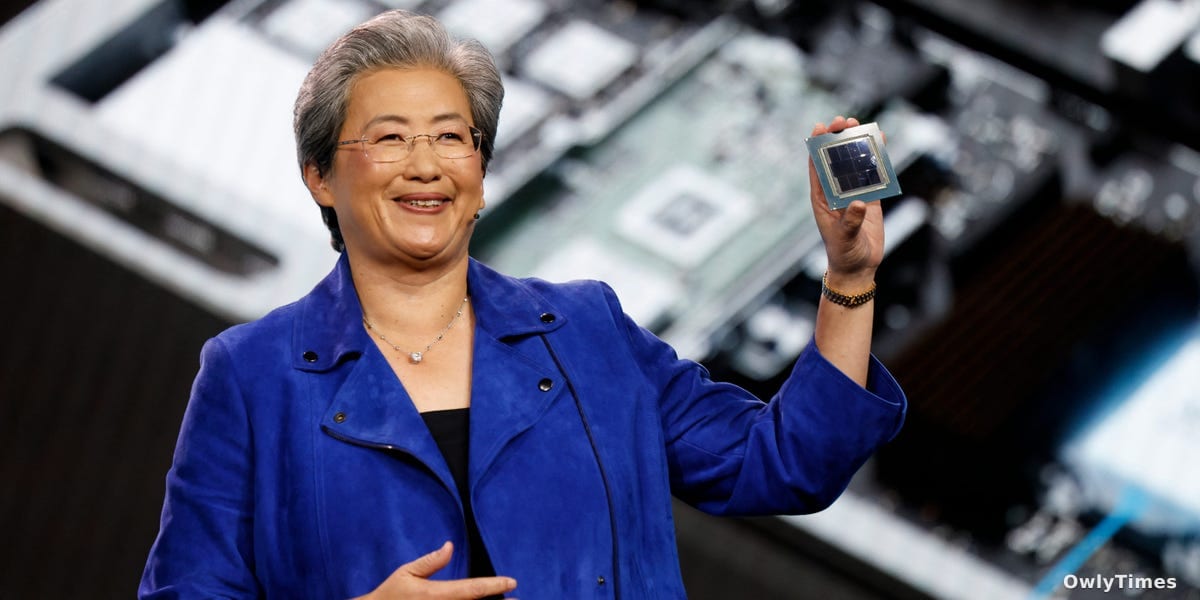
This deal solidifies AMD’s position as a serious player in the AI chip market, a remarkable turnaround for a company that was once considered a distant second to Intel and Nvidia. The October agreement to supply AI chips to OpenAI was the first major sign of this shift, but Meta’s commitment is on another level. Lisa Su, AMD’s CEO, has successfully navigated a challenging market by focusing on high-performance computing and strategically targeting the AI boom. It’s a classic story of disruption, but with a crucial difference: AMD isn’t disrupting the technology of AI, it’s disrupting the control of it. This is a win for competition, but it also raises questions about the long-term implications of a bifurcated chip market.
The Nvidia Factor: A Controlled Burn?
Meta’s simultaneous expansion of its partnership with Nvidia complicates the narrative. Why hedge your bets with AMD if you’re already committed to “millions” of Nvidia’s chips? The answer likely lies in leverage. By creating a competitive dynamic, Meta can negotiate better pricing and terms with both companies. It’s a calculated move to avoid being completely beholden to Nvidia’s pricing power. However, this also suggests a growing anxiety within the industry about Nvidia’s dominance. The company’s market capitalization has soared, fueled by AI hype, but that valuation is predicated on continued, unchecked growth. Meta’s strategy could be seen as a subtle attempt to introduce a degree of controlled burn, preventing Nvidia from becoming an unassailable monopoly.
Looking ahead, expect to see more tech giants pursuing similar dual-sourcing strategies. The chip shortage of the early 2020s left a lasting impression, and the AI boom has only amplified those concerns. By 2027, the question won’t be if your favorite app is powered by AI, but which company controls the chips that power it. And the real test will come when – not if – geopolitical tensions disrupt the flow of semiconductors. Will Meta’s diversified approach provide a buffer, or will the entire AI ecosystem grind to a halt?