
Is the future of music less about the song itself, and more about what it makes you see? That’s the question bubbling up from a new program at MIT, and it’s not about psychedelic light shows. It’s about a fundamental shift in how we interact with sound, driven by a generation of researchers who grew up fluent in both Bach and binary code. The real story here isn’t the resurgence of interest in music technology – it’s the democratization of creative tools, and the potential to unlock musical expression for those who, like Mariano Salcedo, didn’t have access to traditional training.
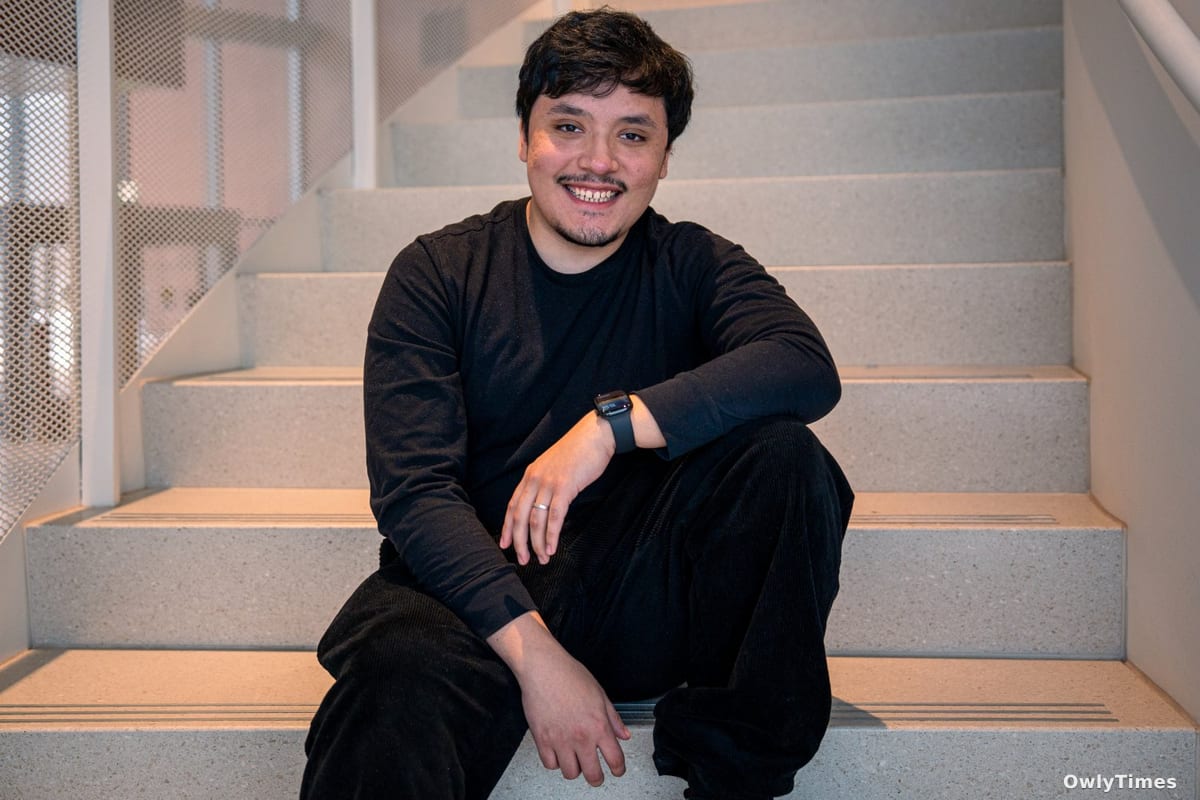
Salcedo, a master’s student and the Alex Rigopulos (1992) Fellow in Music Technology and Computation, embodies this shift. Growing up between Mexico and Texas, he faced a common barrier: limited access to musical education. “There are no bands in Mexican public schools,” he explains, a stark reminder that musical opportunity isn’t evenly distributed. But instead of being sidelined, Salcedo found a different path, one forged in the intersection of artificial intelligence and artistic expression. He initially pursued mechanical engineering at MIT through the Questbridge program, drawn by the promise of a rigorous scientific education. But a chance encounter with a large language model (LLM) chatbot changed everything. “I was both awed and frightened,” he recalls, a sentiment many of us felt during the initial wave of generative AI hype.
Drawn from news.mit.edu.
That “fright” sparked a pivot. Salcedo switched his major to Artificial Intelligence and Decision Making, recognizing the potential – and the responsibility – inherent in the technology. He wasn’t just interested in building AI; he wanted to shape its development, ensuring it was more inclusive and less prone to the biases that plague so many algorithms. This concern is critical. We’ve seen AI-powered music creation tools emerge, often trained on datasets overwhelmingly dominated by Western musical traditions. The risk isn’t just homogenization; it’s the erasure of diverse musical voices. Salcedo’s work, however, aims to build around that problem, not replicate it.
His current research focuses on neural cellular automata (NCA), a complex system that merges classical cellular automata with machine learning. Essentially, he’s teaching algorithms to “visualize” sound. Imagine feeding a song into a system that generates evolving, organic visuals in response – not pre-programmed animations, but genuinely reactive imagery. He’s even designed a web interface allowing anyone to adjust the relationship between a song’s energy and the NCA system, creating unique visual performances. This isn’t about replacing musicians; it’s about augmenting the listening experience, offering a new dimension of engagement. As Eran Egozy ’93, MNG ’95, director of the Music Technology and Computation Graduate Program, puts it, Salcedo is “a beautiful example of a multidisciplinary researcher who thinks deeply about how to best use technology to enhance and expand human creativity.”
The program itself, a collaboration between the School of Humanities, Arts, and Social Sciences (SHASS) and the School of Engineering, is a testament to MIT’s commitment to bridging these traditionally siloed disciplines. It’s also a direct legacy of Alex Rigopulos ’92, SM ’94 and Egozy’s work at Harmonix Music Systems, the company behind Guitar Hero and Dance Central. Now part of Epic Games, Rigopulos funded the fellowship that supports Salcedo’s research, recognizing the potential for MIT to once again be a breeding ground for innovation in music technology. The $37 billion video game industry, and the increasing integration of music within it, is a clear indicator of where this convergence is headed.
But Salcedo’s work isn’t confined to the lab. He presented his research – “Artificial Dancing Intelligence: Neural Cellular Automata for Visual Performance of Music” – at the Association for the Advancement of Artificial Intelligence conference in Singapore in January 2026, and has been selected to deliver the student address at the 2026 Advanced Degree Ceremony for SHASS. This isn’t just academic recognition; it’s a signal that MIT is actively championing this new wave of interdisciplinary research. He’s also keenly aware of the ethical implications of his work, particularly the need to address biases in AI development and ensure broader access to these powerful tools. “It’s intimidating to pursue this path when the academy is currently focused on LLMs,” he admits, “But it’s also important to explain and explore the base technology before digging into more nuanced work.”
Looking ahead, expect to see a proliferation of AI-powered tools that don’t just create music, but actively respond to it, transforming the listening experience into a dynamic, multi-sensory event. The question isn’t whether AI will change music – it already is. The real question is: will these changes be driven by a narrow set of algorithms and corporate interests, or by researchers like Mariano Salcedo who are committed to building a more inclusive and expressive future for music? Watch for the emergence of open-source platforms that allow users to customize and adapt these visualizers, effectively turning every song into a personalized art installation. That’s where the true potential lies.