
The Illusion of Progress: Why We’re Still Asking Martin Luther King Jr. About AI
Is Silicon Valley building a future, or simply a more efficient version of the past’s injustices? That’s the question echoing from a recent University of Pennsylvania symposium revisiting Martin Luther King Jr.’s 1967 Massey Lectures, a series of talks that, remarkably, anticipated the ethical minefield of artificial intelligence. We’re obsessed with AI’s potential to disrupt industries and accelerate innovation, but the real story here isn’t about algorithms and processing power – it’s about who controls them, and what values are being coded into the very fabric of our digital lives.
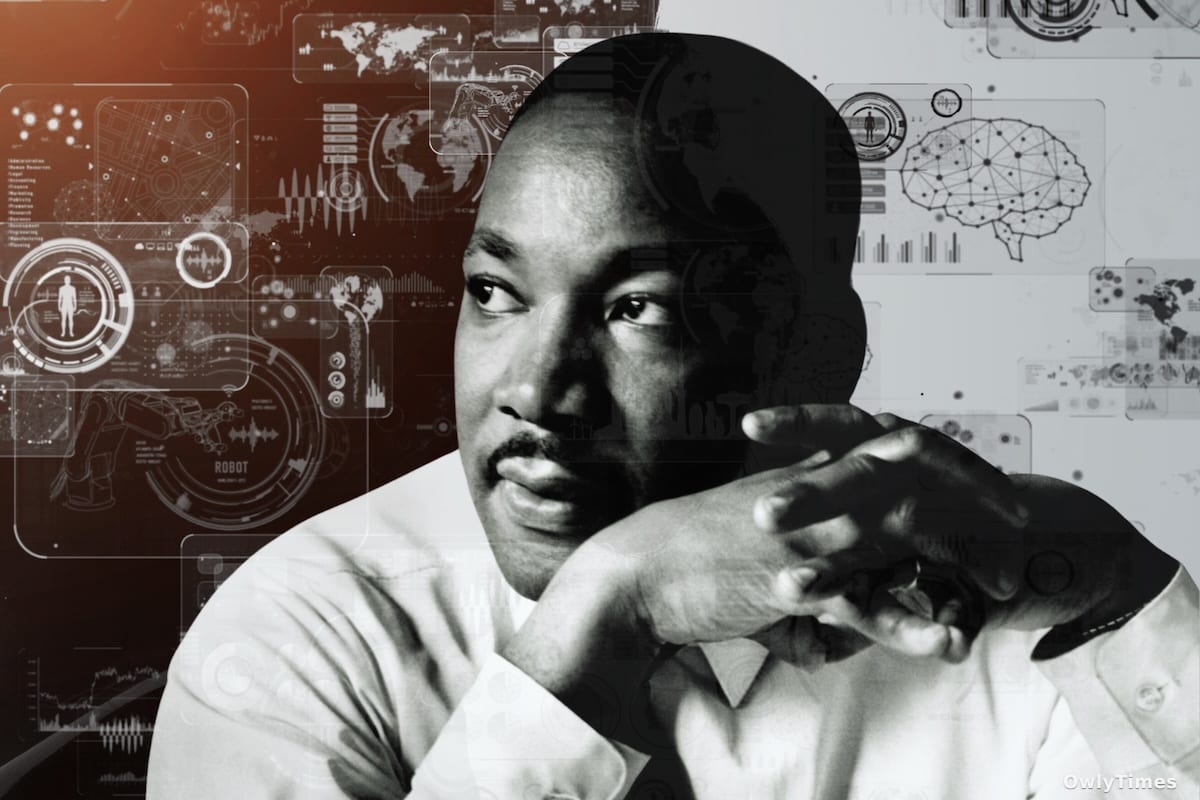
In late 1967, while the Pentagon was laying the groundwork for what would become the internet with ARPANET, Martin Luther King Jr. was warning of a future where “gargantuan industry and government, woven into an intricate computerized mechanism, leave the person outside.” He wasn’t railing against technology itself, but against the potential for it to exacerbate existing power imbalances, to erode individual agency, and to create a sense of alienation. The irony, of course, is that the tools he feared – room-sized computers fed by punch cards – now fit in our pockets, yet the core concern remains chillingly relevant.
The symposium, co-sponsored by Penn Engineering, the School of Social Policy & Practice (SP2), and the African-American Resource Center (AARC), wasn’t a Luddite call to abandon AI. Instead, it was a pointed reminder that technological advancement without a corresponding moral framework is not progress at all. As Valerie Dorsey-Allen, Director of the AARC, put it, “Dr. King warned us that our technological means can outpace our moral ends.” This isn’t a theoretical concern for academics; it’s a practical question impacting everything from loan applications to criminal justice, and increasingly, the very information we consume.
This piece references the seas.upenn.edu report.
The Bias Baked In
The dangers are well-documented. AI systems, trained on existing data, readily replicate societal biases. This isn’t a bug, it’s a feature – a reflection of us, as Chris Callison-Burch, Professor in Computer and Information Science (CIS), bluntly stated. “AI is learning from internet data, which reflects us, our society and our history.” A facial recognition system that misidentifies people of color at a higher rate isn’t a failure of the technology, but a manifestation of the biases present in the datasets used to train it. The consequences are far-reaching, potentially reinforcing discriminatory practices in hiring, housing, and even law enforcement. Consider that in 2023, the error rates for facial recognition systems were still demonstrably higher for darker-skinned individuals, a statistic that highlights the urgent need for diverse and representative training data.
But the problem extends beyond biased data. The very act of building these systems is concentrated in the hands of a relatively small, homogenous group of people. As Desmond Upton Patton, Penn Integrates Knowledge University Professor, emphasized, “Communities have to shape what’s getting built and how it’s governed.” This isn’t about simply adding a diversity checkbox to a hiring process; it’s about fundamentally shifting the power dynamics within the tech industry, ensuring that marginalized communities have a seat at the table when these technologies are designed and deployed. The current landscape, where innovation is largely driven by venture capital and the priorities of Silicon Valley, leaves too much room for unintended – and often harmful – consequences.
Beyond Efficiency: Reimagining Connection
The conversation at Penn wasn’t solely focused on the pitfalls. Participants explored how AI could, in theory, contribute to Martin Luther King Jr.’s vision of a “Beloved Community” – a society rooted in justice, participation, and mutual responsibility. Clayton Colmon, Director of Curriculum Design for Online Learning, framed the discussion around the question of authentic connection in an increasingly mediated world. Can AI foster empathy and understanding, or will it further isolate us behind screens and algorithms?
The potential lies in leveraging AI to strengthen care networks and identify individuals at risk. Automation, for example, could help social networks and chatbots proactively reach out to users exhibiting signs of distress. But even these seemingly benevolent applications require careful consideration. Who decides what constitutes “at-risk” behavior? How do we protect user privacy? And how do we ensure that these systems aren’t used to surveil and control vulnerable populations? The line between helpful intervention and intrusive monitoring is dangerously thin.
The Participation Imperative
Martin Luther King Jr. understood that technology, in and of itself, is neutral. It’s the purpose to which it’s put that determines its impact. “Nothing in our glittering technology can raise man to new heights,” he warned. “In the absence of moral purpose, man himself becomes smaller as the works of man become bigger.” The panelists at Penn echoed this sentiment, concluding that the future of AI will be shaped by those who engage with it. Chris Callison-Burch, who advises the Claude Builder Club, a community for experimenting with AI, urged greater participation. “The more people we can have who engage with AI and better understand it, the better decisions we can make as a society.”
But simply “understanding” AI isn’t enough. We need to demand transparency, accountability, and ethical oversight. We need to push for regulations that protect our data, prevent discrimination, and ensure that AI benefits all of humanity, not just a select few. The question isn’t whether AI will change the world – it already is. The crucial question is: will we let it amplify our best selves, or our worst?
Here’s what to watch for: in the next 18 months, expect a surge in “AI literacy” programs aimed at the general public. But pay attention to who is funding these programs and what narrative they’re promoting. If the goal is simply to normalize AI without addressing the underlying ethical concerns, we’ll be sleepwalking into a future where technology serves power, not people.