
$600 Car Repairs and Roth IRAs: Why Minnesota’s New Mandate Signals a Shift in Financial Preparedness
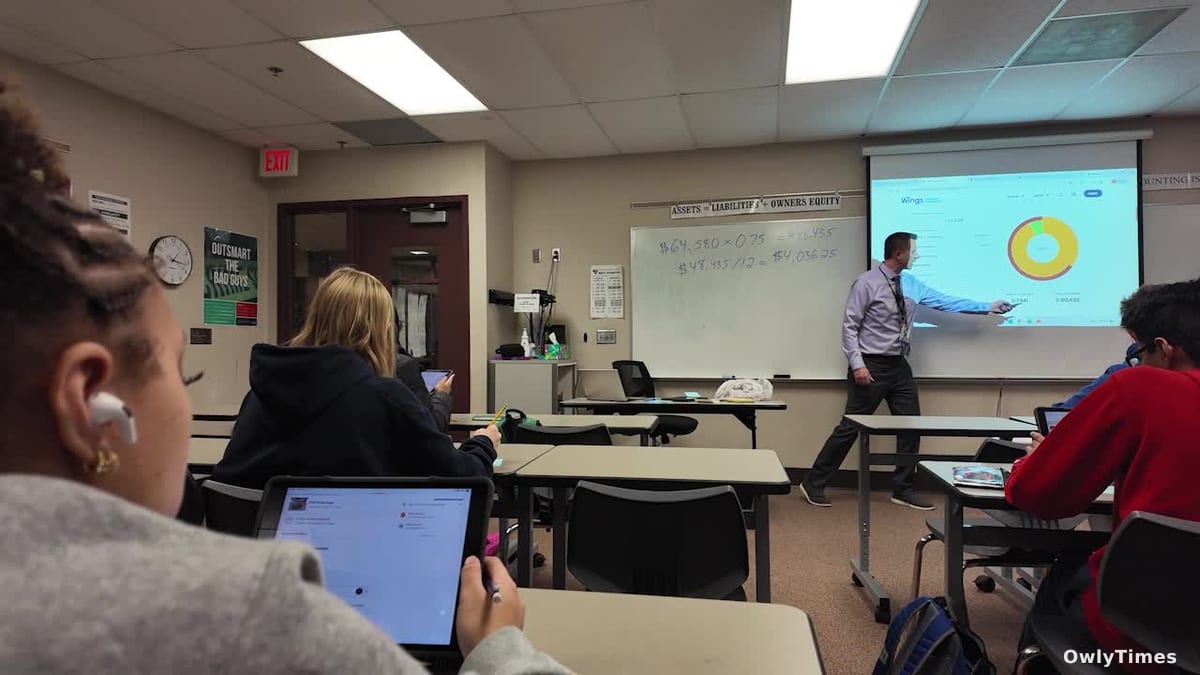
A $600 car repair. That seemingly mundane scenario, part of a classroom simulation at Eagan High School on Friday, encapsulates the core rationale behind Minnesota’s new personal finance graduation requirement. While states have long debated the merits of financial literacy, the urgency now stems from a demonstrable gap in preparedness among young adults entering an increasingly complex economic landscape – a gap that’s costing them, and the broader economy, dearly. The new law, mandating a personal finance course for all Minnesota high school students, isn’t simply about balancing checkbooks; it’s a preemptive strike against mounting consumer debt and a lagging investment rate among the next generation.
Source material: kstp.com.
The shift from elective to mandatory status is a significant policy change, but the real story lies in the demand for this education. Abby Osborn, who teaches the course at Eagan, noted her students’ “unexpected enthusiasm,” particularly around topics like health insurance copays and deductibles. This isn’t abstract theory; it’s immediate relevance. Consider that the average auto repair cost in the US is now $588, according to a 2023 report by AAA – nearly matching the simulated expense in Osborn’s classroom. This isn’t about preparing students for a hypothetical future; it’s about equipping them to navigate present-day financial realities. The previous reliance on families to impart this knowledge is demonstrably failing, evidenced by the 2022 Federal Reserve data showing that 63% of adults could not pass a basic financial literacy quiz.
The impact extends beyond immediate expense management. Hailey Santos, a senior at Eagan, stated she “would have never thought of doing” opening a Roth IRA without the course. This is crucial. While the national average Roth IRA contribution for those under 35 is around $2,200 annually, participation rates remain low, particularly among those without a college degree. The earlier someone begins investing, even small amounts, the greater the potential for compounding returns. A $50 monthly contribution to a Roth IRA starting at age 18, assuming a 7% annual return, could yield over $130,000 by age 65. The course isn’t just teaching students about investing; it’s potentially altering their long-term financial trajectory.
However, the success of this mandate hinges on curriculum quality and teacher preparedness. Simply checking a box isn’t enough. The course must move beyond rote memorization of financial terms and focus on practical application – budgeting, credit score management, understanding loan terms, and recognizing predatory lending practices. Minnesota’s investment in teacher training will be a key indicator of the program’s long-term effectiveness. A 2021 study by the Council for Economic Education found that only 28% of high school students felt “very confident” in their ability to make informed financial decisions. This number needs to demonstrably improve.
The broader implications are significant. A financially literate population is less susceptible to economic shocks, less reliant on social safety nets, and more likely to contribute to economic growth. The state’s investment in this education – estimated at $4.5 million annually for curriculum development and teacher training – is, in effect, an investment in its future economic stability. Malia Fang, a sophomore, succinctly captured the sentiment: “I think it’s definitely super helpful for the future.” But the question remains: will this proactive approach translate into a measurable decrease in student loan debt, increased homeownership rates, and a more secure financial future for Minnesota’s young adults? Investors and consumers alike should watch the state’s debt and savings rates among the 18-25 demographic over the next five years – that’s where the true return on this investment will be revealed.