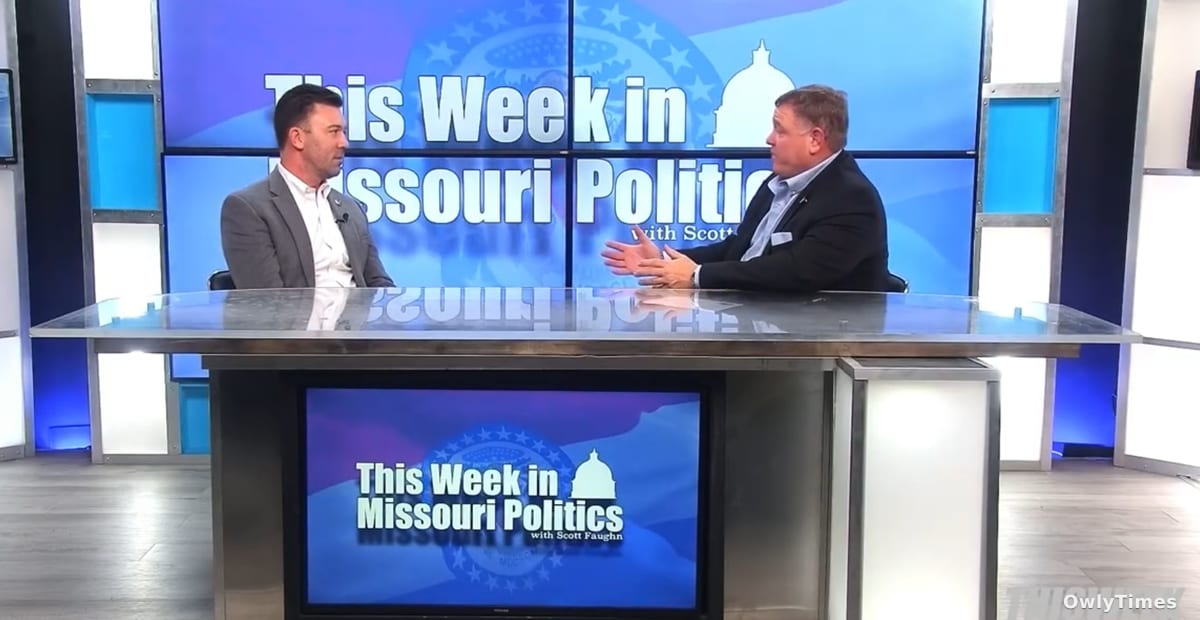

The launch of Taylor Burks's campaign for Missouri’s 5th Congressional District, announced on February 22, 2026, is more than just another entry into a crowded election cycle; it is a meticulously timed strategic play signaling the intensifying competition for federal representation and reflecting the broader political currents in the state. Burks, a Navy Veteran and business owner, brings a profile often sought after in swing districts or open races, aiming to capitalize on a narrative of service and practical experience. His early declaration, highlighted during his appearance with Scott Faughn on "This Week in Missouri Politics," positions him as a proactive force, aiming to shape the early discourse rather than merely react to it. This move forces potential rivals to adjust their own timelines and messaging, setting an aggressive tone for the upcoming cycle.
The Calculus Behind a Congressional Challenge
The strategic calculus behind Burks's bid for the 5th Congressional District is multi-layered. As a veteran, he taps into a historically potent political archetype, one often associated with discipline, leadership, and a commitment to public service – qualities that resonate across partisan lines, especially in a state like Missouri. His business background further suggests an understanding of economic realities, a crucial asset in appealing to a diverse electorate. The timing, early in 2026, allows for substantial fundraising and coalition-building before the primary heats up, a critical advantage in federal races. Who benefits from this early entry? Burks, by establishing a clear narrative and potentially deterring weaker challengers. Who loses? Any incumbent or established candidate who might have preferred a quieter, later entry into the campaign, now forced to contend with a well-defined challenger from the outset.
Original reporting: themissouritimes.com.
Legislative Fissures and Direct Democracy Battles
While Burks makes his federal intentions clear, the Missouri General Assembly continues to grapple with legislative priorities, as evidenced by the panel discussion featuring Representatives Ken Jamison, Mike Steinmeyer, Will Jobe, and Jeff Meyers alongside Jake Kroesen. These state-level discussions often provide the proving ground for issues that eventually echo in federal campaigns. A notable development in this legislative landscape is the recent Missouri REALTORS® court victory, where a judge ruled that "misleading and prejudicial 'ballot candy'" must be stripped from a proposal seeking to weaken citizens’ initiative petition power. This decision is a significant win for proponents of direct democracy, reinforcing the public's ability to shape law outside the legislative chambers. Conversely, it represents a setback for those legislative factions that have consistently sought to curtail the initiative petition process, viewing it as an encroachment on their authority. This ongoing tension between legislative prerogative and popular sovereignty has deep roots in American political history, echoing Progressive Era debates over empowering citizens directly against entrenched political machines.
Echoes of Past Political Contests
The current political climate in Missouri, characterized by numerous campaign announcements — from Tim Bosch in House District 98 to Jacey Buckles in House District 136, and the endorsement of Amy DeClue by Senator Ben Brown — mirrors historical periods of intense political mobilization. The prominence of a veteran like Burks launching a federal bid draws parallels to post-war eras where military service often provided a direct pathway to political office, leveraging public trust and a perceived lack of partisan baggage. Similarly, the debate over initiative petition power is a recurring theme in American governance, reminiscent of struggles in the early 20th century to expand voter influence against legislative capture by special interests. The Melanie Stinnett amendment, securing dedicated funding for the disability community, further highlights how specific legislative victories, often the result of sustained advocacy, shape the political narrative and demonstrate tangible outcomes for targeted groups.
The State of Missouri’s Political Landscape
The flurry of activity, from opinion pieces advocating for farmers' autonomy to calls for new tax structures like the "Data Asset Yield Tax," paints a picture of a state wrestling with core economic and governance questions. These local and state-level debates inevitably inform and influence federal races, as candidates like Burks must articulate how their vision aligns with or diverges from these deeply felt concerns. The 5th Congressional District race, therefore, will not unfold in a vacuum but will be shaped by these concurrent legislative battles and local campaign dynamics. The diverse slate of candidates emerging for various offices, from county auditor to state representative, signifies a healthy, albeit complex, democratic ecosystem, where every position, from the local Pacific Alderman Rafael Madrigal seeking County Auditor to a congressional hopeful, contributes to the overall political texture.
As Taylor Burks embarks on his campaign, the immediate political chess move to watch next will be the responses from potential primary opponents and the incumbent (if any) in Missouri’s 5th Congressional District. Will his early entry and veteran-business owner profile force others to accelerate their own announcements, or will it delineate a clear path for a specific challenger? Beyond the 5th CD, observe how the General Assembly reacts to the REALTORS’ court victory regarding initiative petition language. Will lawmakers pursue alternative strategies to curb direct democracy, or will this ruling temporarily solidify the power of citizen-led ballot initiatives? The interplay between these federal ambitions and state-level legislative maneuvering will define the early contours of Missouri's 2026 election cycle.





