
Are we really still pretending a 3.5-ton SUV needs a V8? The automotive world has spent decades locked in a torque-versus-revs debate, a false dichotomy fueled by marketing and tradition. The real story here isn't about engine displacement – it’s about power density, and how a surprisingly simple shift in thinking is letting motorcycle engines redefine what a “car” can be. For years, the assumption has been cars need low-end grunt, bikes need to scream. But that’s a constraint born of necessity, not engineering law.
The fundamental problem is weight. A motorcycle engine, lacking the rotational inertia and low-end torque to move a typical sedan from a standstill, feels…underpowered in a heavy chassis. It’s like trying to launch a rocket from a battleship. Motorcycles themselves weigh less than 1,000 pounds, allowing those high-revving engines to shine. But strip away the excess, and suddenly, that same engine becomes a cheat code for performance. If you can get a car under 1.5 tons, the equation flips. You’re no longer fighting physics; you’re exploiting it.
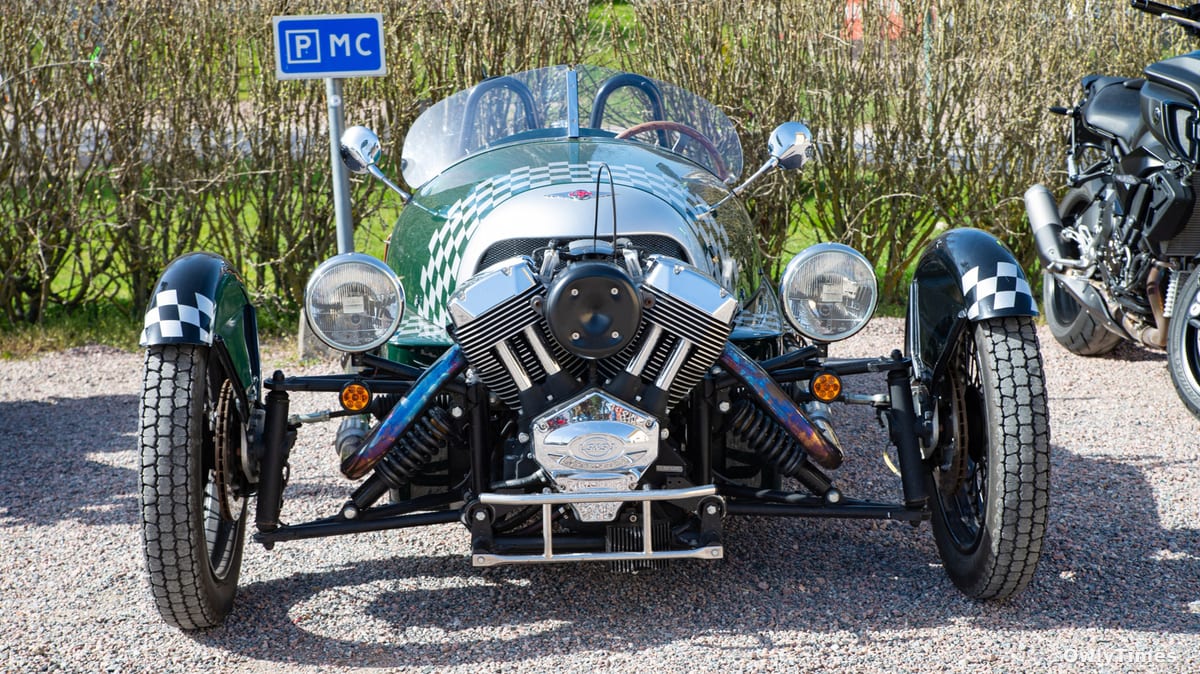
This isn’t some fringe experiment confined to garages. Companies like Morgan, Ariel, Radical, Caterham, and even Honda have been quietly building cars powered by motorcycle engines for years. Take the Morgan 3-Wheeler, a gloriously anachronistic British sports car. It’s a hand-built, leather-and-wood contraption that looks like it escaped from a steampunk novel. But beneath that charming exterior lies a massive 121-cubic inch V-twin engine sourced from S&S, the same company that builds engines for Harley-Davidson. It doesn’t deliver a high-pitched scream, but a low-frequency rumble that shakes the entire car, offering a visceral experience that a turbocharged V6 simply can’t replicate. It’s a brilliant analog experience, a reminder that driving can be an adventure, not just a commute.
Drawn from jalopnik.com.
Then there’s the Ariel Atom V8, which takes things to an entirely different level. Forget subtle; this is raw, unadulterated speed. They literally fuse two Suzuki Hayabusa engines together, creating a 3.0-liter V8 that revs past 10,000 rpm and delivers nearly 500 horsepower in a car weighing just 1,200 pounds. That’s a power-to-weight ratio that rivals hypercars, and the acceleration figures are equally insane – 60 mph in under 2.5 seconds. There’s no windshield, no pretense, just pure, unfiltered acceleration that can temporarily rearrange your face.
The Radical SR1 XXR and SR3 XXR take the Hayabusa engine and refine it for track use, employing dry sump lubrication and other technologies to withstand extreme g-forces. These aren’t backyard builds; they’re incredibly sophisticated racing machines that prove you don’t need a heavy V12 to post insane lap times. The Caterham Seven, a minimalist icon perfected over 50 years, has also experimented with motorcycle engines, notably the Honda CBR1100 and CBR900RR Fireblade, creating a machine that defies logic with its explosive performance and lightning-fast reflexes.
Even Honda’s history reveals this connection. The N600, the first car the company imported to the U.S. in 1967, used a bored-out twin-cylinder engine derived from the Honda CB450 motorcycle. It was a tiny, revvy little car that felt radically different from the big-bore V8s Americans were used to. Today, it’s a sought-after platform for custom builders pushing the boundaries of motorcycle-powered cars.
The common thread here isn’t just about horsepower. It’s about the experience. These cars offer a level of engagement, a direct connection between driver and machine, that’s often lost in modern vehicles. They’re lighter, more nimble, and more responsive, forcing you to pay attention and rewarding skillful driving. They’re also a potent reminder that innovation often comes from challenging conventional wisdom.
But here’s where it gets interesting. The current wave of electric vehicle development is focused on instant torque, mimicking the very characteristic motorcycle engines have always excelled at. As battery technology improves and EV weight comes down, we’ll likely see a convergence. Expect to see more manufacturers experimenting with smaller, high-revving electric motors paired with ultra-lightweight chassis, effectively building the electric equivalent of a four-wheeled superbike. The question isn’t if this will happen, but when will the first major automaker truly embrace the power-to-weight ratio revolution and deliver a genuinely thrilling, accessible sports car that owes its soul to the humble motorcycle?