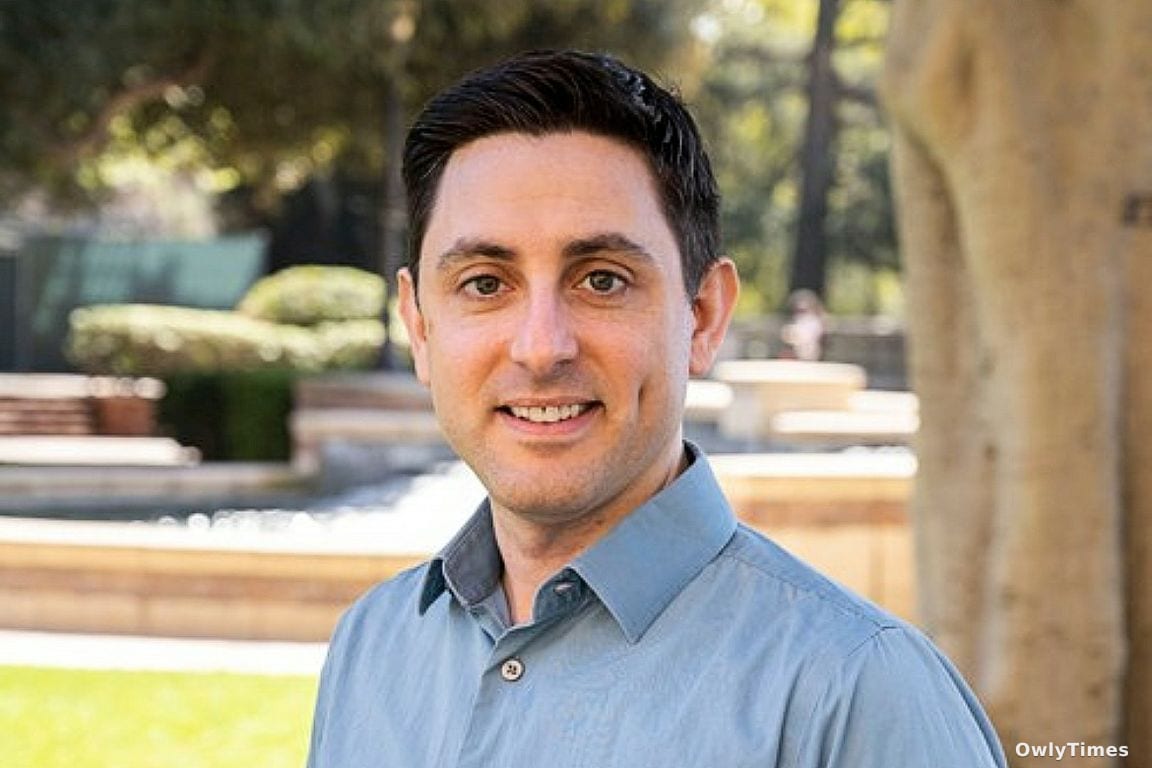

The pursuit of fusion energy, often framed as a distant promise, relies on understanding phenomena so extreme they barely resemble anything on Earth. Recent recognition of Derek Schaeffer, an assistant professor of physics and astronomy at [University Name – not provided in source], as a 2026 Frontiers of Science Fellow by the National Academy of Sciences (NAS), isn’t simply an individual accolade; it’s a signal that the seemingly esoteric field of magnetized plasma physics is rapidly gaining prominence as a critical component of multiple, converging scientific goals. While headlines might focus on the fellowship itself – one of only 80 awarded nationally – the significance lies in where Schaeffer’s work fits within a broader, increasingly collaborative effort to unlock the secrets of both the cosmos and a potential clean energy source.
Decoding the Language of Plasma
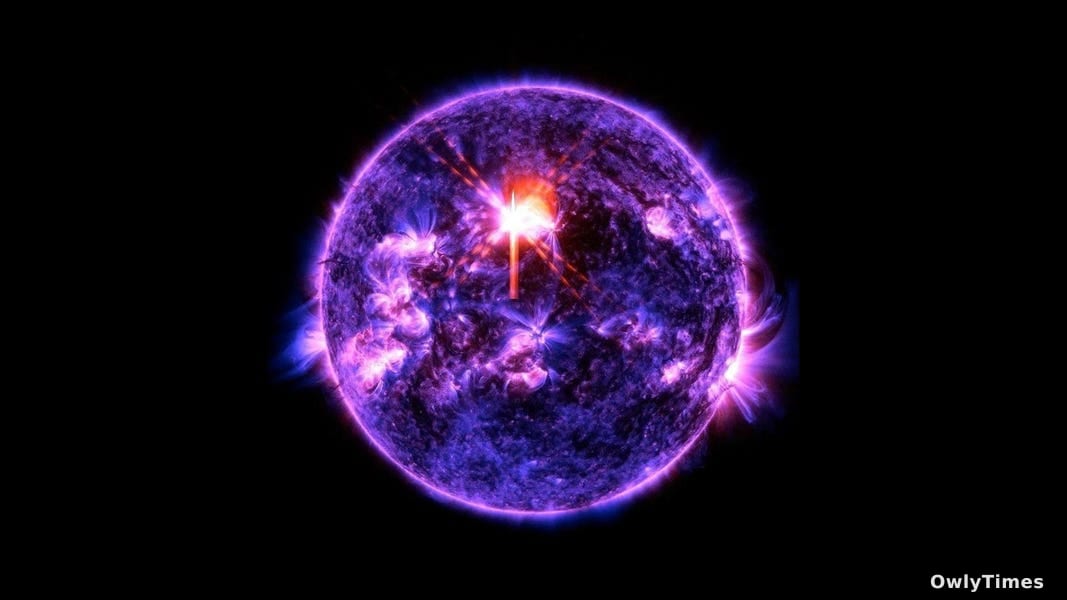
Schaeffer’s research centers on magnetized plasma, a state of matter where gas becomes ionized and highly conductive, profoundly influenced by magnetic fields. This isn’t a laboratory curiosity. Plasma constitutes 99% of the visible universe, driving phenomena from solar flares to the formation of galaxies. Here on Earth, it’s the key ingredient in fusion reactors, where the goal is to replicate the energy-generating processes of the sun. Specifically, Schaeffer investigates collisionless shocks – abrupt changes in plasma velocity – magnetic reconnection (where magnetic field lines break and reconnect, releasing energy), and the formation of ion-scale magnetospheres (miniature versions of the magnetic bubbles surrounding planets). These processes, while occurring in vastly different environments, share fundamental physics, making a unified approach to their study exceptionally valuable. He achieves this through a combination of experiments conducted at high-powered facilities like the University of Rochester’s Omega Laser Facility and the National Ignition Facility at Lawrence Livermore National Laboratory, coupled with sophisticated numerical simulations.
Source material: newsroom.ucla.edu.
Beyond Fusion: A Tri-National Approach to Scientific Challenges
The NAS Frontiers of Science program isn’t solely about individual research; it’s about fostering interdisciplinary collaboration. The program’s structure, including a recent national symposium held March 5–7 in Irvine, California, and planned trilateral symposia with Japan and Germany, alongside bilateral engagements with China and Israel, underscores a growing recognition that major scientific breakthroughs require a global, multifaceted approach. This is particularly true for plasma physics. The challenges of achieving sustained fusion, for example, aren’t limited to engineering hurdles; they demand a deeper understanding of fundamental plasma behavior, requiring expertise from astrophysics, materials science, and computational physics. The program’s emphasis on networking and idea-sharing is designed to break down traditional disciplinary silos, accelerating the pace of discovery. It’s worth noting that the selection of Schaeffer, alongside researchers from diverse fields, suggests the NAS is actively prioritizing this cross-pollination of ideas.
What the Study Actually Found vs. What Headlines Claim
It’s crucial to clarify what this recognition doesn’t mean. Schaeffer’s fellowship doesn’t represent a sudden breakthrough in fusion energy, nor does it guarantee immediate solutions to astrophysical mysteries. Rather, it acknowledges the potential of his research program and provides him with a platform to contribute to a larger, ongoing effort. The NAS isn’t funding a specific outcome; it’s investing in a researcher poised to advance the field. This distinction is often lost in popular science reporting, which tends to emphasize immediate results over the incremental, often painstaking, process of scientific discovery. The recent naming of Schaeffer as a Cottrell Scholar further reinforces this point – it’s recognition of early-career excellence and potential, not a declaration of solved problems.
Limitations to Consider: Scale and Complexity
Despite the sophisticated experimental setups and computational models, simulating the conditions found in astrophysical plasmas remains a formidable challenge. The sheer scale of these environments – light-years across – and the complexity of the interactions involved introduce inherent limitations. Experiments, while providing valuable insights, are necessarily conducted on a much smaller scale and often rely on approximations. Furthermore, the interpretation of experimental data is often complicated by the presence of turbulence and other non-linear effects. While Schaeffer’s work addresses these challenges through advanced diagnostics and simulations, it’s important to acknowledge that our understanding of magnetized plasma is still incomplete. The reliance on facilities like Omega Laser and the National Ignition Facility also introduces a logistical constraint – access to these resources is limited and competitive.
Looking ahead, the next crucial steps involve refining our ability to model plasma behavior across a wider range of conditions and validating these models with increasingly precise experimental data. Specifically, researchers will be watching to see how the insights gained from laboratory experiments can be applied to interpret observations from space-based telescopes and, conversely, how astrophysical observations can inform the design of future fusion reactors. The question isn’t simply if we can harness the power of fusion, but how we can leverage our understanding of fundamental plasma physics to overcome the remaining obstacles – and Schaeffer’s work is now positioned at the forefront of that endeavor. Will the collaborative spirit fostered by programs like the NAS Frontiers of Science prove sufficient to bridge the gap between theoretical models and real-world applications within the next decade? That’s the critical question to watch.