
The Recurring Battle for NASA’s Scientific Future
The narrative feels eerily familiar. As NASA prepares for crewed missions to the Moon and ambitious plans for Mars, the agency’s core science programs are, yet again, facing substantial cuts proposed by the Trump administration. This isn’t a prediction for a future budget cycle; it’s the reality unfolding for the 2026 fiscal year, echoing similar battles fought in previous years. The proposed $18.8 billion budget represents a significant shift in priorities, one that prioritizes certain headline-grabbing projects while simultaneously dismantling the foundational research that underpins long-term space exploration and our understanding of the universe. The core issue isn’t simply how much NASA receives, but where that funding is directed, and the implications for the scientific community are profound.
The proposed budget allocates $3.89 billion to NASA’s science portfolio, a reduction of $3.4 billion compared to current funding levels, and would eliminate over 40 missions. While specific allocations within that science portfolio are detailed – $1.02 billion for Earth science, $1.88 billion for planetary science, $552.4 million for astrophysics, $419.6 million for heliophysics, and $25 million for biological and physical sciences – the overall impact is a dramatic constriction of scientific output. It’s crucial to understand this isn’t a uniform reduction; some areas, like the Dragonfly mission to Saturn’s moon Titan ($424 million) and continued support for the James Webb Space Telescope and Hubble Space Telescope ($213 million), are prioritized. However, these funded projects represent a small fraction of the overall portfolio, and the cuts to other areas are substantial. The proposed elimination of the Mars Sample Return mission, a flagship project aimed at bringing Martian samples back to Earth for detailed analysis, is particularly alarming to many scientists.
See the original payloadspace.com story for the full account.
This pattern of proposed cuts followed by Congressional resistance is becoming a predictable cycle. Last month, 103 lawmakers from both parties signed a letter advocating for $9 billion in NASA science funding for fiscal 2027 – more than double the administration’s proposal. Representative George Whitesides (D-CA) succinctly captured the frustration, stating the budget is “dead on arrival, just like last year,” and highlighting the dissonance between the administration’s rhetoric supporting NASA and its actions undermining the agency’s scientific capabilities. The strength of this bipartisan support is significant, suggesting a willingness to actively push back against the proposed cuts. However, the repeated nature of these battles raises questions about the long-term stability of NASA’s science programs and the efficiency of continually defending established priorities. It also begs the question of whether a more permanent solution – perhaps a dedicated funding stream insulated from annual political fluctuations – is needed.
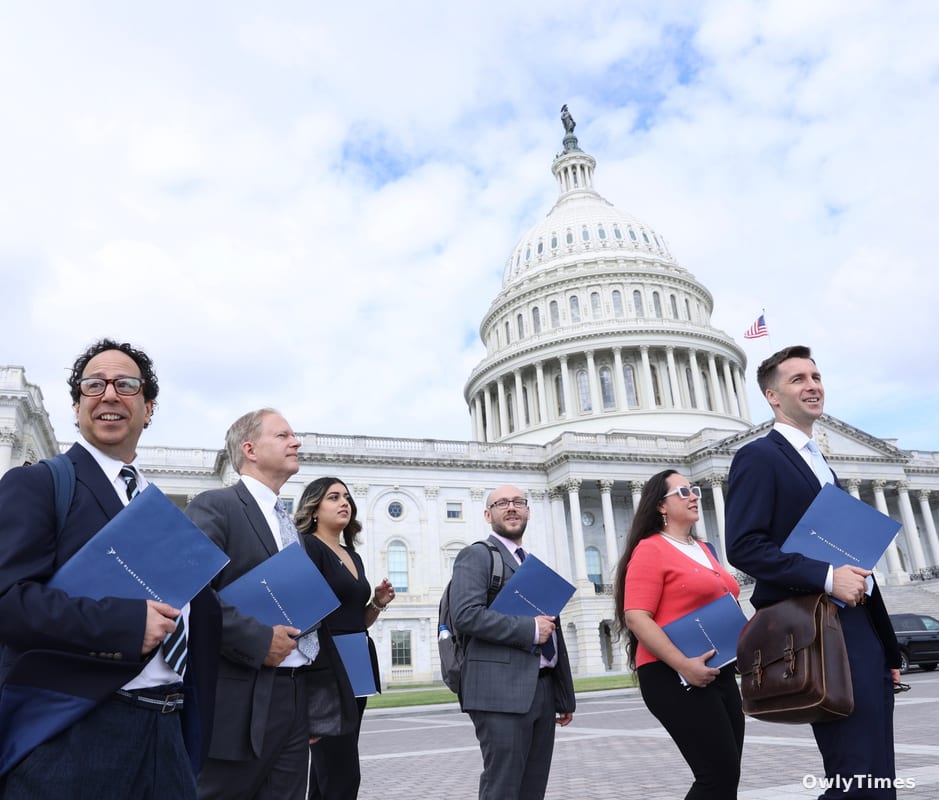
The Planetary Society, a prominent space advocacy group, is mobilizing its members to lobby against the cuts, echoing their efforts from previous years. Their statement emphasizes the contradiction between the President’s stated commitment to NASA’s leadership and the budget proposal’s actions. This isn’t simply about protecting jobs or maintaining the status quo; it’s about safeguarding the scientific infrastructure that allows us to address fundamental questions about our planet, our solar system, and the universe beyond. The SERVIR program, for example, which partners with organizations in Asia, Africa, and Latin America to utilize geospatial data for climate change studies, is slated for elimination. This demonstrates a potential rollback not just in space exploration, but also in crucial Earth-based research with direct implications for global sustainability.
Limitations to consider include the inherent complexities of the federal budget process. Congressional appropriations are rarely a simple up-or-down vote on the President’s proposal. Negotiations, compromises, and unforeseen events can all influence the final outcome. Furthermore, the focus on high-profile missions like Mars Sample Return can overshadow the importance of smaller, but equally valuable, research grants and programs that contribute to a broader understanding of space science. The current political climate, with increasing polarization and competing budgetary demands, adds another layer of uncertainty.
Looking ahead, the next few months will be critical. The key question isn’t whether the proposed cuts will be debated – they will be – but whether the bipartisan coalition in Congress can translate its support into concrete funding allocations. More importantly, observers should watch for whether this recurring cycle of proposed cuts and Congressional pushback prompts a broader conversation about the long-term funding model for NASA’s science programs. Will Congress explore mechanisms to insulate science funding from annual political battles, or will the agency continue to be caught in a perpetual cycle of defense? The answer will determine not only the future of NASA’s scientific endeavors, but also the nation’s capacity for innovation and discovery in the decades to come.