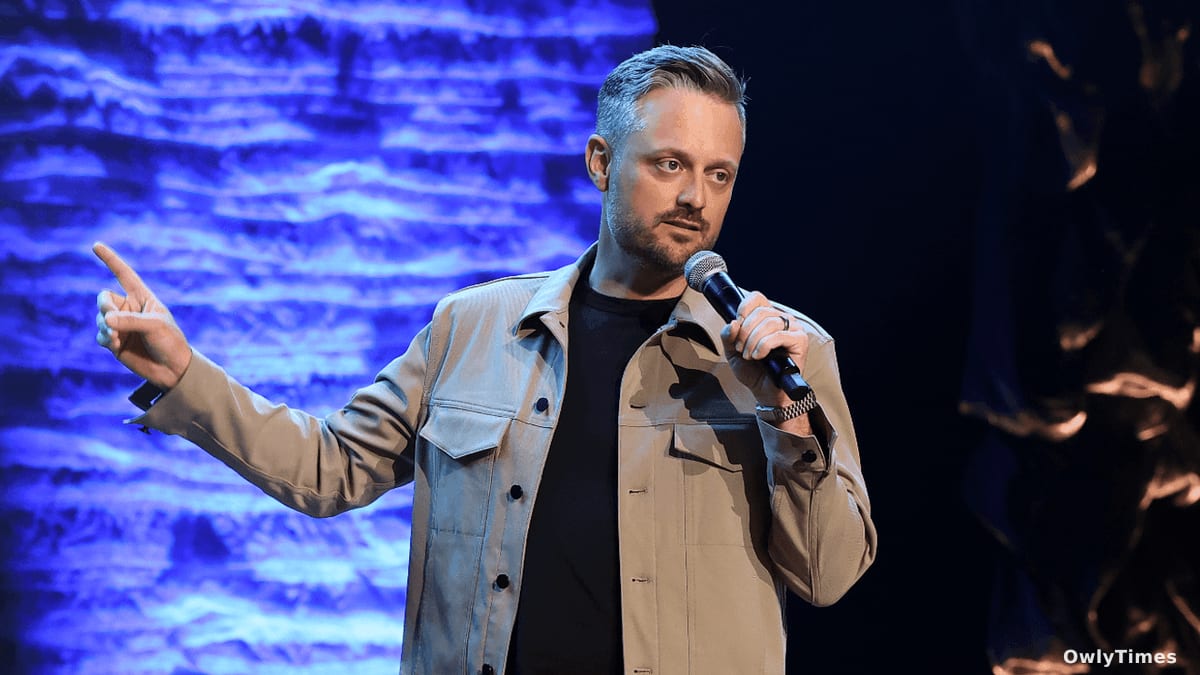

The hush fell over Alice Tully Hall in November 2021 not during a particularly poignant moment of reflection, but because Nate Bargatze was making the audience laugh until they forgot to breathe. It’s a familiar scene for anyone who’s witnessed his “Big Dumb Eyes” tour – a masterclass in observational humor delivered with a disarming, almost bewildered, sincerity. But beneath the sold-out arenas and the Golden Globe appearances, a quiet contemplation is taking hold. Bargatze, at the peak of his comedic powers, is already thinking about what comes after stand-up. It’s not a crisis, not a burnout, but a recognition that creative energy, like a river, will inevitably seek new channels.
This isn’t the typical celebrity “I need to diversify” announcement. Bargatze’s potential shift feels less about escaping comedy and more about a fundamental need to protect the integrity of his work. “I know how hard it is to make something great,” he told Courtney Tezeno of PauseRewind, “I don't want to be spread out too thin.” In an industry obsessed with branding and relentless self-promotion, Bargatze’s reluctance to overextend feels almost radical. He’s acutely aware that the very qualities that make his comedy so appealing – its authenticity, its groundedness – could be diluted by chasing too many opportunities. The current landscape rewards constant content creation, but Bargatze seems to be betting on the enduring power of quality over quantity.
Based on the original komonews.com report.
The expansion isn’t happening in a vacuum. The “Big Dumb Eyes” tour is already planning a second run, a testament to his continued draw. But alongside the stand-up, Bargatze is building a small empire rooted in his adopted home of Nashville. There’s “The Greatest Average American,” his new game show on ABC and Hulu, a concept born from a self-deprecating joke about knowing “all the average American things.” More ambitiously, he’s developing a Nashville-based theme park, a project that speaks to his deep investment in the city’s growth and his desire to create something lasting for his family. This isn’t simply a celebrity lending their name to a venture; Bargatze is actively shaping these projects, ensuring they reflect his sensibility. He filmed the game show in Nashville specifically to showcase the city, stating, “I wanted people to come be on it. Come see our city—we’re a city that’s growing very fast.”
This multi-faceted approach highlights a growing trend: comedians as multi-hyphenates. Kevin Hart has built a film and production empire, Amy Schumer balances stand-up with acting and writing, and John Mulaney has successfully transitioned into television and Broadway. But Bargatze’s situation feels different. He’s not necessarily aspiring to be a movie star; he’s exploring other creative outlets because they genuinely interest him, and because he recognizes that his comedic voice might find new expression in different mediums. He’s protective of his ideas, admitting he might start directing stand-up concepts towards filmmaking if he dives deeper into that world. This isn’t about abandoning comedy, but about allowing his creativity to evolve organically.
Family is clearly the anchor in this evolution. Raised by a magician father and a witty mother, Bargatze credits his upbringing with shaping his comedic timing and perspective. He’s determined to raise his daughter surrounded by family and rooted in his hometown. This desire for stability and connection informs his choices, making the idea of a grueling, never-ending tour schedule less appealing. The humbling moment on “The Greatest Average American” – failing a challenge in front of his parents – underscores this point. It’s a reminder that even success doesn’t shield you from the occasional dose of reality, and that the most important audience is often the one closest to home.
What Bargatze’s quiet contemplation signals is a potential recalibration of the comedy industry itself. For decades, the path to success was largely defined by relentless touring and the pursuit of the “special.” But as comedians like Bargatze demonstrate, there’s a growing appetite for a more sustainable, diversified career path. The question now is whether the industry will adapt to support this shift, or continue to prioritize the relentless churn of content creation. Will we see more comedians prioritizing creative control and long-term projects over immediate fame and fortune? The answer, like one of Bargatze’s perfectly timed pauses, is still unfolding.