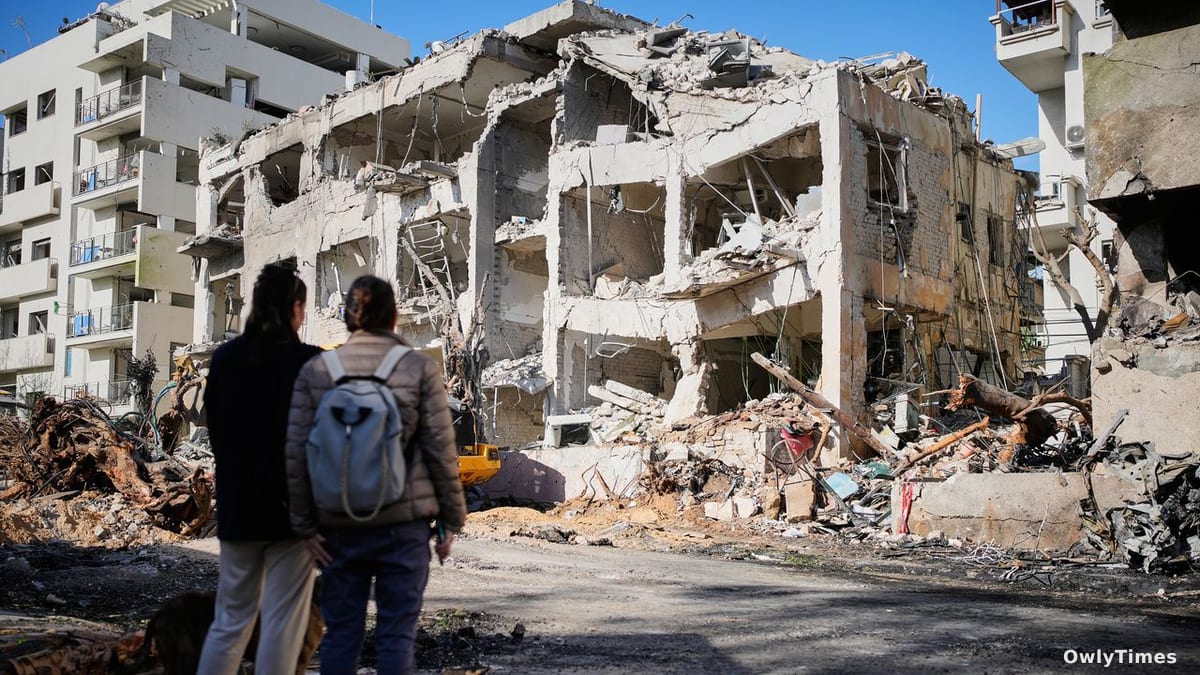

Is the “new Middle East” Benjamin Netanyahu is promising a genuine geopolitical shift, or just a carefully constructed illusion designed to distract from a deepening quagmire? The narrative coming out of Israel – that Operation Roaring Lion will pave the way for broader peace treaties and a united front against Iran – is gaining traction in some corners, but a closer look reveals a far more fractured reality. The real story here isn't a blossoming coalition; it’s the growing disconnect between Israeli ambitions and the pragmatic calculations of its neighbors.
For Israelis, the war launched against Iran, now entering its third week, is overwhelmingly popular. A staggering 93% of Jewish Israelis support the operation, according to the Israel Democracy Institute, fueled by a perception of an existential threat from Iran’s nuclear program – a threat Netanyahu himself downplayed just last summer after a bombing campaign on Iranian nuclear facilities. Families are sleeping in schools and train stations, bracing for attacks that, while diminished in frequency (down 90% from the conflict’s start), arrive in the dead of night, designed to erode morale. But this internal unity masks a critical flaw: the assumption that shared animosity towards Iran automatically translates into strategic alignment.
Based on the original newyorker.com report.
The situation is complicated by the parallel front opened with Hezbollah. Unlike Iranian missile attacks, which offer roughly ten minutes of warning, Hezbollah’s rockets arrive with seconds to spare, amplifying the sense of vulnerability within Israel. In a desperate attempt to project normalcy, Bezalel Smotrich, the far-right finance minister, reopened the economy days into the conflict, a move widely criticized as prioritizing financial concerns – particularly with an election looming – over public safety. This illustrates a core tension: the desire to maintain a semblance of everyday life while engaged in a high-stakes military operation.
The hope, repeatedly voiced by Netanyahu, is that dismantling the Iranian regime will unlock a wave of peace treaties, expanding on the 2020 Abraham Accords. He’s publicly predicted “many more peace treaties” and, through anonymous sources, the Jerusalem Post even reported Emirati attacks on Iranian desalination plants – a claim swiftly denied by the UAE. These attempts to publicly draw Gulf states into the coalition are consistently met with denials and carefully calibrated ambiguity. The United Arab Emirates, for example, has dramatically shifted its tone towards Iran, calling it an “enemy” while conspicuously stopping short of severing diplomatic ties.
This isn’t simply stubbornness. Experts like Yoel Guzansky of the Institute for National Security Studies argue that Netanyahu’s belief that countering Iran will encourage peace is “unfounded.” Gulf states, despite their shared concerns about Iran, are acutely aware of the potential for escalation and the long-term consequences of destabilizing the region. They’ve “come to the conflict with the assumption that the Iranian regime will not disappear,” as Elie Podeh of the Hebrew University of Jerusalem puts it. The recent surge in drone attacks targeting the Gulf, including strikes on U.S. bases and civilian areas in Dubai and Abu Dhabi, underscores this reality.
The disconnect extends beyond strategic calculations. The Israeli government’s unwavering stance against a Palestinian state, coupled with the escalating violence in the West Bank, has eroded trust with key Arab leaders. Dennis Ross, a veteran U.S. diplomat, notes that the respect once afforded to Netanyahu has evaporated, replaced by concerns about the influence of extremist figures like Smotrich and Ben-Gvir. A Washington Institute survey revealed a dramatic shift in Saudi public opinion, with only 1% now viewing normalization with Israel positively, compared to 41% five years ago – a sentiment the Crown Prince Mohammed bin Salman cannot ignore.
The pursuit of Iron Beam technology – an Israeli laser defense system – by Gulf states signals a desire for enhanced security, but doesn’t equate to a full-fledged alliance. It’s a transactional exchange, not a testament to burgeoning trust. While Qatar is reportedly considering expelling Hamas leaders, a move driven by frustration with their refusal to condemn Iranian attacks, this is more about managing internal political pressures than a wholesale realignment. The underlying assumption that shared security concerns will override deeply ingrained political and ideological differences is proving demonstrably false.
The current situation isn’t forging a new Middle East; it’s exposing the fragility of existing relationships and the limits of Israeli influence. The Gulf states are hedging their bets, maintaining channels of communication with Iran while cautiously exploring security cooperation with the U.S. and Israel. They’re preparing for a long-term standoff, not a swift resolution. The euphoria in Israeli television studios about a nascent coalition is, as Guzansky bluntly states, “couldn’t be further from reality.”
Watch for this: in the next six months, as international attention inevitably shifts back to the humanitarian crisis in Gaza, will Saudi Arabia quietly resume backchannel communications with Iran, effectively signaling its disinterest in a U.S.-led anti-Iran bloc? The answer will reveal whether Netanyahu’s gamble on a “new Middle East” was a strategic masterstroke or a catastrophic miscalculation.





