
$15.5 Million Signals a Shift in NFL Contract Guarantees
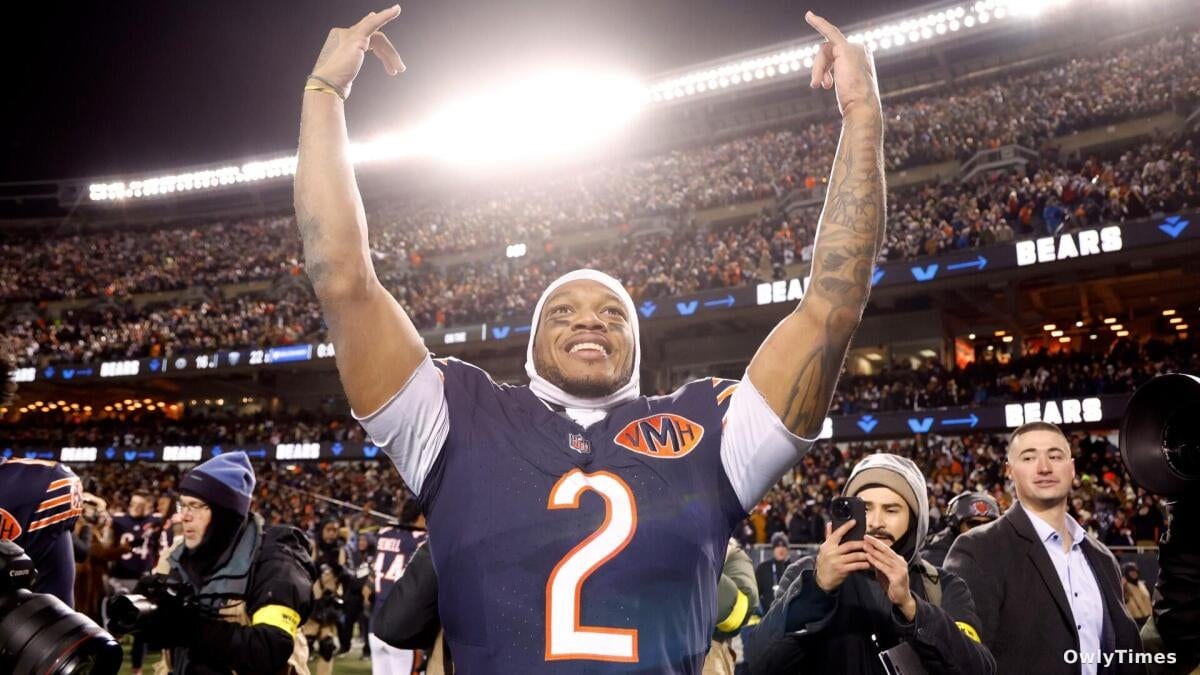
The NFL offseason is already reshaping team rosters and, more importantly, the financial landscape of the league. While coaching carousel moves – John Harbaugh to the Giants, Mike McDaniel’s departure from Miami to Los Angeles, and the Bills’ shift from Sean McDermott to Joe Brady – grab headlines, the surge in trades, and specifically the escalating financial commitments within those trades, is the story few are fully grasping. Consider this: the Buffalo Bills are guaranteeing $15.5 million of wide receiver DJ Moore’s 2028 base salary as part of the trade with the Chicago Bears. This isn’t an isolated incident; it’s a data point signaling a significant shift towards longer, more heavily guaranteed contracts, even for players not currently at the peak of their earning power.
This article draws on reporting from CBS Sports.
The trade itself, a second-round pick for Moore and a fifth, is a relatively modest exchange in terms of draft capital. However, the financial commitment layered on top is where the story lies. Moore’s $23.5 million salary for 2026 is already fully guaranteed, and his 2027 salary guarantees next week. This contrasts sharply with previous eras where guarantees were largely reserved for franchise players. The Bills, under new leadership with Brady, are betting heavily on Moore being a key component of Josh Allen’s offense for years to come, and they’re willing to put significant money where that belief is. This move isn’t simply about acquiring a receiver; it’s about securing a long-term asset in a market where receiver value is rapidly inflating. The Bears, receiving a second-round pick, are effectively betting on their ability to identify and develop receiver talent through the draft, a strategy that carries inherent risk but offers potential cost control.
The trend extends beyond Buffalo. The Los Angeles Rams’ acquisition of cornerback Trent McDuffie from the Kansas City Chiefs involved a 2026 first-round pick (No. 29 overall), along with two later-round picks. While the Rams are known for their willingness to trade future assets – their “F them picks” mantra is well-documented – the Chiefs’ willingness to part with a cornerstone defensive player highlights a different dynamic: cap space management. Kansas City, consistently contending for Super Bowls, is proactively shedding salary, even if it means sacrificing talent. This is a calculated risk, prioritizing the ability to re-sign key players and maintain a competitive roster in the long term. The Chiefs also recently traded L’Jarius Sneed to the Tennessee Titans, further demonstrating this strategy. The Rams, graded an “A” for the deal by CBS Sports’ John Breech, are clearly prioritizing immediate contention, betting that McDuffie can elevate their secondary to championship caliber.
The Houston Texans’ acquisition of running back David Montgomery from the Detroit Lions, for a fourth-round pick, a seventh-round pick, and offensive lineman Juice Scruggs, represents a different facet of this trade surge. While not a blockbuster in terms of draft capital, it underscores a league-wide trend: teams are willing to move players, even those with established roles, to address specific needs. The Lions, with a crowded backfield featuring Jahmyr Gibbs, were willing to part with Montgomery, who had 33 rushing touchdowns over the past three seasons, to acquire additional draft assets. The Texans, meanwhile, are providing Montgomery with an opportunity to be the lead back, a role he may not have secured in Detroit. This trade, graded a “B” by Tyler Sullivan, highlights the increasing fluidity of player movement and the willingness of teams to re-evaluate roles and priorities.
Finally, the player-for-player swap between the Titans and Jets – defensive tackle T’Vondre Sweat for pass rusher Jermaine Johnson II – is a particularly intriguing development. This type of trade is rare, suggesting both teams identified a clear mismatch between their roster needs and player value. The Titans, under a new regime, are prioritizing pass rush, while the Jets are looking to bolster their defensive line with a potentially disruptive force in Sweat. This trade, graded a “B+” for the Jets by Shanna McCarriston, demonstrates a willingness to take calculated risks and shake up the roster in pursuit of immediate improvement.
What this means for your wallet: expect ticket prices and merchandise costs to continue climbing. Teams are investing heavily in talent, and those costs will inevitably be passed on to fans. More importantly, watch for the continued erosion of traditional contract structures. The Bills’ commitment to Moore is a harbinger of things to come – longer contracts with larger guaranteed portions. The question now is, will this trend lead to increased player power and a more volatile free agency market, or will the league find a way to rein in these escalating financial commitments? The next few weeks, as teams navigate free agency and the draft, will provide crucial clues.

