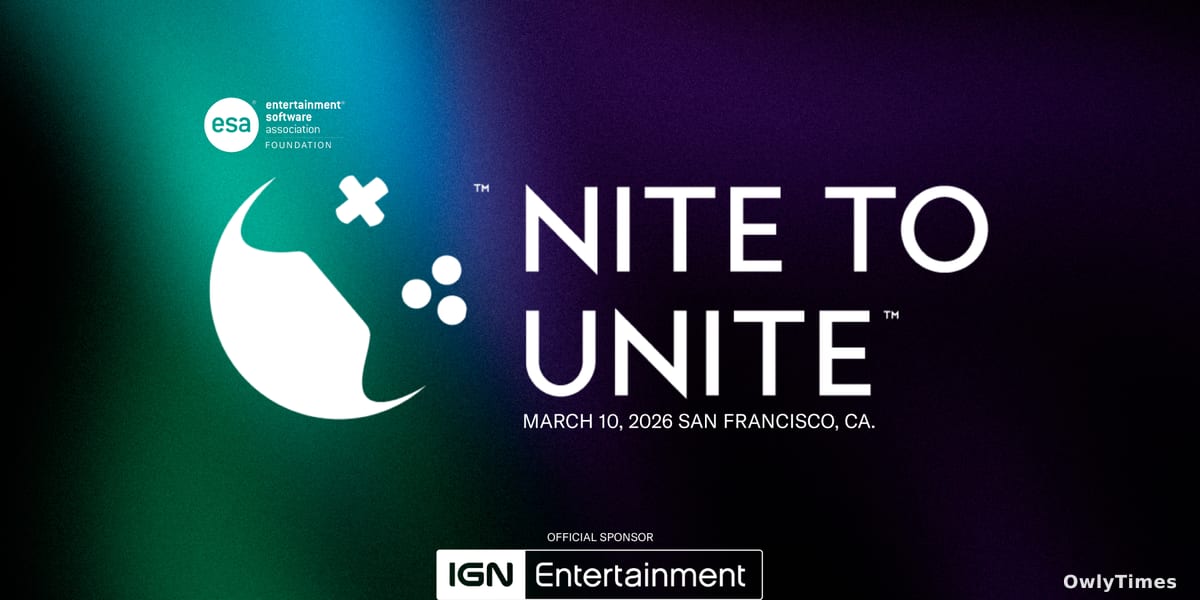

The chandeliers of San Francisco’s Palace Hotel are poised to reflect more than just opulence tomorrow night. As Nite to Unite 2026 prepares to launch, the event isn’t simply a fundraiser; it’s a pressure test for an industry grappling with its own image and future. While headlines often focus on blockbuster releases and record profits – the global games market hit $184 billion in 2023, a slight dip from the pandemic highs but still a colossal figure – a quieter, more urgent conversation is taking place about who gets to build those blockbusters, and whose stories are being told. This year’s event, benefiting the ESA Foundation, is a highly visible attempt to address that imbalance, and the stakes are higher than ever.
Beyond Entertainment: Gaming’s Social Responsibility
The ESA Foundation’s mission, as highlighted by executive director Sue Madden, isn’t just about scholarships and networking events. It’s about actively reshaping an industry historically criticized for its lack of diversity. The foundation’s programs – supporting underrepresented college students, championing social impact storytelling, and investing in workforce development – represent a deliberate shift from viewing games solely as entertainment to recognizing their potential as a powerful cultural force. This isn’t altruism divorced from business sense; a 2022 study by Newzoo found that 60% of gamers believe representation in games is important, and that number climbs to 72% among Gen Z. Ignoring those preferences isn’t just ethically questionable, it’s a market failure waiting to happen.
The involvement of IGN Entertainment and its parent company, Ziff Davis, as exclusive media partner and event host, respectively, is particularly noteworthy. Yael Prough, president of Ziff Davis Gaming & Entertainment, frames the partnership as a natural extension of IGN’s commitment to the gaming community. But it’s also a strategic move for a media giant whose influence shapes public perception of the industry. The fact that GamesIndustry.biz falls under the IGN Entertainment umbrella adds another layer of complexity, highlighting the interconnectedness of media and industry interests. Prough’s mention of Humble Bundle’s $272 million raised for charity through its platform is a powerful statistic, demonstrating the potential for gaming to be a force for good, but it also begs the question: why isn’t this level of philanthropic engagement more widespread across the industry?
See the original gamesindustry.biz story for the full account.
The Silent Auction and the Price of Access
Nite to Unite isn’t a black-tie gala for the masses. Tickets, while available, represent a significant financial commitment, placing the event squarely within the reach of industry executives and major players. The inclusion of a silent auction further reinforces this dynamic. While the proceeds go to a worthy cause, the very act of bidding creates a tiered system of access and influence. This raises a critical question: can genuine inclusivity be fostered within an environment that inherently privileges those with deeper pockets? The ESA Foundation’s work is vital, but relying solely on industry donations risks perpetuating the very power structures it aims to dismantle.
A Three-Time Sponsor: What Does Continued Support Signal?
Sue Madden’s emphasis on IGN Entertainment’s “three-time sponsor” status isn’t merely a thank you. It’s a signal to the rest of the industry. Continued investment in diversity initiatives isn’t a one-off PR stunt; it’s a long-term commitment. However, the industry’s overall progress remains uneven. While representation of women in game development has increased slightly in recent years, people of color remain significantly underrepresented, particularly in leadership positions. The 2023 Game Developers Conference (GDC) survey revealed that only 2% of game developers identify as Black or African American. Numbers like these underscore the urgency of the ESA Foundation’s work and the need for sustained, systemic change.
Will the Momentum Last?
Tomorrow night, the Palace Hotel will be filled with promises of a more inclusive future for gaming. But the true measure of Nite to Unite 2026 won’t be the amount of money raised, but the concrete actions that follow. Will the scholarships genuinely open doors for underrepresented students? Will the social impact storytelling initiatives gain mainstream traction? And, crucially, will the industry as a whole move beyond performative allyship and embrace meaningful, lasting change? The question isn’t whether gaming can be more inclusive, but whether it will be, and whether the momentum generated by events like Nite to Unite can translate into a fundamental shift in the industry’s culture and power dynamics. We’ll be watching to see if the glittering chandeliers illuminate a path towards a truly representative gaming world, or simply reflect the same old patterns of exclusion.