
The Federalization of Election Oversight: A Strategic Power Grab
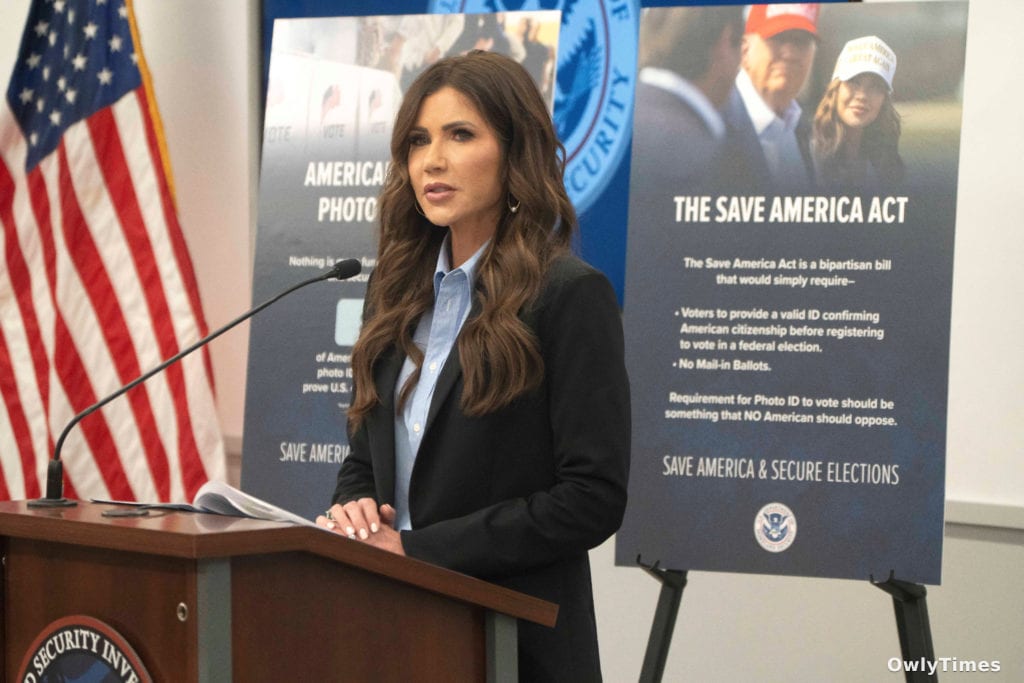
The timing is the tell. Kristi Noem’s assertion of the Department of Homeland Security’s (DHS) authority over election security, delivered February 13th while actively lobbying for the SAVE America Act, wasn’t a clarification of existing roles – it was a claim of expanded jurisdiction. This isn’t about bolstering election integrity; it’s about positioning DHS as a central player in a traditionally state-managed process, a move that fundamentally alters the balance of power and lays the groundwork for potential federal intervention. The strategic calculus is clear: leverage anxieties about election security to justify increased federal control, packaged as a protective measure.
The context is crucial. The House Republicans’ passage of the SAVE America Act on February 11th, championed by Donald Trump, demands photo ID and documentary proof of citizenship for voter registration – measures widely criticized as voter suppression tactics. Noem’s subsequent comments, framing DHS as having responsibility for “making sure that our elections are run correctly,” directly supports the narrative underpinning the Act. She stated, “Although the Constitution gives states the primary responsibility for running their elections, Congress also gives authorities and duties to the federal government…those authorities lie within my department.” This isn’t a restatement of federal support for state elections; it’s a subtle but significant redefinition of the federal role, shifting from support to oversight. Who benefits and who loses here is starkly defined: the Republican party gains a potential tool to shape electoral outcomes through federal enforcement of restrictive voting laws, while voters – particularly those lacking readily available identification or citizenship documentation – face increased barriers to participation.
Drawn from PBS.
Historical Echoes of Federal Intervention
This maneuver isn’t unprecedented. The historical parallels to the Enforcement Acts of the Reconstruction era are unsettling. Passed in the wake of the Civil War, these acts – ostensibly designed to protect Black voters from intimidation – were also used to justify federal intervention in Southern states, often with the intent of suppressing the Black vote and restoring white supremacy. While the SAVE Act’s stated aim differs, the underlying principle of leveraging federal power to influence state-level election administration remains consistent. The difference now is the justification: not racial equality, but election “security.” The 1993 National Voter Registration Act (“Motor Voter” law) also illustrates a federal attempt to influence election administration, but that law aimed to increase voter access, a direct contrast to the restrictive nature of the SAVE Act. Noem’s framing, however, positions DHS not as a facilitator of access, but as a validator of state processes – a gatekeeper, effectively.
The Ambiguity of “Vulnerabilities” and “Mitigation Measures”
The vagueness of Noem’s description of DHS’s role is deliberate. She speaks of identifying “vulnerabilities” and implementing “mitigation measures,” but offers no specifics. This ambiguity is a feature, not a bug. It allows DHS to define “vulnerabilities” broadly – potentially encompassing anything from outdated voting machines to perceived irregularities in voter rolls – and to propose “mitigation measures” that could range from technical assistance to direct federal oversight of election procedures. The lack of transparency raises serious concerns about the potential for politically motivated interventions. Consider the implications: a DHS assessment identifying “vulnerabilities” in a state with a Democratic governor could easily be used to justify federal pressure to adopt stricter voting laws, framed as necessary for election security. The $2.2 billion allocated to election security grants by the Help America Vote Act of 2002 provides a precedent for federal funding influencing state practices, but Noem’s comments suggest a move beyond funding towards direct authority.
Beyond the SAVE Act: The Long Game
The SAVE America Act is likely just the opening salvo. While its passage through the Senate remains uncertain, the political groundwork laid by Noem’s statements is far more significant. She has effectively asserted a claim to federal authority over election security, regardless of the Act’s fate. This claim will be tested. The political chess move to watch next isn’t whether the SAVE Act becomes law, but whether DHS begins to actively deploy resources and personnel to “assist” states in election administration, particularly in states perceived as politically vulnerable or resistant to federal pressure. Will DHS issue binding directives to states regarding voter ID requirements or voter roll maintenance? Will they establish a federal election security task force with the power to investigate and audit state election systems? The answer to these questions will reveal the true extent of this power grab and the future of election administration in the United States.





