
The escalation isn’t about Iran; it’s about securing Donald Trump’s domestic political position heading into the 2028 election cycle. The explicit threat to target Iranian civilian infrastructure – “every” bridge and power plant, as stated on April 7, 2026 – isn’t a deviation from established military strategy, but a deliberate provocation designed to rally a base increasingly fractured by economic anxieties and legal challenges. The question isn’t whether this constitutes a war crime, as international legal scholars are already arguing, but what leverage Trump believes this brinkmanship affords him at home. The timing, coinciding with a dip in his polling numbers and renewed scrutiny of his financial dealings, is not coincidental.
A Calculus of Domestic Control
The immediate context is the ongoing, low-intensity conflict in the Strait of Hormuz, where Iranian naval forces have repeatedly harassed commercial shipping. While disruptive, these actions haven’t risen to the level justifying a wholesale assault on Iranian infrastructure. The official justification offered by Trump – that Iranian leaders are “animals” who need to be stopped – is a rhetorical escalation, deliberately stripping the opposing side of any pretense of legitimacy. This language mirrors tactics employed during the 2016 and 2020 campaigns, framing opponents as existential threats to American values. However, the scale of the threatened response is disproportionate to the provocation, suggesting the primary audience isn’t Ayatollah Ali Khamenei, but rather the American electorate. The stated goal of deterring further harassment is secondary to the demonstrable display of strength, a performance of presidential power intended to project resolve.
This article draws on reporting from The Washington Post.
Who Benefits and Who Loses from Escalation?
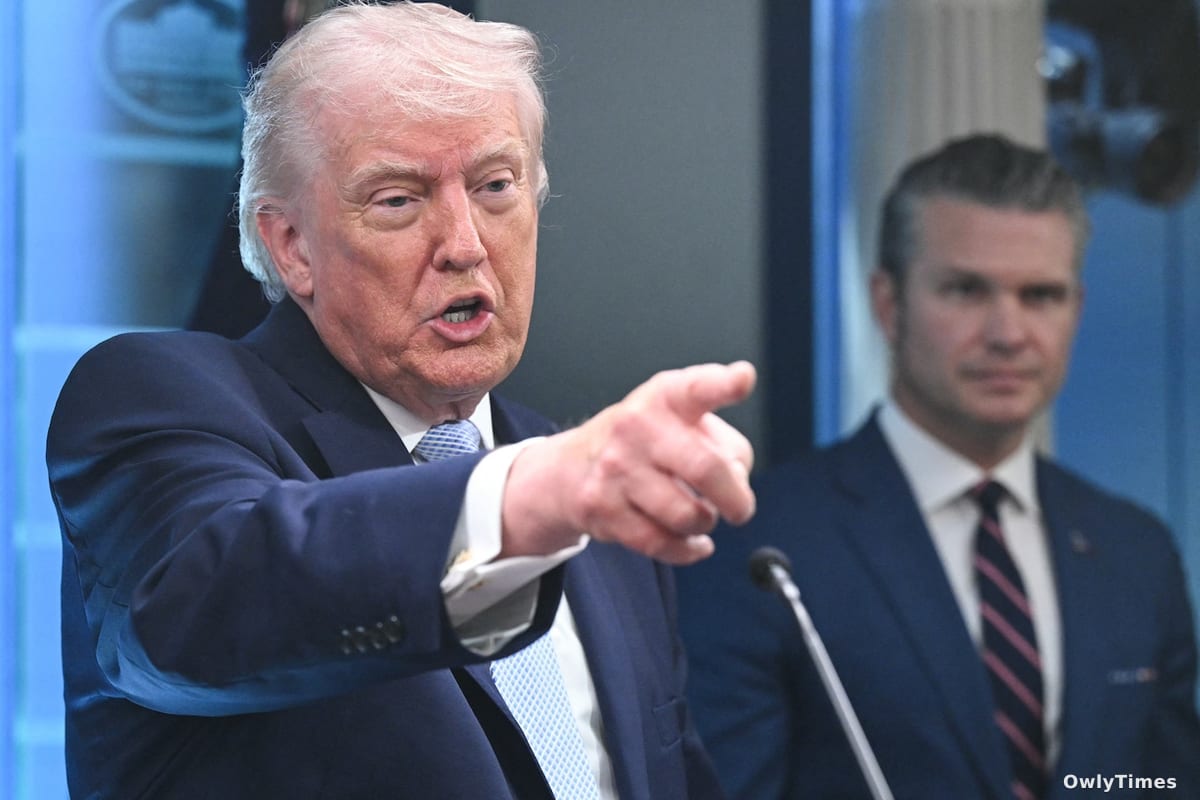
The immediate beneficiaries are, predictably, those aligned with a hawkish foreign policy. Secretary of Defense Pete Hegseth, standing alongside Trump at Monday’s press conference, represents a faction within the administration advocating for a more assertive stance against Iran. Defense contractors, anticipating increased military spending, also stand to gain. Lockheed Martin and Boeing stock both saw a modest bump following Trump’s remarks. Conversely, the potential losers are numerous. Iran, obviously, faces catastrophic damage to its infrastructure and potential for widespread civilian casualties. But the economic fallout extends far beyond Iran’s borders. A disruption to oil supplies flowing through the Strait of Hormuz – controlling roughly 20% of global oil transit – would send energy prices soaring, impacting consumers worldwide and potentially triggering a global recession. European allies, already wary of Trump’s “America First” policies, are likely to condemn the escalation, further straining transatlantic relations.
Historical Echoes of Calculated Risk
This pattern of escalating rhetoric followed by threats of overwhelming force isn’t new. The parallels to the lead-up to the 2003 invasion of Iraq are striking. Then, as now, the justification for military action was based on exaggerated claims of an imminent threat – weapons of mass destruction in Iraq, Iranian support for terrorist groups today. The key difference is the direct targeting of civilian infrastructure. While the Bush administration focused on military targets, Trump’s threat explicitly includes bridges and power plants, a tactic historically reserved for total war scenarios. This echoes the strategic bombing campaigns of World War II, but without the context of a declared war or a comparable level of existential threat. The intent, then as now, appears to be to shock and awe, to demonstrate an unyielding commitment to national interests, even at the cost of international norms. The 1962 Cuban Missile Crisis offers another, albeit colder, comparison. John F. Kennedy’s calculated brinkmanship, while fraught with risk, was aimed at achieving a specific, limited objective – the removal of Soviet missiles from Cuba. Trump’s current posture lacks that clarity of purpose, appearing instead as a broader attempt to reassert control.
The Limits of Deterrence and the Shadow of Legal Challenges
The effectiveness of this strategy hinges on the assumption that Iran will be deterred by the threat of overwhelming force. However, Ayatollah Khamenei’s regime has demonstrated a willingness to withstand significant economic pressure and has repeatedly defied international norms. A cornered Iran might respond unpredictably, potentially escalating the conflict beyond the Strait of Hormuz. Furthermore, the legal ramifications of targeting civilian infrastructure are substantial. The International Criminal Court could investigate potential war crimes, and individual military commanders could face prosecution. While Trump has consistently dismissed international legal constraints, the threat of legal action could deter some within his administration from carrying out his orders. The fact that the White House spent Monday “fending off questions” about war crimes suggests an internal awareness of the legal jeopardy.
The political chess move to watch next isn’t whether Trump follows through on his threat – the cost of doing so is too high. It’s whether he can successfully translate this manufactured crisis into a surge in domestic support. Specifically, will he leverage the perceived strength demonstrated by this escalation to deflect attention from the ongoing investigations and bolster his fundraising efforts? The next 72 hours will reveal whether this is a genuine escalation towards war, or a calculated gamble to salvage a faltering political campaign.