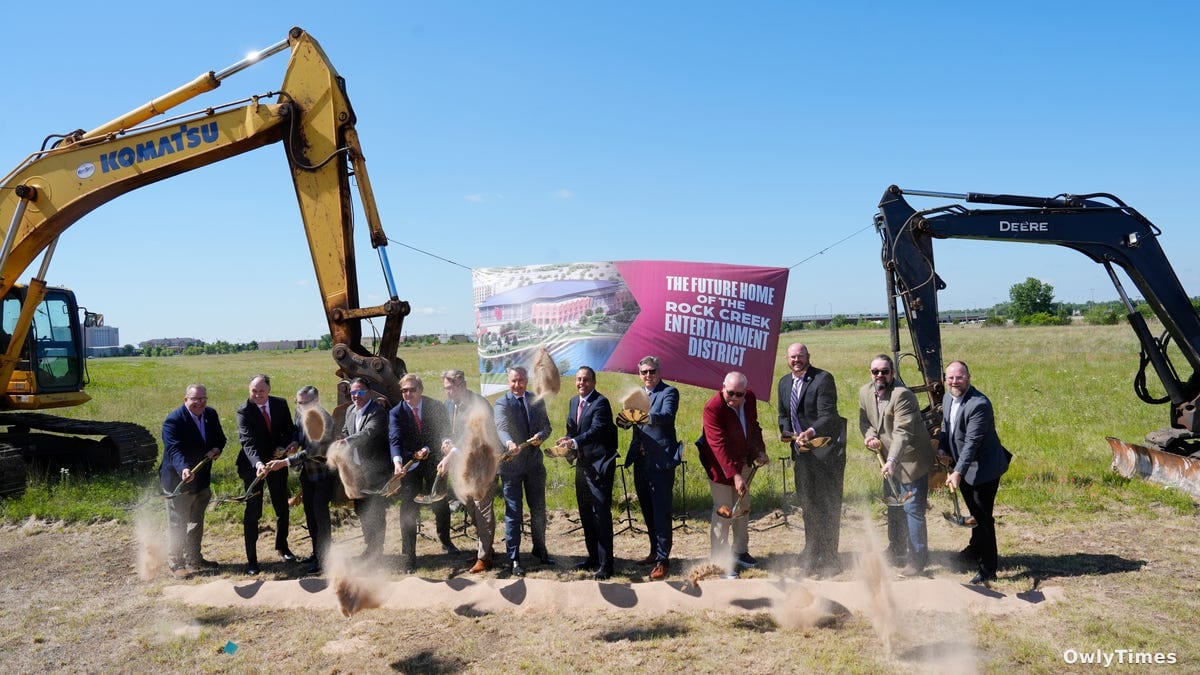

The scene in Norman, Oklahoma, was set for a triumphant moment: thirteen influential leaders, gold shovels gleaming, stood ready to break ground on a transformative project. Behind them, two excavators hoisted a sign proclaiming "The Future Home of the Rock Creek Entertainment District." The plan, like so many meticulously choreographed moments, included celebratory cannons blasting crimson streamers into the sky. But just as the $1.1 billion project itself had faced its share of false starts and unexpected detours, so too did the cannons initially sputter. It took a few extra tries to get the celebratory burst just right, a fitting metaphor for the long, complicated road that led to Tuesday’s groundbreaking.
This wasn't just another construction site. This 269-acre mixed-use district, slated to house an 8,000-seat arena for OU basketball and women’s gymnastics, represents far more than just new facilities. It’s a cultural declaration, a bid to redefine the very experience of collegiate sports and urban living in Norman. University of Oklahoma president Joseph Harroz Jr., standing front and center with his shovel, encapsulated the sentiment, telling over 200 guests, “Today is a day of celebration because today we’re worthy of history. And today, we’re making history.” This moment, as chronicled by The Oklahoman, marks the culmination of years of political wrangling and community debate, finally overcoming hurdles that once threatened to derail it entirely.
The path to this "historic" day was anything but smooth. The project navigated "hurdle after hurdle," including contentious city council debates and fierce opposition from groups like Oklahomans for Responsible Economic Development. Their challenge ultimately reached the Oklahoma Supreme Court, which deemed their petition insufficient, clearing the way for development. These battles underscore a fundamental tension often present in large-scale urban developments: the promise of economic growth versus concerns over public resources and community impact. The initial vision for the arena projected an opening as early as 2026, or at least by the 2027-28 season, but construction officially begins May 19, pushing the arena's expected opening to the 2028-29 basketball season. This delay, while significant, highlights the sheer complexity and political will required to bring such an ambitious vision to fruition.
For the University of Oklahoma, this project is nothing short of "transformational." Basketball, in particular, has long grappled with low energy and inconsistent attendance at the Lloyd Noble Center, a facility that opened "more than five decades ago." The new arena is designed to inject vitality, providing a modern environment crucial for recruiting and fan engagement. New athletic director Roger Denny, who arrived from Illinois — a program that made the Final Four this past season — understands intimately how "the details matter" in creating a true "home-court advantage." His experience, including a previous career working with a large municipality financing an entertainment district around an MLB stadium, gives him a broader perspective on the synergistic potential of such developments, linking sports to wider urban revitalization.
Beyond the Bleachers: A New Model for Collegiate Sports
The Rock Creek Entertainment District is a prime example of a growing trend in collegiate athletics and urban planning: moving beyond standalone sports venues to integrated entertainment and commercial hubs. This comprehensive approach, championed by figures like Denny, aims to create a vibrant destination that benefits the university, the city of Norman, and the broader region. The district is envisioned as a magnet for "events to retail to headquarters of businesses to new residential opportunities," as noted by former athletic director Joe Castiglione, for whom the project has been a long-standing passion. This strategy is critical in an evolving sports landscape, especially as universities look for new revenue streams in the "revenue-sharing era."
Norman's Future: A Hub of Entertainment and Opportunity
The project's scope extends far beyond the hardwood court. Danny Lovell, president and CEO of Rainier Companies, the real estate firm partnering on the project, confirmed the construction timeline for the arena. The district is set to reshape the landscape just east of I-35 on Radius Way, becoming a focal point within University North Park. This kind of integrated development signals a shift in how institutions like OU think about their role in local economies. It’s not just about winning games; it’s about creating an attractive destination that draws talent, investment, and tourism, fostering a dynamic environment for students, faculty, and residents alike in Norman, Oklahoma.
The Long Game: Investing in Experience and Legacy
For coaches like Jennie Baranczyk and Porter Moser, who advocated publicly for the project even at city council meetings, the new arena is about more than just facilities — it’s about building a legacy. Moser articulated the vision succinctly: "You have to transition from having home games to home-court advantage." This sentiment speaks to the modern athlete and fan experience, where atmosphere and amenities are paramount. The district also includes significant investment in other athletic infrastructure, with renovations to OU’s football stadium expected to begin after the 2027 season, adding approximately 4,000 club seats aimed at driving critical revenue. These parallel projects highlight a strategic, long-term commitment to elevating the entire athletic department.
The groundbreaking for the Rock Creek Entertainment District is more than just a ceremonial shovel in the dirt; it's a powerful statement about the future of collegiate sports and community development. It’s a testament to perseverance through political headwinds and a bold bet on the power of integrated design to transform a city and an athletic program. As construction moves forward, the university will be actively pursuing sponsorship opportunities for the arena, which still awaits a name. This next phase of development, alongside the planned football stadium renovations, will be the clearest indicator of whether this ambitious vision can truly deliver on its promise to create an unparalleled experience for athletes, fans, and the entire community for decades to come.