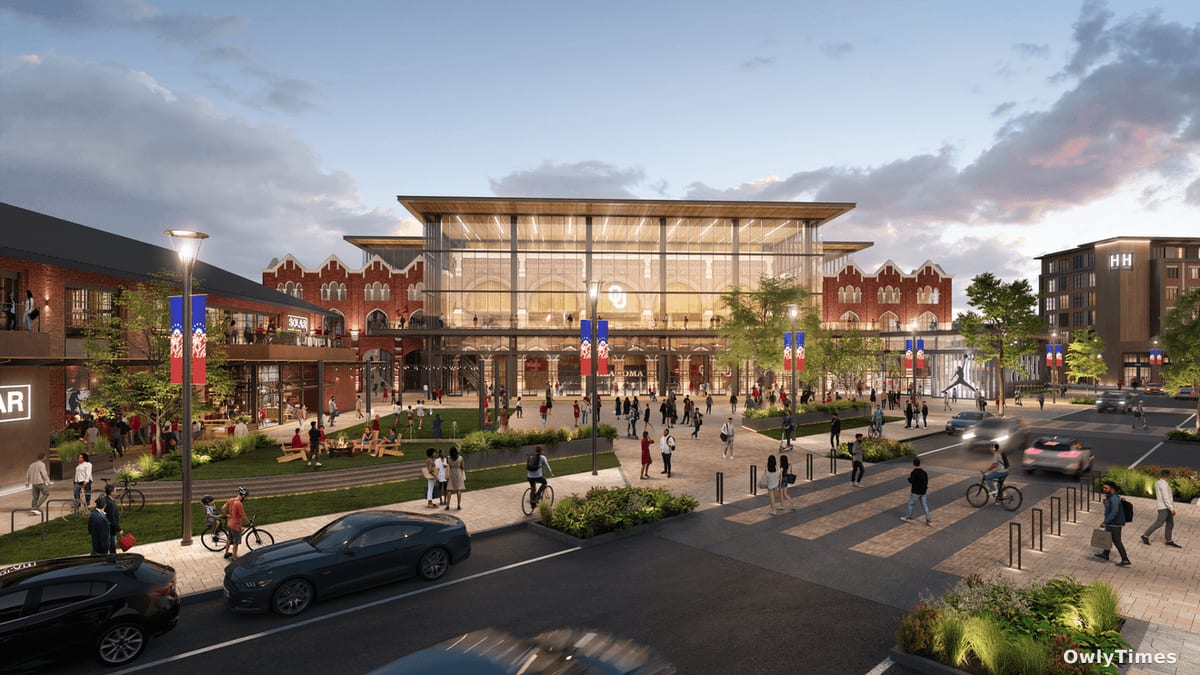

The glint of ceremonial shovels reflected the bright Oklahoma sun, marking the official groundbreaking of the Rock Creek Entertainment District in Norman. It was a moment brimming with the kind of civic pride and grand pronouncements that usually accompany a $1.1 billion investment. Yet, beneath the fanfare and optimistic speeches, a subtle tremor of dissent rippled through the community, a reminder that even the most ambitious visions can ignite fierce local debate. This wasn't just another development; it was a cultural flashpoint, pushing the boundaries of how cities grow and who gets a say.
Shovels Break Ground, But Not All Resistance
The Tuesday groundbreaking heralded a massive 269-acre mixed-use destination, promising a transformative future for Norman and Cleveland County. University of Oklahoma President Joseph Harroz Jr. spoke passionately, describing the district as a "defining moment" years in the making. He framed the project as a natural extension of the university's growth, aligning with a "proven formula" for "live, work, and play" environments designed to attract and retain talent. This narrative positions the university not just as an academic institution, but as a key architect of regional economic destiny, tasked with building "communities that create lasting opportunity."
However, the path to this ceremonial moment was anything but smooth. The project has been tagged as "controversial," largely due to vocal opposition from residents who felt sidelined from the decision-making process. These citizens argued that a development of this scale, especially one utilizing tax increment financing (TIF) to the tune of $600 million, warranted direct city-wide input. Their efforts to force a public vote gathered signatures, but the Oklahoma Supreme Court ultimately ruled their petition "legally insufficient," effectively silencing their direct democratic recourse and allowing the Norman City Council's September vote to proceed.
OU's Bold Bet: A Blueprint for "Live, Work, Play"
The vision for the Rock Creek Entertainment District extends far beyond a typical shopping center. It's conceived as a year-round destination, a holistic ecosystem blending hospitality, office space, retail, dining, residential living, and public gathering areas. This integrated approach reflects a broader societal trend towards creating self-contained urban hubs where every aspect of daily life is interwoven, reducing commutes and fostering a sense of localized community. It's a strategy increasingly adopted by cities looking to retain younger generations and attract new businesses.
At its heart, the district will feature a state-of-the-art, approximately 8,000-seat arena. This arena isn't just for concerts and conventions; it's slated to become the new home for University of Oklahoma men’s and women’s basketball games and women’s gymnastics meets, intertwining sports and entertainment directly into the district's identity. This convergence of university athletics, professional entertainment, and urban development highlights a growing trend where major institutions leverage their cultural capital to drive significant economic and infrastructural projects. More information about the university's role in the state's development can often be found on the University of Oklahoma website.
The Arena and Its Economic Ripple
Organizers are banking on the district to be a powerful economic engine. They project it will generate more than 3,000 construction and permanent jobs across hospitality, retail, and operations over its lifetime. This promise of job creation is a powerful political tool, often invoked to garner support for large-scale developments. Cleveland County Commissioner #1 Rod Cleveland underscored this point, calling the groundbreaking a "long-term investment in Cleveland County" that will "bring jobs and support businesses" for families.
The ambition is clear: to transform Norman into a regional draw, attracting visitors from across Oklahoma and beyond. City of Norman Ward #8 Council Member Scott Dixon echoed this sentiment, stating, "We’re not just breaking ground on Rock Creek Entertainment District – we’re laying the foundation for jobs, for economic vitality, and for experiences that will bring people together for generations." The rhetoric paints a picture of intentional, collaborative community building, yet it starkly contrasts with the residents' claims of insufficient input.
Beyond the Groundbreaking: The Unresolved Tensions
The Rock Creek Entertainment District represents a fascinating, and at times contentious, crossroads of economic ambition, university influence, and local governance. While the shovels have officially broken ground, signifying the start of construction, the underlying tensions around public participation and the allocation of significant public funds remain. The project, as reported by OKCFox, is moving forward despite the public outcry that reached the state's highest court.
As this massive development takes shape, it will serve as a critical case study for how large-scale "live, work, play" districts integrate into existing communities, both physically and socially. The true measure of its success won't just be in the economic metrics or the vibrancy of its arena, but in how it ultimately addresses the cultural and democratic concerns that marked its controversial inception. The ongoing evolution of this $1.1 billion project will undoubtedly continue to shape the dialogue around urban development, public engagement, and the powerful partnerships between universities and local governments for generations to come.