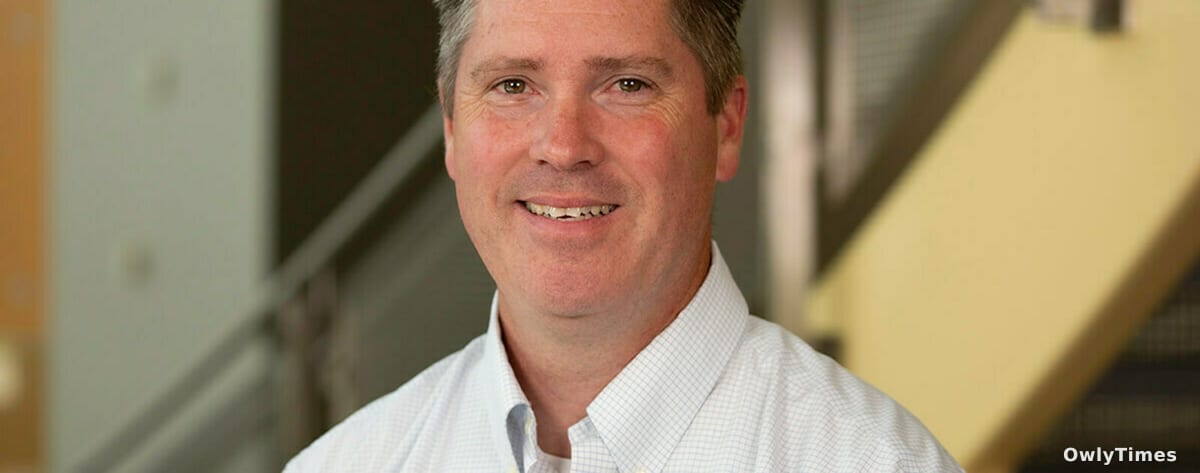

The pursuit of regenerative medicine often feels poised on the brink of breakthrough, yet translating laboratory success into widespread clinical application remains a formidable challenge. The appointment of John Fisher as the new director of the Bioengineering & Life Sciences Initiative (BELS) at the University of Notre Dame isn’t simply a personnel change; it signals a strategic recalibration within a field demanding both innovative science and a clear pathway to tangible patient benefit. While headlines announce a leadership transition, the deeper story is about how Notre Dame intends to position itself as a central hub for accelerating this translation – a process notoriously slow and expensive.
Fisher arrives from the University of Maryland, where he chaired the Fischell Department of Bioengineering and earned the institution’s highest faculty honor, Distinguished University Professor, in 2024. His expertise lies at the intersection of computational modeling, tissue engineering, and bioprinting – areas critical for recreating functional tissues and organs. This isn’t about futuristic promises of growing replacement limbs; it’s about building increasingly sophisticated models to understand how tissues develop and degrade, and then leveraging that knowledge to design better therapies. His lab’s focus on bioreactors, for example, isn’t about creating artificial organs in a vat, but about optimizing the environment for cells to grow and organize themselves into functional units.
The timing of Fisher’s arrival is particularly noteworthy. BELS, a joint venture between the College of Engineering and the College of Science, launched in 2024 and has already demonstrated early success, distributing $1.25 million in seed funding to multidisciplinary teams tackling major health challenges like cancer and cardiovascular disease. This initial investment isn’t a massive sum in the context of biomedical research – the National Institutes of Health alone allocates tens of billions annually – but it’s strategically directed. The focus on “seed” funding suggests a deliberate effort to foster high-risk, high-reward projects that might not attract traditional grant funding, and to encourage collaboration across departmental silos. The recent acquisition of a Glacios 2 cryo-TEM microscope, a cutting-edge tool for visualizing biological structures at near-atomic resolution, further underscores this commitment to providing researchers with the infrastructure they need to push boundaries.
However, the narrative of seamless progress requires careful consideration. Paul Bohn, the inaugural director of BELS, retired in December, leaving a strong foundation, as John T. McGreevy, Notre Dame’s Provost, acknowledges. But a change in leadership invariably brings a shift in priorities and approach. While McGreevy emphasizes Fisher’s alignment with the initiative’s “trajectory,” the specific contours of that trajectory under his direction remain to be seen. The University’s stated ambition to become a “leading global Catholic research university” is broad, and translating that aspiration into concrete research outcomes will require navigating the complex landscape of academic politics, funding constraints, and the inherent uncertainties of scientific discovery.
See the original news.nd.edu story for the full account.
Fisher’s personal connection to the Midwest and his Irish Catholic upbringing, as he shared, are more than just biographical details. They speak to a broader emphasis on research with societal impact, a value deeply ingrained in Notre Dame’s mission. He explicitly frames his work as a means of “positively impacting society,” a sentiment echoed by Patricia Culligan, Dean of the College of Engineering, who highlights the importance of advancing research and training in bioengineering. This focus on accessibility and ethical considerations is crucial, particularly in a field like regenerative medicine where the potential for both benefit and inequity is significant. The question now is whether this commitment will translate into a deliberate effort to address health disparities and ensure that the fruits of BELS’s research are available to all, not just those with access to advanced medical care.
Looking ahead, the critical next step isn’t simply more research, but a more robust system for evaluating the clinical potential of promising discoveries. Will BELS prioritize the development of translational research programs, perhaps partnering with local hospitals and clinics to facilitate clinical trials? And, crucially, how will the initiative address the notoriously high failure rate of biomedical innovations – the vast majority of promising lab results never make it to market? The success of Fisher’s tenure will depend not only on the brilliance of the science conducted at Notre Dame, but on its ability to bridge the gap between the bench and the bedside, and to deliver on the promise of regenerative medicine for all.