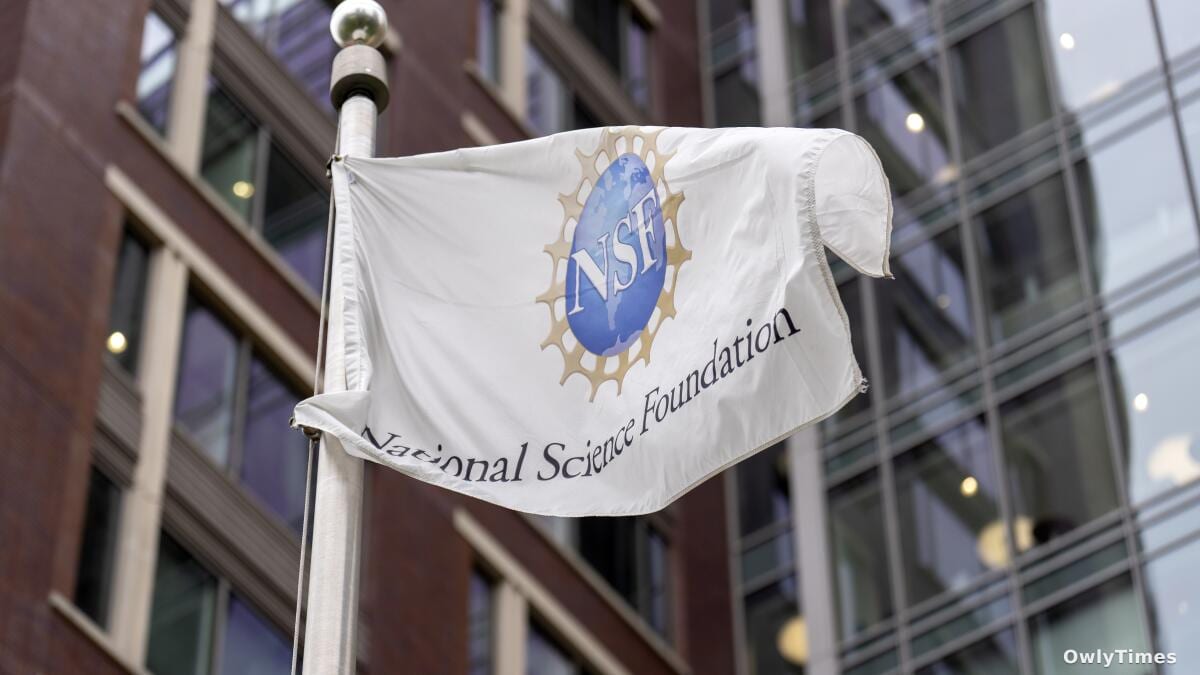

The independence of American scientific research, a cornerstone of national strategy since the post-World War II era, faces a sudden and profound governance crisis. On Friday, the White House issued a directive terminating all 22 current members of the National Science Board (NSB), the independent body tasked with overseeing the National Science Foundation (NSF) and providing expert counsel to both the president and Congress. This move effectively clears the oversight mechanism of an agency that, for over 75 years, has served as the primary engine for fundamental research and engineering in the United States.
What the headlines describe as a "mass firing" is, in practice, a fundamental shift in how the government manages a budget exceeding $9 billion. According to Yolanda Gil, a principal scientist at the USC Information Sciences Institute who has served on the board since 2024, the members received a curt, uniform email from the presidential personnel office. The message, sent on behalf of President Donald J. Trump, stated their positions were terminated "effective immediately." Keivan Stassun, a professor of physics and astronomy at Vanderbilt University and a board member since 2022, described the action as a "wholesale evisceration of American leadership in science and technology globally."
The scientific community is currently navigating a significant contradiction: while the administration has offered no public explanation for the dismissals, the timing suggests a move toward centralizing control over federal research priorities. Stassun notes that with the NSB removed, the administration could bypass traditional peer-review governance and exercise direct influence through the Office of Management and Budget. This bypasses the structural "impediments" meant to ensure that taxpayer-funded science remains independent of shifting political cycles.
Governance in a Vacuum
The removal of the board members arrives during a period of extreme administrative instability for the agency. The position of NSF director has remained vacant since Sethuraman Panchanathan resigned in April 2025. Furthermore, the administration has previously nominated James O’Neill, a venture capitalist and investor, to lead the foundation. O’Neill’s nomination has drawn sharp criticism from figures like Dr. Julian Reyes of the Union of Concerned Scientists, who noted that O’Neill would be the first director in the agency's history without a background as a scientist or engineer.
This transition marks a departure from the traditional model of NSF leadership, which has historically prioritized research expertise to maintain the integrity of the peer-review process. Gil suggests that the recent personnel reductions at the agency already threaten that process, potentially shifting power toward political appointees rather than objective scientific review. This follows a pattern of similar removals across federal scientific advisory boards, including previous dismissals at the National Institutes of Health and the Centers for Disease Control and Prevention.
Limitations to Consider
While the dismissals have sparked alarm regarding the future of basic research, the full operational impact remains to be seen. The White House has not yet provided information on whether the board will be reconstituted or what specific criteria might guide future appointments. Additionally, while the administration has proposed significant budget reductions over the last two years, the final allocation of funds remains a matter of ongoing negotiation with Congress. The tension lies between the administration’s expressed interest in targeted outcomes—such as specific investments in artificial intelligence and infrastructure—and the board’s historical mandate to support broad, foundational scientific inquiry.
The Path Toward Accountability
The next indicator of the agency's direction will be the confirmation process for James O’Neill. His eventual appearance before Congress for a hearing will likely serve as the primary forum for the administration to articulate its new vision for the NSF. Whether this results in a shift toward a more centralized, commercially-focused agency or a total departure from the foundational research models of the past depends on how Congress asserts its oversight in the coming months. As Stassun observes, the core of the issue is whether the U.S. will continue to invest in the "human mind and creative human genius" or prioritize the rapid synthesis of existing data through large-scale technological systems.