
The sudden termination of the entire 22-member National Science Board (NSB) last week poses a fundamental question for the American research enterprise: Can an institution designed to provide independent, expert-led oversight survive when its internal check-and-balance mechanism is dismantled overnight? While the administration characterizes this mass firing as a technical necessity, the scientific community views it as a definitive break in the continuity of federal research oversight.
A Structural Shift in Oversight
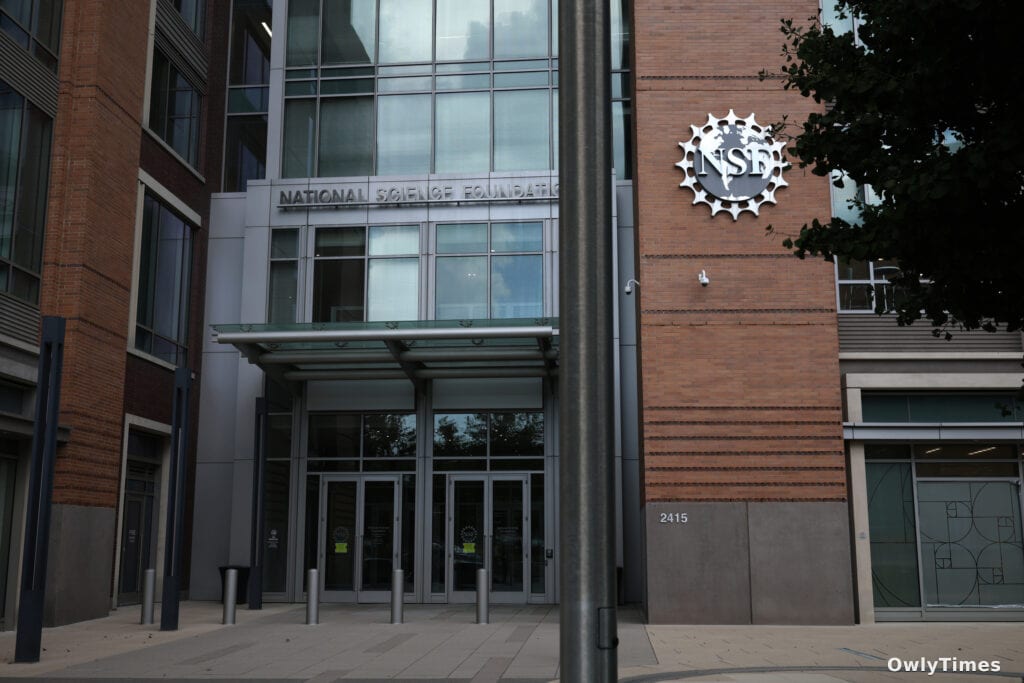
The NSB, established by Congress in 1950, serves as the governing body for the National Science Foundation (NSF). Its primary role is to set policy and ensure that the multi-billion dollar agency remains insulated from short-term political volatility. By firing all 22 members simultaneously—communicated via an email declaring their positions “terminated, effective immediately”—the administration has effectively placed the NSF under direct, unmediated executive control.
This move follows a broader pattern of administrative actions since January 2025. According to Carlos Javier Martinez, a senior climate scientist at the Union of Concerned Scientists, this latest dismissal is less of a standalone event and more a continuation of an ongoing "onslaught of attacks on science" that has included the shuttering of research facilities and the cancellation of grants. Geraldine Richmond, a former NSB member and presidential chair in science at the University of Oregon, noted that the board’s value lay in its ability to provide non-partisan counsel to both Congress and the President. With the board now replaced by the placeholder notice "pending new appointments" on the NSF website, that advisory pipeline is effectively dormant.
The Legal Justification vs. Scientific Reality
The White House has defended the mass termination by citing a 2021 U.S. Supreme Court case regarding administrative patent judges. A White House official stated that the ruling raised constitutional questions about whether non-Senate-confirmed appointees, such as the board members, can exercise the authorities granted to them by Congress. The administration signaled an intent to work with the Hill to update the relevant statutes.
However, legal experts suggest this justification lacks historical or judicial precedent in this context. Lauren Kurtz, executive director at the Climate Science Legal Defense Fund, labeled the argument a "smoke screen," noting that the statute governing the board was already updated as recently as 2022. The tension here lies between the administration’s stated desire to align the board with its interpretation of constitutional authority and the community’s view that the board’s independence is being weaponized against it.
Limitations to Consider
It is vital to distinguish between the administration’s claim of procedural compliance and the systemic impact on research. While the White House asserts that the NSF’s work continues uninterrupted, the loss of the board creates a void in long-term strategic planning. The primary limitation of this current situation is the lack of transparency regarding the selection criteria for future members. Without the traditional, staggered six-year term structure that ensures institutional memory and scientific diversity, there is a legitimate concern that the board will be reconstituted with individuals chosen for ideological alignment rather than scientific eminence.
The Cost of Curiosity-Driven Research
The removal of the board signals a potential shift away from curiosity-driven science toward research that prioritizes immediate industrial or commercial application. Jacquelyn Gill, a paleoecologist at the University of Maine, characterized the firing as "one of the darkest moments" for the scientific community, warning that a focus on industry-favored outcomes leaves critical but less-profitable fields like biodiversity and pollution monitoring vulnerable.
The next steps for the scientific community will hinge on the legislative process. The administration has expressed a desire to work with Congress to update the governing statutes of the NSB, and the nature of those proposed changes will serve as the next primary indicator of the board’s future autonomy. Whether the board is reconstituted as an independent body of experts or an extension of executive policy will determine the trajectory of federal research funding and the health of the American scientific pipeline for the coming decade.