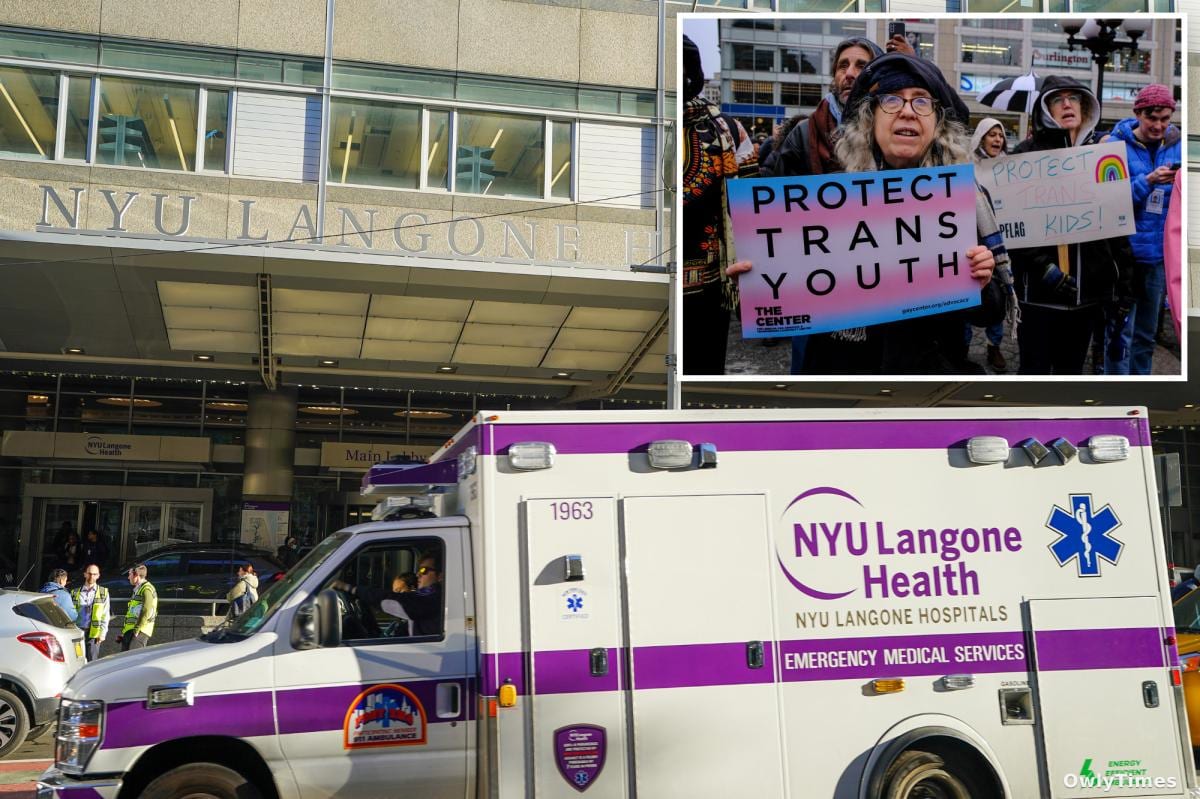

The quiet dismantling of specialized medical programs, often framed as budgetary or logistical decisions, reveals a stark reality: healthcare access isn’t solely a clinical matter, but deeply interwoven with the political and financial pressures facing institutions. The recent decision by NYU Langone Health to permanently close its Transgender Youth Health Program isn’t simply a hospital restructuring; it’s a direct consequence of threatened federal funding cuts stemming from the Trump administration’s policies, and it highlights a growing tension between providing comprehensive care and navigating a shifting regulatory landscape. While headlines declare the program’s end, the nuance lies in understanding why this happened now, and what it signals about the future of gender-affirming care for young people.
Beyond the Headlines: What NYU Langone’s Closure Actually Means
The official statement from NYU Langone cites the departure of their medical director alongside the “current regulatory environment” as reasons for the program’s closure. This is a carefully worded explanation. The “regulatory environment” refers to a late-2023 move by the Trump administration to potentially withhold federal funding from institutions offering gender-affirming care to minors. While the Biden administration has since reversed some of these policies, the threat of future restrictions – and the financial risk associated with challenging them – remains potent. It’s crucial to note that the program isn’t vanishing entirely; the hospital’s website now directs visitors to a broader “Gender & Sexuality Service,” suggesting a continuation of some care, but not the specialized, multidisciplinary approach previously offered to transgender youth. This shift, while presented as a continuation of service, represents a significant reduction in access to dedicated expertise. The hospital emphasizes that pediatric mental health care will continue, but hormone therapy and other medical interventions specific to gender transition will no longer be provided directly to minors.
See the original the New York Post story for the full account.
The Financial Calculus of Healthcare Provision
The situation at Baystate Health in Massachusetts mirrors that of NYU Langone, albeit with a slightly different approach. Baystate Health, the largest healthcare system in western Massachusetts, has stopped prescribing gender-affirming hormone treatments to those under 18, redirecting patients for prescriptions while continuing counseling services. Their rationale, as stated to the Boston Globe, centers on protecting access to Medicaid and Medicare funding, which comprise nearly 70% of their patient base. This reveals a critical point: hospitals, even those committed to inclusive care, operate within complex financial constraints. The potential loss of hundreds of millions in federal funding isn’t a hypothetical concern; it’s a concrete risk that directly impacts their ability to serve the broader community. This isn’t necessarily about opposition to gender-affirming care itself, but a pragmatic calculation of financial sustainability. The hospital’s spokesperson explicitly frames the decision as a means of “preserving access to care for these individuals and all others in our community,” highlighting the difficult trade-offs institutions are forced to make.
A Local Political Response and Broader Implications
The timing of these closures is particularly noteworthy in New York City, given the commitments made by Mayor Zohran Mamdani. Prior to his election, Mamdani pledged to allocate $65 million in taxpayer funds to public providers supporting transgender New Yorkers, including minors. This promise now faces a challenging reality. While the city’s funding could potentially offset some of the gaps left by NYU Langone’s decision, it won’t replicate the specialized expertise of a major academic medical center. Furthermore, relying solely on municipal funding creates a precarious situation, vulnerable to future political shifts. The closures also raise questions about equitable access to care. Wealthier families may be able to travel to states with more supportive policies, while those with limited resources will face significant barriers. This exacerbates existing health disparities and reinforces systemic inequalities.
Limitations to Consider and Future Research
It’s important to acknowledge the limitations of drawing broad conclusions from these two cases. NYU Langone and Baystate Health are large institutions operating in specific regional contexts. Their decisions may not be representative of all hospitals across the country. Additionally, the long-term impact of these closures on the health and well-being of transgender youth remains to be seen. We lack robust data on the effects of interrupted care, the psychological consequences of limited access, and the potential for increased rates of mental health crises. Future research should focus on tracking these outcomes, as well as examining the effectiveness of alternative care models, such as telehealth and mobile clinics.
The critical question moving forward isn’t simply whether hospitals will continue to offer gender-affirming care, but how they will do so in an increasingly polarized and financially constrained environment. Will we see a further consolidation of specialized services in states with more supportive policies, creating geographic deserts of care? Or will innovative funding models and legal challenges emerge to protect access for all transgender youth, regardless of their location or socioeconomic status? The coming years will reveal whether these closures are isolated incidents or the beginning of a broader trend, and the answer will have profound implications for the future of healthcare equity.





