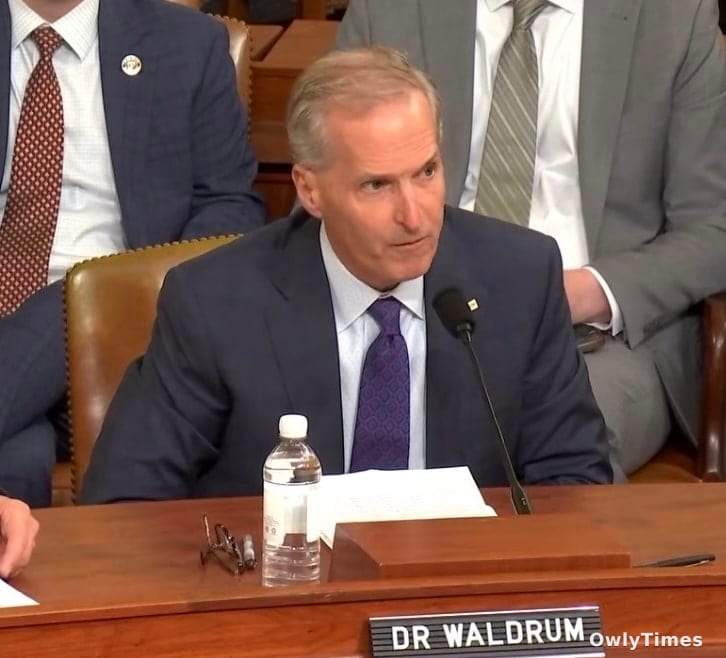

The question of whether federal health policy can effectively bridge the divide between urban centers and rural hinterlands remains one of the most pressing challenges in American medicine. While national health metrics often aggregate data to show broad trends, they frequently obscure the distinct, precarious realities of regions where geography and economic hardship converge. Today, the U.S. House Committee on Ways and Means heard testimony that attempts to shift this conversation from theoretical models to the logistical ground game of rural survival.
Dr. Michael Waldrum, a critical care physician and chief executive officer of ECU Health, presented a case for why standardized, "one size fits all" federal regulations may be inadvertently accelerating the degradation of rural healthcare. The central argument posits that rural safety net systems are not simply smaller versions of urban hospital networks; they are entities governed by different demographic and financial variables. When these systems are forced to navigate the same regulatory environment as well-funded metropolitan centers, the structural friction often leads to hospital closures and a loss of community-level care.
The Reality of the Rural Safety Net
What the testimony actually highlights is the tension between the necessity of consolidation and the mission-driven mandate of nonprofit providers. While some headlines focus on the financial pressures of the health sector at large, the data provided by Dr. Waldrum reveals a more localized crisis. Serving more than 1.4 million people across a 29-county region in eastern North Carolina, ECU Health operates under the specific burden of managing a population that, if considered an independent state, would rank among the poorest and sickest in the nation.
The study—or in this case, the institutional experience—finds that rural providers face a specific convergence of risks: an aging patient demographic, stagnant population growth, and severe workforce shortages. These are not merely administrative hurdles; they are life-or-death variables that dictate whether a community can maintain an emergency room or a primary care clinic. Dr. Waldrum noted that his system’s "hub and spoke" model, which supports eight hospitals and over 1,200 providers, was constructed not as a corporate strategy for scale, but as a defensive measure to maintain a basic safety net where profit-driven competitors have retreated.
Limitations to Consider
It is vital to recognize that these insights are derived from the perspective of a specific nonprofit, academic-affiliated system. While the testimony offers a crucial window into the challenges of rural health, the effectiveness of the proposed "targeted solutions" remains a subject of intense legislative debate. The primary limitation in assessing these claims is the inherent difficulty in isolating which aspects of rural decline are driven by federal policy versus those stemming from regional economic stagnation. Furthermore, while the argument for specialized rural payment models is compelling, the fiscal impact of such adjustments on the federal budget remains an open question for policymakers.
Future Policy and Regulatory Engagement
The path forward hinges on whether Congress can draft legislation that acknowledges the unique realities of the 66 million Americans living in rural areas. The next signal of progress will be the specific legislative language introduced in upcoming sessions of the House Committee on Ways and Means. Whether these policies successfully prioritize geographic equity over broad-stroke efficiency will determine if systems like ECU Health can continue to provide essential services to vulnerable populations, or if the current trend of rural care erosion will continue unabated.