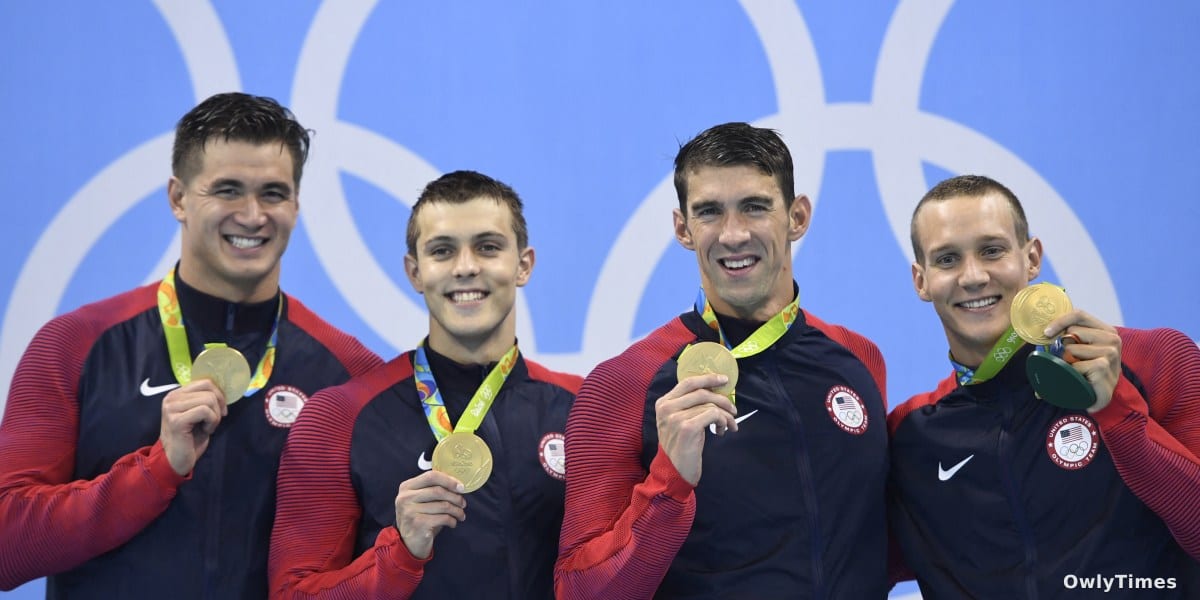

The air in Paris still tasted of victory and exhaustion as the 2024 Olympics drew to a close, but for Ryan Held, the champagne had already gone flat. Not from celebration’s end, but from a swift pivot. Just days after securing his second Olympic gold in the 4x100m freestyle relay – a triumphant echo of his 2016 Rio success alongside Michael Phelps – Held announced his retirement from competitive swimming. It wasn’t a story of burnout or injury, but of calculated ambition, a leap not away from peak performance, but into a world where that same drive could be unexpectedly valuable: the high-stakes arena of Wall Street. Held, along with a growing cohort of Olympians, is now a risk analyst at Goldman Sachs, a $280 billion bank that’s actively recruiting athletes, even those lacking traditional financial backgrounds. This isn’t just a feel-good story about second acts; it’s a revealing look at how the very definition of “qualified” is being reshaped, and what it says about the demands of success in the 21st century.
The shift is particularly striking given Goldman Sachs’ historically selective hiring practices. In 2025 alone, over a million experienced candidates applied for open roles, with a mere 2,600 summer internships awarded – less than 1% acceptance rate. The bank isn’t lowering its standards; it’s redefining them. Jacqueline Arthur, head of human capital management at Goldman Sachs, explains the strategy plainly: “Olympians and competitive athletes generally are a really interesting talent pool for us, given these incredibly valuable attributes like resilience, leadership, ability to manage time, and performing at the highest level under pressure.” These aren’t “soft skills” tacked onto a resume; they’re the core competencies forged in the crucible of elite competition, qualities Arthur argues are “valuable in any career, but especially here.” It’s a fascinating inversion – a firm known for its rigorous analytical demands is prioritizing traits often associated with physical prowess and mental fortitude.
This article draws on reporting from Fortune.
Held’s journey exemplifies this new approach. Initially envisioning a career in environmental conservation following his athletic retirement, he stumbled upon Goldman Sachs through a conversation with a fellow swimmer. “I didn’t study finance,” he admits to Fortune, “But after talking with him, I discovered that there’s so much more to the bank.” He was surprised to find a culture that valued “perseverance, grit, determination” above all else, a place where a science degree and Olympic medals could outweigh a lack of financial pedigree. This isn’t simply about offering charity to retiring athletes; it’s about recognizing a unique skillset honed through years of relentless training and competition. The bank isn’t looking for future financiers, they’re looking for individuals who have already mastered the art of high-performance, individuals who understand what it takes to consistently operate at the very edge of their capabilities.
This isn’t a new phenomenon for Goldman Sachs. Rob Williams, now a managing director in global banking and markets, transitioned to the firm in 2012 after winning a silver medal in rowing at the London Olympics. Williams’ story highlights another crucial element: the economic realities of professional athletics. “Rowing is not a well paid sport,” he bluntly states. “It can be okay for a few years, but you’re not going to be retiring off the back of being good at rowing.” For many athletes, a post-Olympic career isn’t a matter of choice, but of necessity. But Goldman Sachs offers more than just financial security; it offers a comparable level of intellectual and emotional stimulation. Williams sought a role with “defined parameter success,” a structure that mirrored the clear-cut goals and immediate feedback of competitive rowing. He found that in the fast-paced world of foreign exchange forward trading, a world that demanded the same intensity and strategic thinking as his former sport.
Beyond the individual stories, this trend speaks to a broader cultural shift. We live in an era obsessed with “transferable skills,” a recognition that the rigid boundaries between disciplines are increasingly porous. The emphasis on resilience, adaptability, and emotional intelligence – qualities traditionally undervalued in the hyper-rational world of finance – is a direct response to the volatility and complexity of the modern economy. Goldman Sachs isn’t just hiring athletes; it’s acknowledging that the skills required to thrive in a rapidly changing world are often developed outside of traditional academic or professional pathways. The bank is betting that the discipline of a swimmer, the strategic thinking of a rower, or the composure of a Super Bowl champion are just as valuable as an MBA from a top-tier business school.
The question now isn’t if other industries will follow suit, but how. Will we see a broader embrace of non-traditional backgrounds in fields historically dominated by specific credentials? Will companies begin to actively seek out individuals with demonstrated expertise in areas like teamwork, problem-solving, and pressure management, regardless of their formal training? And perhaps most importantly, will this shift lead to a more diverse and innovative workforce, one that benefits from the unique perspectives and experiences of those who have pushed themselves to the limits in arenas beyond the boardroom? The gold medalists are trading their swim caps for power suits, and the ripple effect could redefine what it means to be “qualified” for success in the years to come.