
$80 Billion Gap Drives U.S. Pivot to Pacific Investment
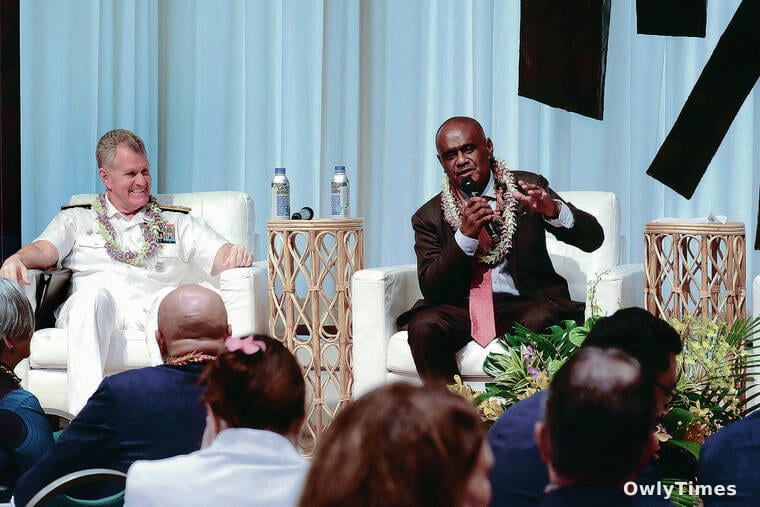
The Pacific Islands are poised to become the next major theater in great power competition, but the economic dimension – a staggering $80 billion investment gap – is the key to understanding the urgency behind this week’s Pacific Agenda summit at the East-West Center in Honolulu. While headlines focused on diplomatic handshakes between Jeremiah Manele, Prime Minister of the Solomon Islands, and U.S. officials, the core issue driving the summit wasn’t simply countering China’s influence, but addressing a critical shortfall in private sector capital flowing to the region. This isn’t charity; it’s a calculated move to secure strategic positioning through economic leverage.
Original reporting: staradvertiser.com.
The summit, bringing together leaders from over a dozen Pacific nations and 80 companies including giants like Salesforce, Boeing, and SpaceX, wasn’t a spontaneous event. It’s a direct response to the growing economic footprint of China’s Belt and Road Initiative (BRI) in the region. While the U.S. has focused heavily on military aid – exemplified by infrastructure investments in Palau geared towards potential conflict – Pacific Island nations are explicitly requesting a different kind of support. As Palauan President Surangel Whipps Jr. bluntly stated to the Honolulu Star-Advertiser, “You’re absent [in the private sector], but China’s there.” This disparity isn’t lost on Washington, with U.S. Deputy Secretary of State Christopher Landau acknowledging the need to “up our game” after observing China’s “aggressive” approach.
Follow the money: U.S. military investment in the region, while substantial, doesn’t translate directly into broad-based economic development. The focus on port renovations, radar installations, and weapons stockpiling in Palau, coupled with a new fuel depot in Papua New Guinea, serves a clear strategic purpose, but doesn’t address the fundamental needs articulated by island leaders – reliable electricity, access to markets for farmers, and digital connectivity for young people. These are the issues Manele highlighted, framing basic infrastructure as inseparable from “investment and security.” The $80 billion figure, representing the estimated infrastructure needs across the Pacific Islands over the next decade, underscores the scale of the challenge and the opportunity for U.S. companies. This isn’t simply about competing with China on project-by-project basis; it’s about establishing a long-term economic ecosystem that aligns Pacific Island nations with U.S. interests.
The summit yielded initial commitments, including a U.S. Trade and Development Agency-funded feasibility study for a hospital relocation project in Palau, spearheaded by local firm Architects Hawaii Ltd., and several memorandums of understanding for future projects. However, these are preliminary steps. Landau himself cautioned that measuring the summit’s impact will take “years” as deals materialize. The tension lies in the conflicting priorities of the Trump administration’s rollback of environmental regulations and denial of climate change, directly contradicting the existential threat posed to these island nations. Manele’s keynote address, declaring climate change “the greatest security threat,” highlights this fundamental disagreement. While the U.S. offers potential investment in areas like underwater geothermal energy for Tonga, as discussed by Prime Minister Fatafehi Fakafanua, the broader policy context raises questions about the sincerity of long-term commitment.
The call from Manele for a Pacific trade investment office in the U.S., mirroring existing offices in New Zealand, Australia, China, and Japan, is a critical indicator. It’s not simply about facilitating trade; it’s about establishing a dedicated channel for Pacific Island nations to advocate for their interests within the U.S. system. This request, coupled with Fakafanua’s observation that the summit is a “catalyst” for deepening relationships, suggests a strategic shift towards a more proactive and sustained engagement. What this means for your wallet: expect increased scrutiny of U.S. foreign aid and investment policies in the Pacific, and potentially, a ripple effect on U.S. companies seeking to capitalize on infrastructure projects in the region. Investors should watch for the establishment of this proposed trade office and, more importantly, whether the U.S. government can reconcile its climate policy with the urgent needs of its Pacific Island partners – the answer to that question will determine whether this summit was a genuine turning point or simply another diplomatic gesture.