
A $1.3 Million Safety Net Signals California’s Risky Bet on Heli-Skiing
$169,000. That’s the upfront investment Sweetwater Heli, California’s newest and only heli-skiing operation, made in avalanche safety equipment alone – specifically, fourteen $1,300 BCA Float E2-15 avalanche airbag backpacks for its initial clients. This isn’t just about precaution; it’s a calculated signal to a wary market and regulatory environment that California’s long-dormant heli-skiing industry is attempting a revival, and it’s doing so with a heightened awareness of the inherent risks. Follow the money, and you’ll find a story not just of entrepreneurial ambition, but of navigating a complex web of environmental regulations, inconsistent snowpack, and a history of failed ventures.
See the original outsideonline.com story for the full account.
The launch of Sweetwater Heli on January 31, 2026, represents the eighth commercial heli-skiing operation in the contiguous United States, a market previously capped at seven. While the state boasts 39 million residents and some of the nation’s largest ski resorts, the accessibility of untouched powder via helicopter has remained stubbornly limited. This isn’t due to a lack of terrain – the Sweetwater Mountains, a range in Northeastern California, offer 180,000 acres of potential runs – but rather a legacy of restrictions stemming from the 1984 California Wilderness Act, which designated 3 million acres of National Forest land as protected wilderness, effectively banning motorized flight within those zones. Sweetwater Heli’s success hinges on exploiting a loophole: operating primarily within the Humboldt-Toiyabe National Forest, where a smaller percentage of land falls under these restrictions.
The story of Sweetwater Heli is a collision of backgrounds. Mark Johnson, a 63-year-old former NASCAR team manager and ski instructor, conceived the idea after years of observing the untapped potential of the Sweetwaters while driving between Lake Tahoe and Mammoth Mountain. However, Johnson himself admits he’s never actually heli-skied before. He partnered with Brian Kirschenmann, a fifth-generation potato farmer with a penchant for extreme sports and a network of contacts in the heli-skiing world, to navigate the logistical and financial hurdles. Kirschenmann’s prior heli-skiing experiences across the globe informed his insistence on an Airbus B3 helicopter and guides with Alaskan or Canadian pedigree – a significant cost, but one deemed necessary to establish credibility and safety. This pairing highlights a key tension: a vision born of observation versus the practical expertise required for execution.
The path to operation wasn’t straightforward. Johnson spent years navigating the Forest Service bureaucracy, a process initially encouraged by local ranger Megan Mahoney but ultimately delayed by extensive environmental impact studies. The Forest Service’s stipulations – no flights below 7,500 feet to protect sage grouse, avoidance of Sierra Nevada Red Fox habitat – demonstrate the delicate balance between economic development and environmental preservation. This contrasts sharply with the experiences of Dave “Happy” Rintala, who attempted a similar venture with Pacific Crest Heli-Guides in 2011. Rintala’s operation, built on a patchwork of permissions from private landowners, ultimately failed due to inconsistent snowpack, logistical challenges, and the higher overhead costs compared to his established snowcat skiing business. The $169,000 spent on safety gear isn’t just about protecting clients; it’s about demonstrating a commitment to responsible operation that Rintala’s venture seemingly lacked.
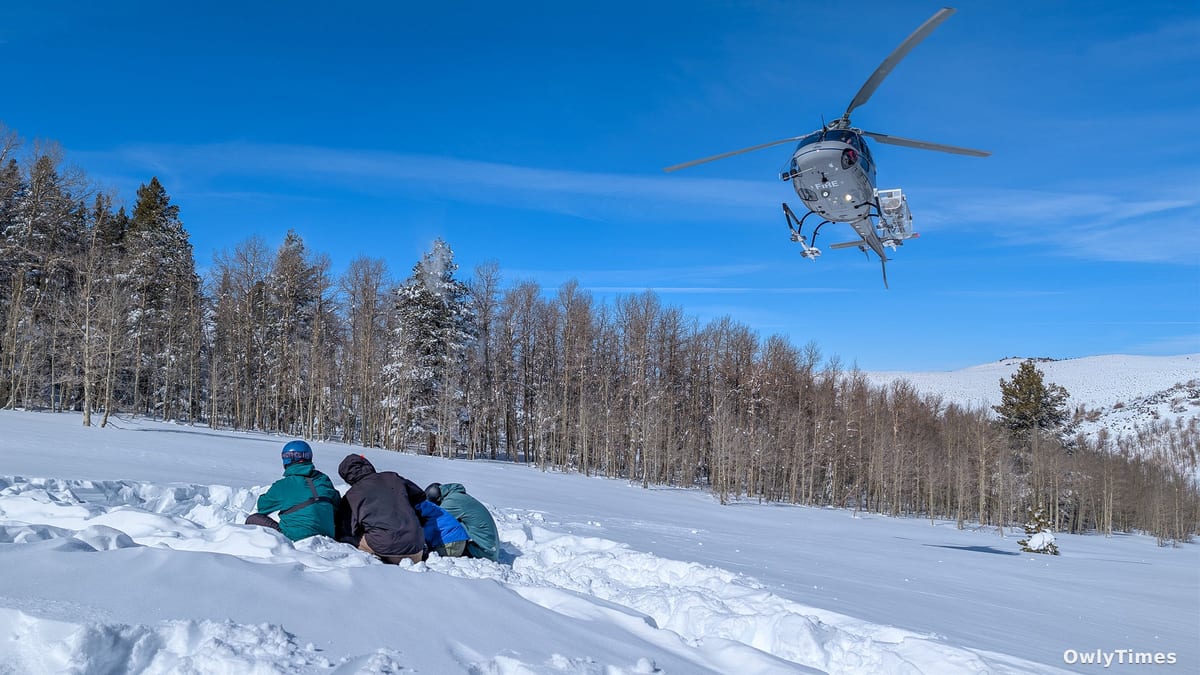
Sweetwater Heli’s current strategy is to position itself as an accessible add-on to existing ski trips to Mammoth and Tahoe, catering to both first-time heli-skiers and those seeking a unique experience. This is a deliberate departure from the “extreme” image often associated with heli-skiing, and a response to the inherent risks highlighted by a recent avalanche near Lake Tahoe that claimed nine lives just days before Sweetwater Heli’s inaugural flights. The guides, while experienced in Alaskan and Canadian backcountry, are prioritizing lower-angle slopes and rigorous safety briefings, as evidenced by the hour-long avalanche beacon training session. However, the close call experienced by another group during my visit – triggering a small avalanche despite cautious descent – underscores the unpredictable nature of the backcountry, even with meticulous preparation.
The expansion to Mount Grant in Nevada, secured in March 2026, brings Sweetwater Heli’s total tenure to over 200,000 acres, positioning it as the third-largest heli-skiing operation in the lower 48. This expansion, however, relies on securing a long-term permit from the Forest Service, contingent on demonstrating responsible stewardship of the land. The initial one-year permit is a probationary period, and the future of Sweetwater Heli – and the potential for a wider resurgence of heli-skiing in California – hangs in the balance.
What this means for your wallet: expect to see a tiered pricing structure emerge. Sweetwater Heli’s current pricing reflects the high operational costs and emphasis on safety. If the business model proves sustainable, and competition increases, prices could become more accessible. However, the inherent risks and regulatory hurdles will likely prevent heli-skiing from becoming a mainstream activity. The key question for consumers – and investors – is whether Sweetwater Heli can navigate these challenges and establish a viable, long-term business, or if it will follow in the footsteps of its predecessors and become another footnote in California’s complicated relationship with the backcountry. Watch closely for the Forest Service’s decision on the ten-year permit; that will be the clearest indicator of whether California is truly ready to embrace heli-skiing.