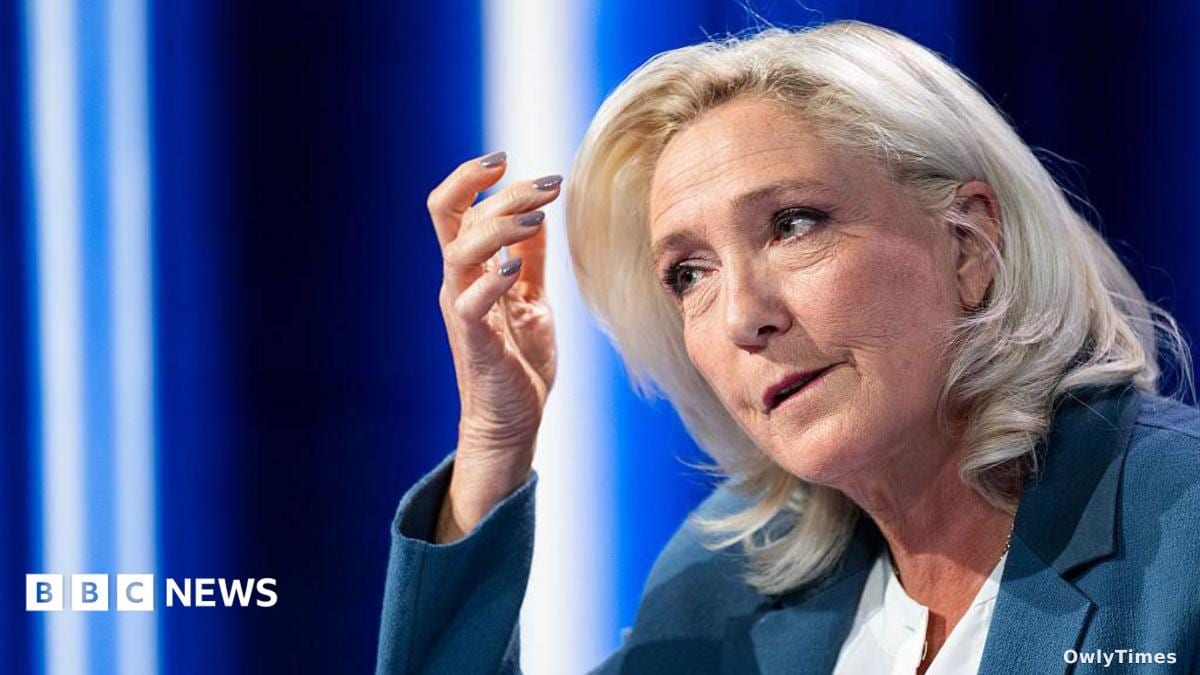

Is a courtroom verdict the new campaign manager for the French presidency? The real story here isn’t just the legal fate of Marine Le Pen—it’s the reality that the future of a G7 nation’s executive branch is currently being held hostage by a procedural debate over parliamentary payrolls.
On Tuesday, a Paris appeals court is scheduled to deliver a ruling at 13:30 (11:30 GMT) that will decide if the 57-year-old leader of the National Rally (RN) can appear on the ballot for the 2027 election, according to the BBC. This high-stakes legal drama centers on a March 2025 conviction for the embezzlement of European Parliament funds, a case where the lower court found Le Pen had "authoritatively and with determination" orchestrated a scheme to use EU money to pay party employees.
The financial scale of this alleged operation is where reports diverge significantly. While the BBC reports that the original embezzlement conviction involved €1.4 million, Euronews cites a figure of €2.9 million. Regardless of the exact total, the legal jeopardy remains consistent: Le Pen was handed a five-year ban from public office in 2025, a sentence that effectively serves as a political death warrant if upheld.
Think of this like a software "lockout" feature on a high-end device: the court is deciding whether to grant the administrative override that would allow Le Pen to resume her political operation. If the judges uphold the ban for more than two years, the 2027 race—the first without incumbent Emmanuel Macron, who is term-limited—will be forced to reset. ABC News notes that if the ban is reduced to two years or less, it could theoretically expire before the April 18, 2027, first round of voting. However, Le Pen has signaled that even if she is legally cleared to run, any accompanying judicial restrictions, such as an electronic monitoring tag, would make a viable campaign impossible.
"I can't be dependent on a judge to authorize me to go hold a campaign rally... or to visit a market," Le Pen told the LCI channel, as referenced by ABC News. For the average voter, this isn't just about a courtroom verdict; it is about the structural integrity of a campaign. Because French presidential candidates must secure 500 endorsements from elected officials to qualify, a last-minute disqualification would leave the National Rally scrambling to pivot to their "Plan B," 30-year-old party chairman Jordan Bardella.
Both Le Pen and Bardella have been working to project a united front, recently appearing at a "country banquet" in Liévin to quell internal rumors of dissent, according to Euronews. Bardella has explicitly pledged to support Le Pen should she be barred, reinforcing the narrative that the party’s platform is bigger than one individual. Yet, the logistical reality is stark: if the court upholds the ban, the party must transition its entire electoral infrastructure to a new candidate with less than 10 months until the vote.
The immediate trigger to watch follows Tuesday's ruling: if the court issues a guilty verdict, Le Pen has a 10-day window to decide whether to challenge the decision at the Court of Cassation, a move that would keep the political landscape in a state of suspended animation while the election clock continues to tick.