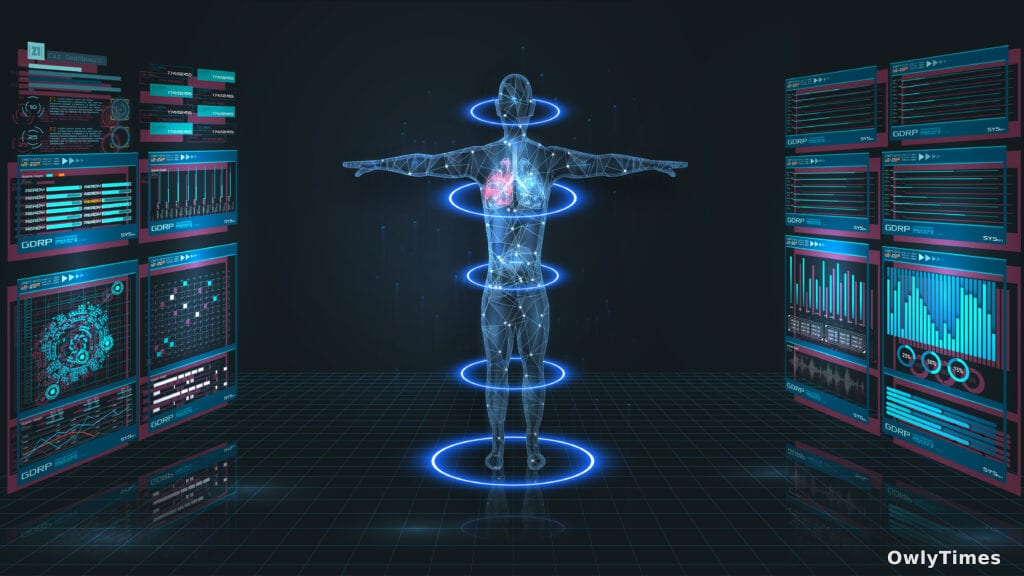

The pursuit of predicting individual health destinies, once relegated to science fiction, is no longer a distant prospect. While headlines often trumpet the arrival of “digital twins” – virtual replicas of patients used to forecast health outcomes – the reality is far more nuanced. The current wave of activity isn’t about complete, predictive avatars, but rather the incremental application of AI and expanding datasets to refine risk assessments and treatment strategies. This shift, reported by Mohana Ravindranath in a STAT+ exclusive on February 24, 2026, isn’t simply a technological leap; it’s a recalibration of expectations, moving from Kurzweil’s vision of eradicating disease to a more pragmatic focus on optimizing care within existing constraints.
The Evolution of Prediction: From Singularity to Specifics
Twenty years ago, Ray Kurzweil’s “The Singularity Is Near” posited a future where technology could proactively combat illness. This vision fueled early enthusiasm for personalized medicine, specifically the idea of digital twins capable of forecasting drug response, surgical success, or even the timing of elective procedures like knee replacements. The core appeal was, and remains, economic: reducing healthcare costs through preventative measures and targeted interventions. However, the initial ambition of a holistic, predictive model has encountered significant hurdles. The current approach, as Ravindranath details, is more modular. Instead of building complete digital twins, companies and health systems are focusing on specific applications – predicting the likelihood of hospital readmission for heart failure patients, for example, or identifying individuals most likely to benefit from a new cancer therapy. This targeted approach acknowledges the complexity of human biology and the limitations of current data.
This piece references the STAT report.
Data’s Double-Edged Sword: Availability and Accuracy
The progress towards even these limited digital twin applications hinges on two critical factors: the availability of data and the accuracy of the algorithms used to interpret it. Advances in artificial intelligence, coupled with the increasing digitization of medical records and the growing field of genomics, have undeniably expanded the data landscape. However, simply having data isn’t enough. The quality and representativeness of that data are paramount. Algorithms are only as good as the information they’re trained on, and biases within datasets can lead to inaccurate or even harmful predictions. Ravindranath’s reporting highlights that early adopters are cautiously implementing these technologies, recognizing that widespread deployment requires rigorous validation and ongoing monitoring for unintended consequences. The promise of reduced costs and improved outcomes is contingent on ensuring that these predictive models are equitable and reliable across diverse patient populations.
Beyond the Algorithm: The Human Element Remains Crucial
It’s easy to get lost in the technical details of AI and digital twins, but it’s vital to remember that these tools are intended to augment, not replace, clinical judgment. The potential for automated clinical trials, as initially envisioned, is still largely unrealized. While AI can accelerate the identification of suitable candidates and streamline data analysis, the ultimate decision-making authority rests with physicians. A key tension lies in integrating these predictive insights into existing clinical workflows. Doctors need to understand how an algorithm arrived at a particular prediction, not just what the prediction is. Transparency and explainability are crucial for building trust and ensuring that these tools are used responsibly. The focus isn’t solely on creating more accurate predictions, but on creating predictions that are clinically actionable and understandable.
Limitations to Consider: The Path Forward Isn’t Paved with Certainty
The current state of digital twins is best described as “proof of concept” rather than widespread clinical implementation. Ravindranath’s reporting, accessible only to STAT+ subscribers, underscores this point. The article doesn’t detail widespread adoption, but rather the initial steps taken by “early-adopter health systems and enterprising tech companies.” This limited scope is a significant limitation. Furthermore, the long-term impact on patient outcomes remains largely unknown. While short-term benefits, such as reduced readmission rates, may be demonstrable, the true value of these technologies will only become apparent over time. The ethical implications of predictive modeling – including potential for discrimination and the erosion of patient autonomy – also require careful consideration.
The next crucial research step involves establishing standardized validation protocols for digital twin applications. Currently, each health system or company is essentially developing and testing its own models, making it difficult to compare results or assess overall effectiveness. A collaborative effort, involving regulatory agencies, academic institutions, and industry stakeholders, is needed to define clear benchmarks and ensure that these technologies meet rigorous standards of accuracy, reliability, and fairness. Will we see a future where personalized health predictions are commonplace? The answer depends not just on technological advancements, but on our ability to address the ethical, logistical, and methodological challenges that lie ahead. Specifically, we should watch for the emergence of independent, publicly funded evaluations of these systems – evaluations that go beyond the claims of the companies developing them and assess the real-world impact on patient care.