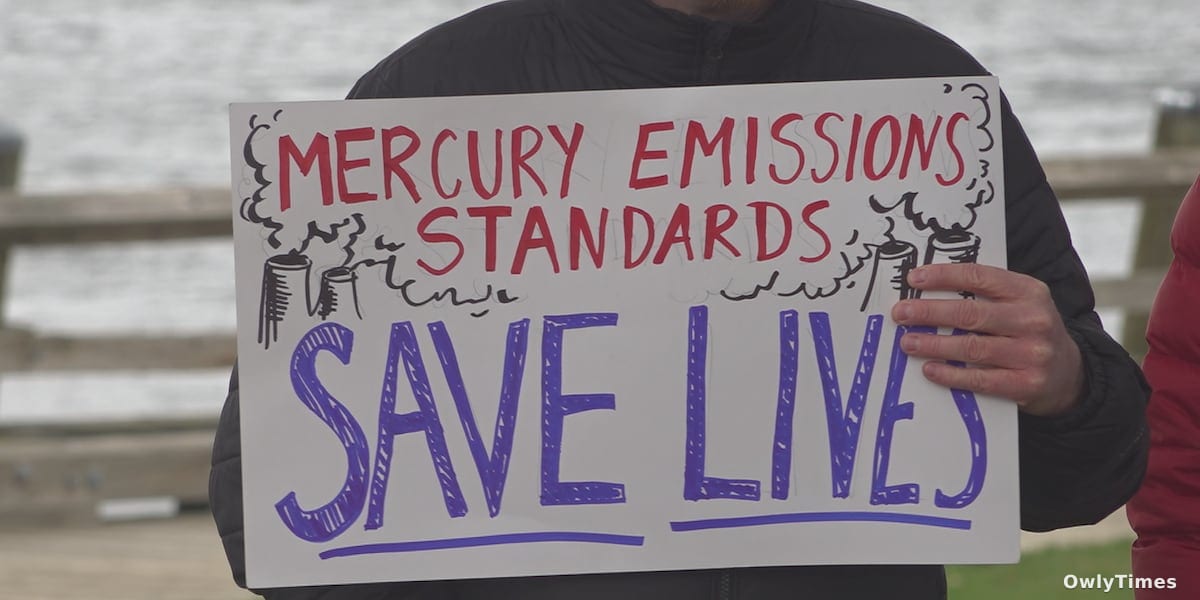

The fundamental tension between federal environmental oversight and local public health outcomes took center stage in Gardiner, Maine, this Earth Day. As science and public health advocates convened under the auspices of the Natural Resources Council of Maine, the central inquiry was not merely about policy debate, but about the tangible, physiological consequences of shifting regulatory frameworks. The gathering sought to bridge the gap between abstract federal rule-making and the specific, localized health risks faced by Maine residents, particularly as they navigate the fallout from the Trump administration’s recent deregulatory agenda concerning the U.S. Environmental Protection Agency (EPA).
The Disconnect Between Policy and Clinical Reality
The discourse in Gardiner centered on a growing friction: the federal government’s stated goal of reducing compliance costs versus the medical community’s observation of rising public health burdens. Tony Owners, an emergency medicine physician at Maine Medical Center, framed the issue through the lens of patient care rather than political ideology. Owners argued that the current trajectory of rolling back pollution limits represents a "medical disaster," emphasizing that air quality management is not a luxury but a prerequisite for human health. While the EPA released a statement in February asserting that these regulatory changes would stimulate the economy by lowering vehicle prices and restoring consumer choice, medical professionals at the event countered that such metrics fail to account for the long-term cost of chronic health conditions.
Scientific Consensus Versus Regulatory Action
A recurring theme among the speakers was the widening chasm between established climate science and federal environmental policy. Beverly Johnson, a professor of Earth and Climate Sciences at Bates College, pointed to the 2009 Endangerment Act as a historical benchmark for when the scientific community solidified its understanding of greenhouse gas impacts on human welfare. Johnson’s point highlights the primary conflict: while the body of evidence regarding climate-driven health impacts has grown more precise over the last 15 years, the regulatory mechanism intended to address these findings has moved in the opposite direction. The speakers noted that for communities already struggling with the aftermath of extreme weather and flooding, the loss of stringent federal standards removes a vital layer of protection that local governments cannot easily replicate.
Local Success as a Proxy for Federal Necessity
The advocates in Gardiner were careful to distinguish between local achievements and the limitations of municipal governance. Citing the successful pollution cleanup efforts on the Kennebec River and the measurable decline in mercury levels, participants illustrated that environmental remediation is possible when local initiatives are supported by consistent standards. However, Gardiner Mayor Patricia Hart emphasized that these local successes are fragile. Hart’s critique is that the current administrative shift leaves small municipalities disconnected from the federal resources required for comprehensive recovery. The implication is that local progress is not an excuse for federal withdrawal, but rather a proof-of-concept that requires higher-level support to sustain.
Limitations and Future Indicators
It is important to recognize that the perspectives shared in Gardiner reflect a specific clinical and municipal vantage point. While these health officials provide essential data on the front lines of patient care, they are also navigating a political environment where the EPA’s stated mandate—cutting regulations to favor consumer economics—is in direct competition with public health priorities. The success of future environmental policy will likely hinge on whether the EPA reconciles its current focus on economic deregulation with its foundational mission to protect human health. The next reading of national air quality standards and subsequent reports on mercury levels in the Kennebec River will serve as a measurable signal, indicating whether these local public health concerns are being integrated back into federal strategy or if the disconnect between policy and practice will continue to widen.