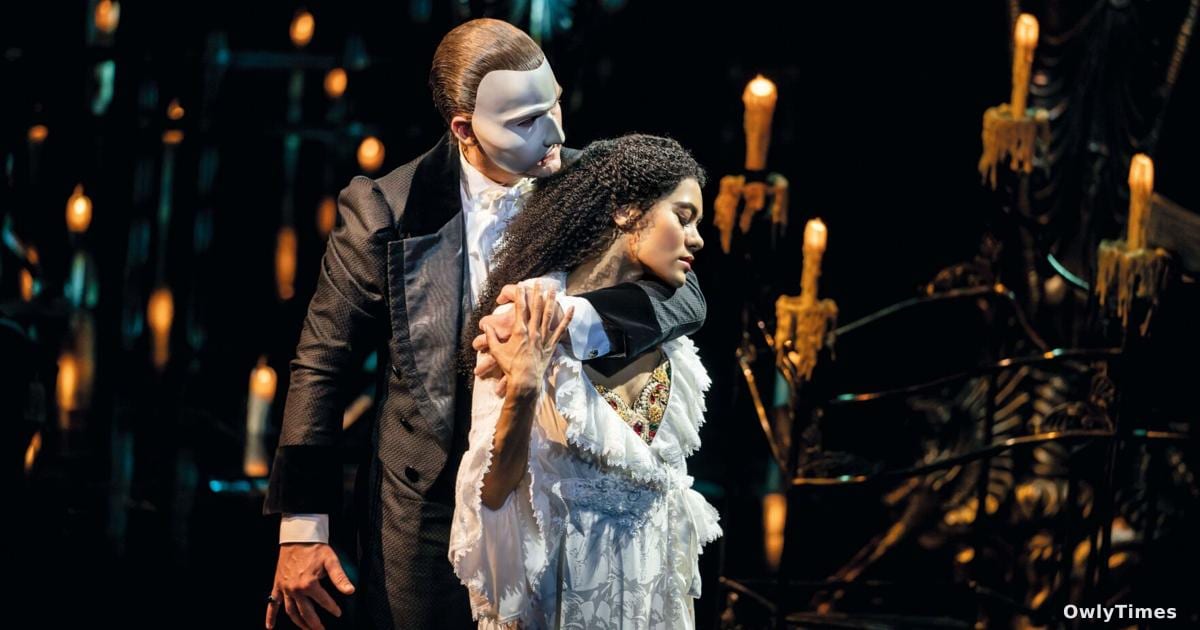

The chandelier hadn’t even begun to fall when the ticket sales surged. Wednesday night, the Saenger Theatre will once again host the spectral romance of “The Phantom of the Opera,” a production that feels less like a revival and more like a cultural touchstone being re-polished. It’s a familiar story – the masked genius, the ingénue, the obsessive love – but its return to New Orleans speaks to a deeper hunger for grand spectacle at a moment when live performance feels both fragile and fiercely vital. This isn’t just about a long-running show; it’s about the enduring power of theatrical escapism, and what it takes to lure audiences back into darkened theaters after years of disruption.
A Phantom for a New Generation
“Phantom of the Opera” isn’t simply the longest-running show in Broadway history – a title it held for 35 years, closing in April 2023 after 13,981 performances – it’s a masterclass in theatrical branding. Andrew Lloyd Webber’s score, with its soaring melodies like “The Music of the Night,” “All I Ask of You,” and “Masquerade,” became instantly recognizable, transcending the theater to permeate popular culture. But the current touring production, revitalized by original producer Cameron Mackintosh following its 2021 London re-opening, isn’t relying on nostalgia alone. Mackintosh’s updates, while respecting the core of the story, aim to inject a renewed energy into the production, appealing to both seasoned fans and a new generation unfamiliar with the Phantom’s haunting tale. Ticket prices, starting at $52, reflect a calculated attempt to broaden accessibility, a crucial move in a market where entertainment budgets are increasingly scrutinized.
See the original NOLA.com story for the full account.
Yat Talk and Local Lore: The Rise of Hyperlocal Humor
While the Phantom stalks the halls of a Parisian opera house, a different kind of mystery is unfolding in Westwego. “Murder Most Meemaw,” the brainchild of Ricky Graham and Gary Rucker, is a distinctly New Orleans comedic whodunnit, a play that revels in the city’s unique linguistic quirks and cultural eccentricities. Graham, who embodies the titular Meemaw – “The Agatha Christie of Barataria Boulevard” – describes the show as taking “classic British murder mystery…except in good ol’ Yat talk that people can understand.” This isn’t accidental. In a landscape dominated by national tours and Broadway revivals, “Murder Most Meemaw” represents a growing trend towards hyperlocal entertainment, a desire to see stories that reflect and celebrate the specificities of place. The show’s success, playing to sold-out crowds at the Westwego Performing Arts Theatre, demonstrates a powerful appetite for art that feels deeply rooted in the community.
Beyond the Chocolate River: Family Theater as a Stabilizing Force
The third piece of the puzzle is “Charlie and the Chocolate Factory, the New Musical” at Cutting Edge Theater in Slidell. Directed by Joey Pruitt, this production, based on Roald Dahl’s beloved story, offers a different kind of escape – one geared towards families. With ticket prices starting at $35, it’s positioned as an accessible outing for parents and children, a deliberate strategy in a market where family-friendly entertainment often serves as a reliable draw. The large cast, ranging from grandparents to children, underscores the importance of community theater as a training ground for young performers and a vital source of local arts engagement. While the Phantom and Meemaw cater to different demographics, both productions benefit from the stabilizing effect of a robust family theater scene.
The Shifting Landscape of Live Performance
What connects these three seemingly disparate productions – a gothic romance, a local comedy, and a children’s classic – is a shared attempt to navigate a rapidly evolving landscape for live performance. The pandemic forced a reckoning within the industry, exposing vulnerabilities in business models and audience habits. Now, as theaters cautiously reopen, they’re facing a new set of challenges: rising production costs, competition from streaming services, and a need to demonstrate value in a world saturated with entertainment options. The success of “Phantom,” “Meemaw,” and “Charlie” isn’t guaranteed, but their presence on stages across the metro area signals a cautious optimism, a belief that live theater still has a place in the cultural conversation. The question now is whether that place will be defined by grand spectacle, hyperlocal charm, or a combination of both – and whether audiences will continue to answer the call to gather in the darkness and experience the magic of live storytelling.