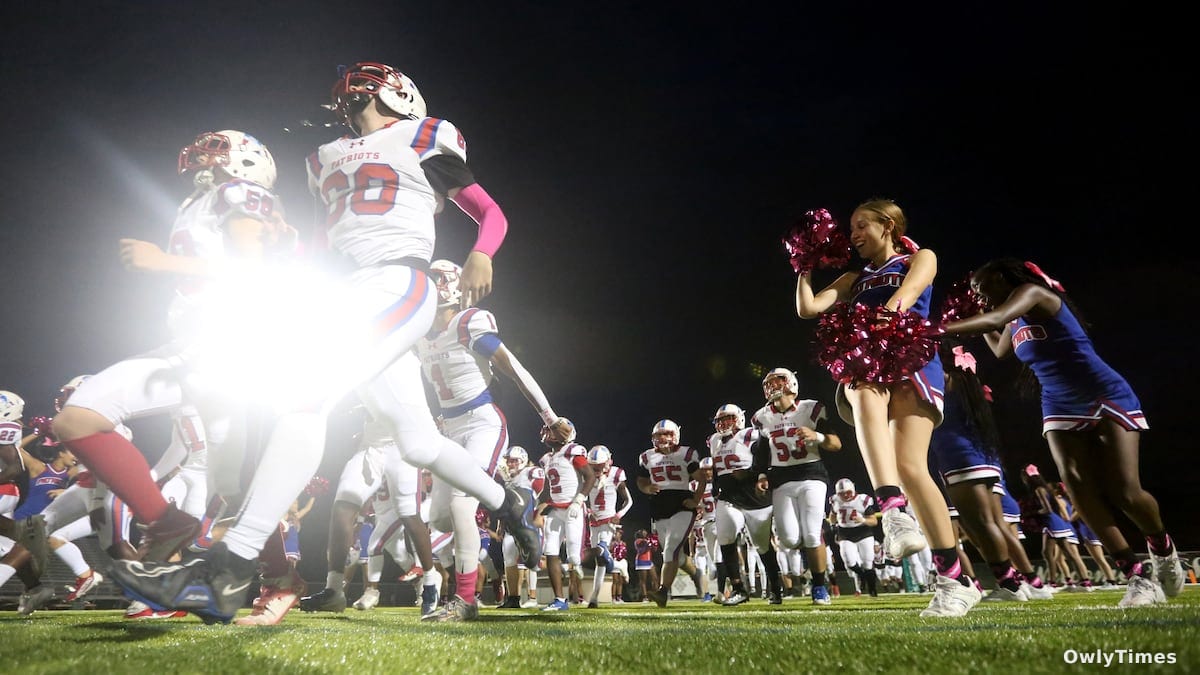

The Friday night lights in Pinellas County, Florida, are about to get a little dimmer for some. Not from lack of spirit, but from a new financial reality. The Pinellas County school district recently announced a policy requiring student-athletes to pay a $50 participation fee per sport, capped at $200 per family. It’s a move framed as a necessary measure to offset rising expenses, but beyond the headlines of budget shortfalls lies a troubling question: are we slowly eroding the promise of accessible public education, one participation fee at a time? This isn’t simply about football or cheerleading; it’s about who gets to play the game of opportunity, and who’s benched before it even begins.
The Rising Cost of the Sideline Dream
Fifty dollars might not sound like much to some, but for families already stretched thin, it represents a significant barrier. Consider a household with three children, each wanting to participate in a different sport – that’s $150 just to sign up. The district assures that the $200 cap will protect larger families, but even that figure demands a difficult choice. Is soccer more valuable than band? Is basketball worth sacrificing a spot in the debate club? These aren’t decisions any parent should have to make, especially when public education is ostensibly free. The timing is particularly stinging, coming after years of increased focus on the holistic benefits of extracurricular activities – the improved grades, the social-emotional learning, the college applications boosted by demonstrated commitment. Now, that commitment comes with a price tag.
This isn’t an isolated incident. Participation fees are becoming increasingly common across the country, driven by shrinking school budgets and a growing reliance on families to shoulder the costs of education. A 2018 report by the National Federation of State High School Associations found that 36 states had some form of participation fees, with the average fee around $75 per sport – already exceeding Pinellas County’s initial charge, but signaling a clear trend. What’s different now is the context. We’re emerging from a period of heightened economic uncertainty, where inflation has eroded household incomes and the gap between the haves and have-nots has widened. Adding another financial hurdle to participation feels less like responsible budgeting and more like a quiet form of exclusion.
Drawn from tampabay.com.
Beyond the Budget: Equity and Access
The district’s justification centers on offsetting expenses. As Jeffrey Solochek of the Tampa Bay Times reports, the fees are intended to help cover the rising costs of equipment, transportation, and officials. But this raises a critical question: shouldn’t these costs be absorbed by the school district’s overall budget, funded by property taxes and state allocations? Shifting the burden to families feels like a tacit admission that the current funding model is unsustainable, and that the easiest solution is to make those who benefit directly pay for it. This logic, if applied consistently, could lead to a slippery slope. Will we see fees for band instruments? For theater productions? For academic clubs?
The impact won’t be felt equally. Students from wealthier families will likely absorb the cost without much difficulty, continuing to benefit from the opportunities that extracurriculars provide. But for students from low-income households, the fee could be the difference between playing a sport and sitting on the sidelines. This isn’t just about fairness; it’s about perpetuating cycles of inequality. Sports and other extracurriculars can be powerful pathways to college scholarships and future opportunities. By making them less accessible, we’re effectively limiting the potential of students who already face systemic disadvantages. The district needs to demonstrate a clear plan for providing waivers or financial assistance to ensure that no student is excluded based on their family’s ability to pay.
A Symptom of a Larger Systemic Issue
The situation in Pinellas County is a microcosm of a larger crisis in public education funding. For decades, schools have been asked to do more with less, relying increasingly on fundraising, donations, and now, participation fees. This trend reflects a broader societal shift, where public goods are increasingly viewed as commodities to be purchased rather than rights to be guaranteed. The narrative has subtly changed from “investing in our children’s future” to “users should pay for the services they receive.” This isn’t just about sports; it’s about the fundamental values we place on education and opportunity.
The long-term consequences of this shift are potentially profound. As access to extracurricular activities becomes increasingly stratified, we risk creating a two-tiered system of education, where opportunities are determined not by talent or effort, but by socioeconomic status. This will not only exacerbate existing inequalities but also undermine the very principles of meritocracy and social mobility that underpin the American dream. The Pinellas school district’s decision isn’t just a local issue; it’s a warning sign.
What will it take for communities to recognize that investing in accessible public education – including extracurricular activities – isn’t an expense, but an investment in our collective future? And more urgently, will other districts follow suit, or will Pinellas County’s move spark a broader conversation about equitable funding for all students? The answer to those questions will determine whether the Friday night lights continue to shine for everyone, or just for those who can afford to keep them on.