
Is your next pizza going to be made by a robot? It’s a question that sounds ripped from a science fiction script, but one increasingly relevant to your Friday night dinner plans. The flurry of headlines about AI and robotics in restaurants often focuses on flashy demos and venture capital rounds, but the real story here isn’t about replacing chefs – it’s about a fundamental reshaping of how restaurants operate, and how you interact with them, driven by the uniquely demanding world of pizza.
On a typical Friday night in 2026, a modern pizza restaurant likely relies on more software than staff to keep orders flowing, a reality that’s been steadily building for the last decade. While the broader restaurant industry is scrambling to adopt new tech, pizza has been the proving ground. High delivery volumes, standardized kitchens, and cutthroat competition have created a perfect storm for innovation, and what works for pizza often becomes the blueprint for everyone else. We’re seeing a cascade effect, where solutions first honed on pepperoni and mozzarella are now being applied to burgers, tacos, and everything in between.
This piece references the restauranttechnologynews.com report.
Jet’s Pizza, a Detroit-style brand founded in 1978, exemplifies this shift. For decades, they were a classic neighborhood pizzeria. But recognizing the rise of smartphones and third-party delivery apps, they pivoted. Their partnership with HungerRush to implement an AI-driven SMS ordering system is a prime example. Forget navigating an app; you can simply text “usual” and your favorite pizza is on its way. This isn’t just about convenience; it’s about reclaiming the direct relationship with the customer, a battleground increasingly important as delivery platforms siphon off profits and data. Jet’s has already processed over ten million orders through these AI channels, representing hundreds of millions in sales – a figure that should make any restaurant owner take notice.
But the AI isn’t just front-of-house. Jet’s is also using voice AI to handle phone orders, freeing up staff to focus on, well, making pizza. This highlights a crucial point: the initial fear of robots replacing workers is often misplaced. The more immediate impact is robots and AI taking over the repetitive, frustrating tasks that burn out employees and introduce errors. It’s about optimizing the human element, not eliminating it.
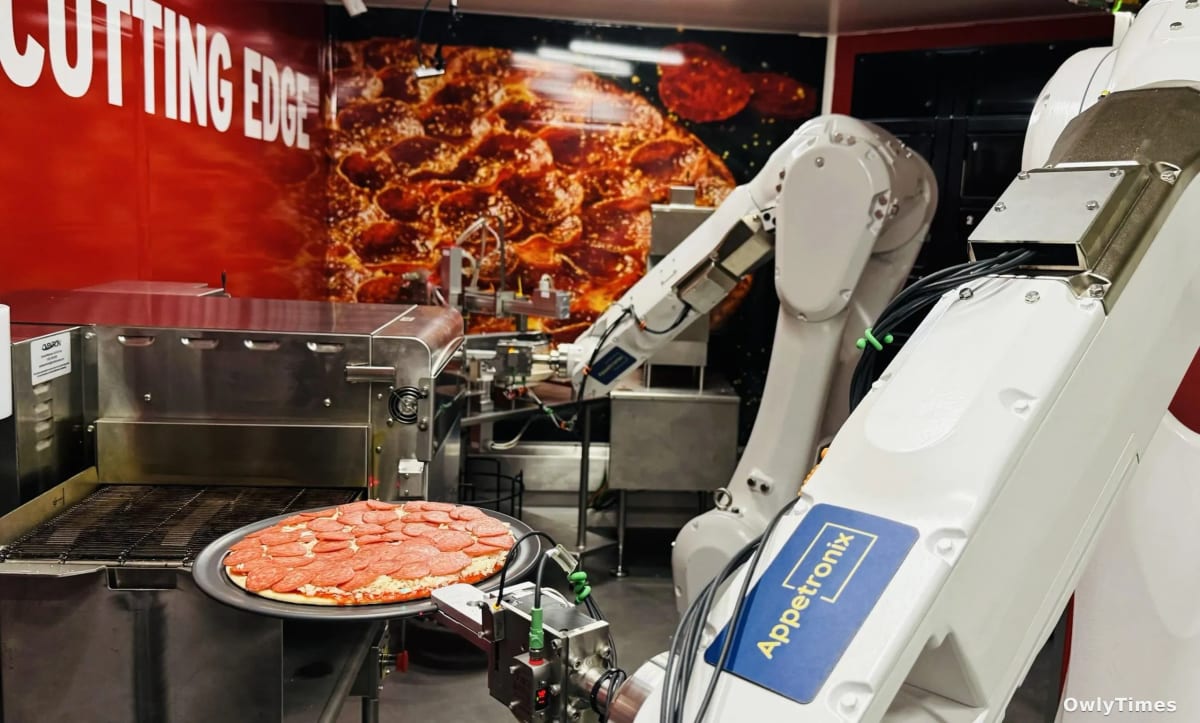
Donatos Pizza, founded in Columbus, Ohio in 1963, is taking this a step further. Their most visible experiment is the fully autonomous pizza restaurant at John Glenn Columbus International Airport, built in partnership with robotics company Appetronix. This isn’t a gimmick; it’s a real-world stress test. Airports offer a constant stream of customers and a demanding environment, allowing engineers to refine the technology under pressure. If it works there, the implications are huge. Imagine fully automated pizza stations in hospitals, universities, or 24/7 transportation hubs – places where consistent, round-the-clock food service is valuable but staffing is a nightmare.
The rollout of these technologies isn’t without its hurdles. Donatos learned early on that involving franchisees in the testing process is critical. Imposing new systems without input from the people actually running the restaurants is a recipe for disaster. This tension between corporate innovation and franchisee buy-in is a recurring theme across the industry.
Of course, the giants are playing too. Domino’s Pizza has spent the last decade building a sophisticated digital ordering ecosystem – ordering via apps, voice assistants, smart TVs, even your car. Their “AnyWare” platform isn’t just about offering options; it’s about meeting customers where they are. They’re also partnering with Microsoft to explore generative AI for tasks like inventory management and staff scheduling. Papa Johns is leveraging Google Cloud to personalize marketing and menu recommendations. And even independent pizzerias are getting in on the action, thanks to platforms like Slice, which provide small shops with the tools to compete with the big chains.
But the most intriguing development might be the rise of the pizza vending machine. Companies like PizzaForno and Piestro are deploying automated kiosks stocked with freshly made pizzas, offering a 24/7 solution for locations where traditional restaurants aren’t feasible. These aren’t the sad, frozen-pizza-in-a-box machines of the past; they’re sophisticated systems capable of delivering a quality product with minimal human intervention.
The common thread running through all of this is a relentless focus on speed, convenience, and data. Predictive analytics are now used to forecast demand, optimize staffing, and personalize marketing. Robotics are automating everything from ingredient dispensing to pizza assembly. And AI is handling everything from phone orders to customer service.
The pizza industry isn’t just selling pizza anymore; it’s selling a seamless, data-driven experience. And that’s a lesson the entire restaurant industry is learning. Expect to see more and more restaurants adopting these technologies, not just to cut costs, but to meet the ever-increasing expectations of a digitally native consumer.
Here’s what to watch for: by late 2027, the first fully automated, drive-through-only pizza restaurant will open, offering a complete order-to-pickup experience without a single human employee. It won’t be a question of if robots will make your pizza, but where you’ll get it from.