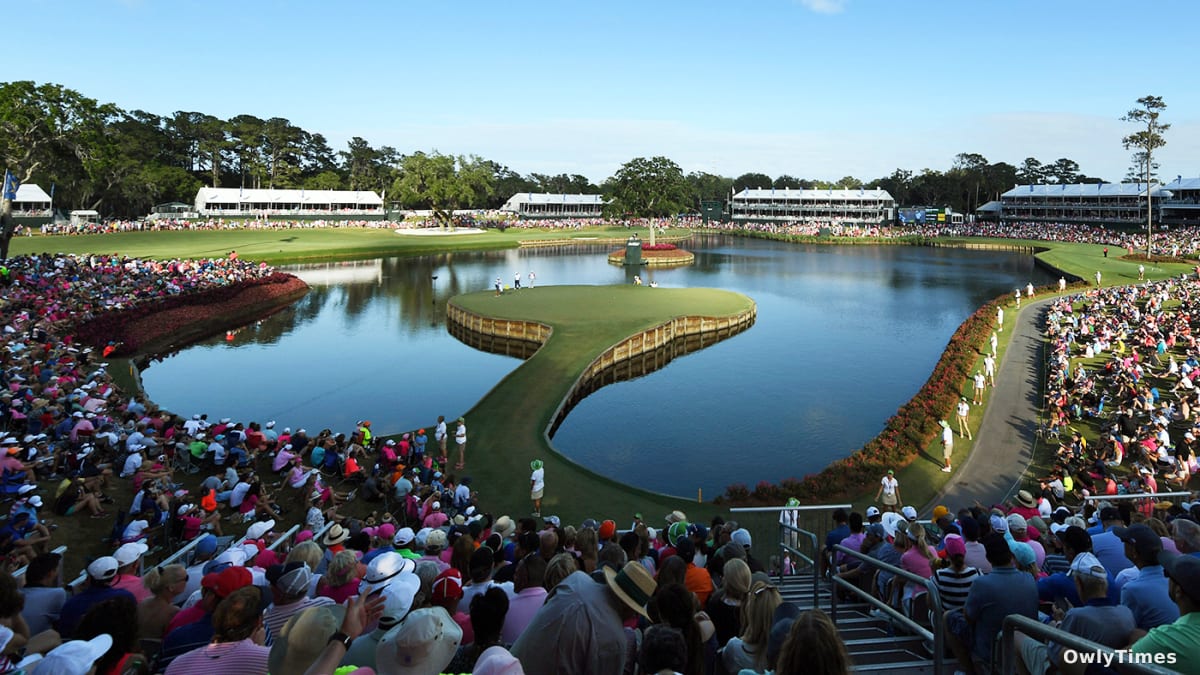

The air at TPC Sawgrass is thick with something more than Florida humidity this week. It’s a sense of unsettled expectation. Usually, the Players Championship arrives with Scottie Scheffler and Rory McIlroy as the presumptive contenders, a coronation almost expected. But this year, as 123 golfers prepare to tackle the infamous island green, a tremor of uncertainty runs through Ponte Vedra Beach. It’s not just that the top two are showing cracks – Scheffler wrestling with his ball striking, McIlroy sidelined by a recurring back injury – it’s that the established order feels… challenged. This isn’t simply a tournament with an open field; it’s a potential inflection point, a moment where the PGA Tour’s generational shift could accelerate.
For years, the Players Championship has been a proving ground for dominance, a stage for the world’s best to cement their legacies. The last half-decade, as CBS Sports’ Patrick McDonald points out, has consistently rewarded players already residing within the top 10 of the Official World Golf Rankings. But the whispers around Sawgrass suggest this pattern might be broken. The old guard, while still present – Brooks Koepka, Justin Thomas, and Justin Rose all hoping to rediscover their form – are facing a surge from a younger, bolder cohort. The narrative isn’t just about who can win, but who should win, and increasingly, that answer points away from the familiar faces. This isn’t just about individual performance; it’s about a changing of the guard, a redefinition of what it means to be a top golfer in a landscape still reeling from the LIV Golf disruption.
Based on the original CBS Sports report.
The vulnerability of Scheffler is particularly striking. He’s been seen relentlessly on the driving range, testing new driver heads, a visible sign of a player grappling with a loss of control. His recent struggles with iron play – a shocking 88th in strokes gained approaching the green, according to CBS Sports’ Robby Kalland – are a stark departure from the form that made him so dominant. This isn’t just a slump; it’s a potential crisis of confidence for a player who has built his game on precision. Meanwhile, McIlroy’s absence, due to the same back injury that forced him out of the Arnold Palmer Invitational, throws another wrench into the equation. His on-again, off-again relationship with Florida golf is well-documented, but this feels different. The timing, with the tournament approaching, and his history of struggles at Sawgrass outside of his 2019 win, amplify the concern. It’s a reminder that even the most physically gifted athletes are susceptible to the unpredictable nature of injury and the mental toll it takes.
But the real story unfolding at TPC Sawgrass isn’t about the struggles of the established stars, it’s about the arrival of the next generation. Players like Chris Gotterup, Jacob Bridgeman, Akshay Bhatia, and especially Ludvig Åberg are not just participating; they’re imposing their will on the tour. Åberg, despite Kalland’s prediction that he won’t win this week, represents the new breed: fearless, aggressive, and unburdened by the weight of expectation. This isn’t simply a matter of youthful exuberance; it’s a reflection of a changing athletic mindset, a willingness to take risks and embrace a more unconventional approach to the game. The emergence of these young players also speaks to the success of developmental programs and the increasing accessibility of high-level coaching, creating a pipeline of talent that is challenging the established order. Collin Morikawa, already a two-time major champion, embodies this shift, entering the tournament with a confidence born from recent victories at Pebble Beach and Bay Hill.
Beyond the headline predictions – Russell Henley (30-1) as McDonald’s pick, Si Woo Kim (22-1) favored by Kalland – lies a more compelling question: can the PGA Tour successfully navigate this transition? The league has spent the last year attempting to solidify its position in the wake of LIV Golf, emphasizing its commitment to young talent and a more fan-friendly experience. The Players Championship, with its elevated status and substantial prize money ($25 million purse), is a crucial test of that strategy. If a player under 26 emerges victorious, it will send a powerful message about the future of the tour, signaling a clear break from the past. But if a veteran manages to hold on, it could reinforce the perception that the PGA Tour is still clinging to its established stars. The sleeper pick of Ryan Gerard (70-1) by McDonald, a player excelling in strokes gained but lacking a proven track record, highlights the potential for an unexpected champion, a wildcard who could disrupt the narrative entirely.
This week at TPC Sawgrass isn’t just about golf; it’s about the evolution of a sport, the shifting dynamics of power, and the enduring tension between tradition and innovation. The question isn’t simply who will lift the trophy on Sunday, but what that victory will signify for the future of the PGA Tour and the game of golf itself. Will the young guns truly seize control, or will the old guard mount one last stand? The answer, unfolding over the next four days, will resonate far beyond the fairways of Ponte Vedra Beach.

