
The strategic calculus behind the current administration’s push into the Iran conflict rests on a gamble that executive speed can outpace the traditional mechanisms of moral and legal accountability. By framing the campaign as a preventive necessity, the White House has effectively bypassed the deliberative processes that usually govern the use of force. This move creates a tension between the administration’s stated humanitarian objectives and the evolving skepticism from religious and legal observers who view the strategy through the lens of a 1,500-year-old moral framework.
The Just War Threshold and Institutional Friction
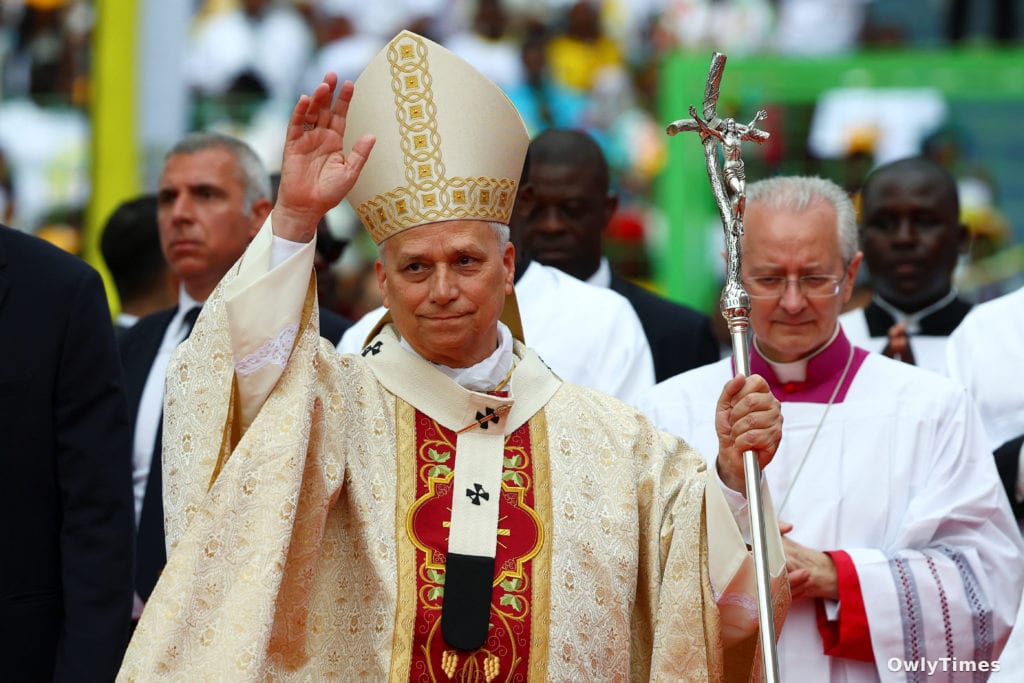
The ongoing conflict has triggered a rare public friction between the Vatican and the U.S. government. Pope Leo XIV has repeatedly warned of a "delusion of omnipotence" driving military intervention, a stance that has found support among a growing coalition of Catholic voices. In March, the archbishop of Washington explicitly stated that the war failed to meet the "just war threshold," a sentiment echoed by the Vatican’s secretary of state. These critiques carry significant weight because they challenge the administration’s legitimacy by invoking the criteria established by St. Thomas Aquinas: authority, cause, and intention.
Who benefits from this friction? The administration maintains tactical flexibility by keeping the justifications for the war broad and shifting. Conversely, the critics—ranging from clergy to legal scholars—lose their ability to influence policy directly but gain ground in shaping the long-term historical narrative. By forcing the conversation toward the "just war" tradition, these figures are highlighting the contradiction between the administration’s rhetoric and its actual conduct.
Contested Authority in the Constitutional Gray Zone
The question of "legitimate authority" sits at the heart of the current domestic political deadlock. While the U.S. Constitution grants Congress the power to declare war and control funding, the executive branch retains broad command authority. The 1973 War Powers Resolution was designed to act as a tether, requiring presidential authorization from Congress for operations exceeding 60 days.
However, today’s debate is complicated by the fact that some scholars now look to the United Nations as the ultimate arbiter of force, citing its charter which restricts military action to self-defense. In the U.S., the boundary between the president’s role as commander-in-chief and the legislative branch’s oversight is being stretched to its limits. Secretary of Defense Pete Hegseth and Chairman of the Joint Chiefs of Staff Gen. Dan Caine remain central figures in executing these operations, operating in a space where congressional authorization is increasingly viewed as an impediment rather than a requirement.
Preventive War and the Problem of Intent
The administration’s shift in rationales—from self-defense against "imminent threats" to the prevention of future nuclear capabilities—further complicates the ethical calculus. While President Donald Trump cited the need to eliminate threats from the Iranian regime, statements from Secretary of State Marco Rubio and Pentagon briefings to Congress have contradicted the "imminent" nature of these risks. International law generally prohibits preventive war, and the International Atomic Energy Agency’s 2025 declaration that Iran was not complying with nuclear nonproliferation agreements has become the administration's primary shield against these legal challenges.
The true test of the administration's "right intent," as defined by the Aquinas tradition, lies in whether the common good is the primary motivator or if the conflict is driven by secondary goals. The next reading of the administration’s rhetoric regarding civilian infrastructure and the continued support of proxies like Hamas and Hezbollah will show whether these humanitarian claims hold weight or if the "wicked intention" warned of by theologians remains the driving force behind the campaign.





