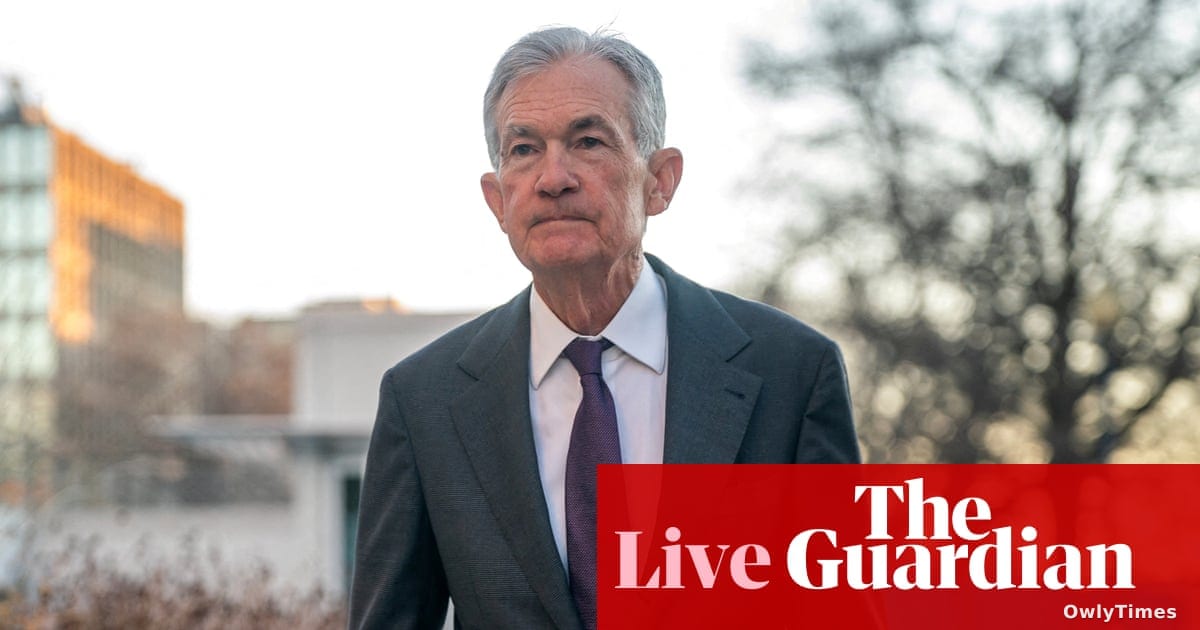

The convergence of demands from Elizabeth Warren and Thom Tillis for the Justice Department to drop its investigation into Jerome Powell isn’t a display of bipartisan unity, but a calculated response to a shifting power dynamic centered on the Federal Reserve’s independence – and, crucially, the leverage each Senator wields over upcoming confirmations. The blocking of a DOJ subpoena against Powell, confirmed by Judge James Boasberg on Friday, wasn’t a legal victory for the Fed Chair so much as it revealed the fragility of the investigation itself, and the political cost of pursuing it. Both Warren and Tillis, despite representing opposite ends of the political spectrum, recognize the same underlying truth: a protracted legal battle over Powell’s conduct risks destabilizing the Fed at a moment of intense economic and geopolitical uncertainty.
The immediate beneficiary of this unlikely alliance is, of course, Jerome Powell himself. The investigation, initiated under the Trump administration, stemmed from concerns over insider trading related to Fed actions during the pandemic. While the specifics remain contested, the timing – coinciding with Powell’s resistance to Donald Trump’s demands for lower interest rates – strongly suggested a politically motivated inquiry. Jeanine Pirro’s defiant dismissal of Tillis’s plea, insisting the appeal will proceed regardless of political considerations, is a performative gesture designed to project an image of prosecutorial independence. However, her insistence on appealing, despite the judge’s ruling, underscores the inherent risk of escalating the conflict and further politicizing the Fed. The real loser here is the principle of independent oversight of the central bank, now demonstrably vulnerable to executive branch pressure.
Drawn from The Guardian.
This situation echoes historical precedents, most notably the attempts by the Lyndon B. Johnson administration to pressure William McChesney Martin Jr., then Chairman of the Federal Reserve, during the Vietnam War. Johnson, frustrated by Martin’s reluctance to accommodate inflationary pressures caused by war spending, engaged in a campaign of intimidation and public criticism. While Johnson didn’t initiate a criminal investigation, the parallels are striking: a President seeking to manipulate monetary policy for short-term political gain, and a Fed Chair attempting to maintain independence. The difference now is the explicit weaponization of the Justice Department, a tactic that has become increasingly common in recent years. The fact that both Warren and Tillis are willing to defend Powell, albeit for different reasons, highlights the broad concern over this trend. Warren frames it as a defense against Trump’s “weaponization of DOJ,” while Tillis sees it as a necessary step to secure the confirmation of Kevin Warsh as the next Fed Chair.
The case in Texas, where nine anti-ICE protesters were convicted on terrorism-related charges, adds another layer to this complex political landscape. The prosecution’s claim that these activists were part of an “antifa cell” represents a significant expansion of the definition of terrorism, potentially criminalizing dissent and political activism. This parallels the post-9/11 era, where broad anti-terrorism legislation was often used to suppress legitimate protest. The conviction, while legally distinct from the Powell case, reinforces a pattern of the government using expansive legal powers to target political opponents. The fact that Benjamin Song fled and required an 11-day manhunt further fuels the narrative of a dangerous, organized threat, even as legal observers question the proportionality of the charges.
Meanwhile, Donald Trump’s seemingly erratic behavior – removing Ric Grenell from his self-appointed position at the Kennedy Center amidst escalating tensions with Iran – reveals a consistent pattern of prioritizing personal grievances and symbolic gestures over substantive policy. The focus on renaming the Kennedy Center, and the subsequent fallout with Grenell, is a distraction from the far more serious issues at hand: a potential wider conflict in the Middle East and a volatile global economy. Trump’s claim that the war with Iran will end “when I feel it in my bones” is a chilling reminder of his reliance on intuition over expertise, and his willingness to gamble with global stability. This is not simply a matter of personality; it’s a strategic calculation to project an image of strength and decisiveness, even in the face of uncertainty.
The political chess move to watch next isn’t whether the Justice Department will appeal the ruling on the Powell subpoena – Pirro’s insistence suggests it will – but whether Thom Tillis will actually follow through on his threat to block the confirmation of Kevin Warsh. If Tillis holds firm, it will signal that the Senate is willing to assert its independence from the executive branch, even under pressure from a former President. Conversely, if he relents, it will demonstrate the continued erosion of congressional oversight and the increasing power of the presidency to manipulate the institutions of government. The fate of the Federal Reserve, and the broader principle of its independence, hangs in the balance.





