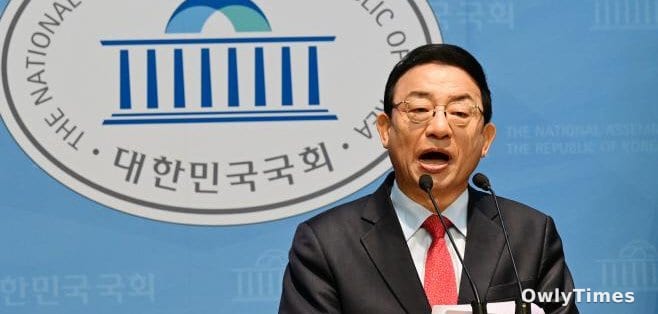

The Calculus of Youth: Realigning Power Within the People Power Party
The appeal from Lee Jung-hyun, head of the People Power Party’s nomination management committee, for increased youth participation in regional politics isn’t a spontaneous call for generational renewal – it’s a calculated maneuver to address a deepening legitimacy crisis within the party and reshape its electoral base. While framed as a desire for a “new beginning” for South Korean politics, the pledge to create a “fairer and more open candidate selection process” directly targets the perception that nominations are predetermined by established power brokers and financial interests. This isn’t simply about attracting young voters; it’s about fundamentally altering the internal power dynamics of the People Power Party.
This piece references the upi.com report.
Lee’s invocation of historical precedent – “Throughout Korea’s history, when young people moved forward, the nation changed and the times advanced” – is a deliberate attempt to imbue the call with nationalistic weight. This echoes similar appeals made during periods of significant political upheaval, notably the student movements of the 1980s that directly challenged the authoritarian regimes of the time. However, the context is vastly different. Then, youth were mobilizing against the established order; now, Lee Jung-hyun is attempting to channel that energy within the existing system. The success of this strategy hinges on whether young members perceive the promised reforms as genuine or merely rhetorical.
Who benefits and who loses from this shift? The immediate beneficiaries are ambitious young party members who have historically been sidelined in favor of candidates with stronger connections and financial backing. Lee Jung-hyun’s emphasis on earning nominations through challenge, rather than relying on predetermination, directly threatens the influence of veteran politicians and wealthy donors who traditionally control the nomination process. Conversely, those entrenched interests stand to lose significant control over candidate selection, and therefore, over the party’s direction. The broader public, particularly younger voters, could benefit from increased representation and a more responsive political system – if the promised changes materialize. The risk, however, is that the reforms prove superficial, leading to further disillusionment and a deepening of the existing political apathy among youth.
The timing of this announcement is also significant. South Korea is grappling with a complex set of challenges, including a rising national debt – as evidenced by the ongoing debate over free holiday tolls – and increasing geopolitical tensions, highlighted by the concurrent developments involving North Korea and the United States. These issues demand innovative solutions, and Lee Jung-hyun is positioning youth as the demographic best equipped to provide them. He explicitly frames today’s youth as having been “born and raised in an era of democratization and post-Cold War stability,” suggesting they are less burdened by the ideological constraints of previous generations. This is a subtle but important distinction, implying a willingness to embrace new approaches to governance.
However, the call for youth participation also reveals a vulnerability within the People Power Party. The party has struggled to connect with younger voters in recent elections, and this outreach can be interpreted as an attempt to address that demographic deficit. The emphasis on “real authority and influence” for young participants is crucial. Symbolic gestures of inclusion – appointing young advisors with no decision-making power, for example – will likely be met with skepticism. The true test will be whether the nomination committee genuinely lowers the barriers to entry for young candidates, as Lee Jung-hyun claims, and whether those candidates are given viable opportunities to compete for meaningful positions.
The political chess move to watch next is the composition of the nomination committee itself. Will Lee Jung-hyun appoint a significant number of young members to the committee, demonstrating a genuine commitment to reform? Or will the committee remain dominated by established figures, signaling that the call for youth participation was largely performative? The answer to that question will determine whether this initiative becomes a genuine catalyst for change or simply another instance of political rhetoric failing to translate into meaningful action.





