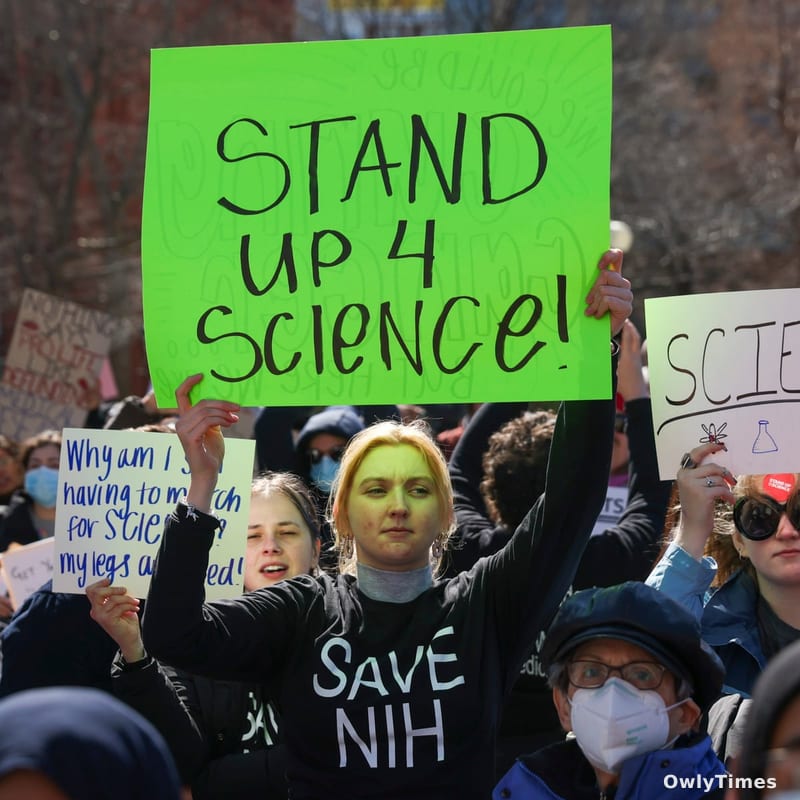

The historical compact between the scientific community and the state—a tacit agreement that government would provide funding while remaining at arm’s length from research—is fracturing. For decades, the prevailing wisdom among researchers was that political neutrality served as a protective shield. Today, however, that shield is being bypassed by a wave of populist movements that view scientific autonomy not as a benefit to society, but as a target for political realignment.
The Limits of Executive Influence on Funding
The tension between the White House and the scientific establishment reached a crescendo last year when Donald Trump demanded a reduction of approximately 50 percent in federal scientific and medical research funding. When the federal budget was finalized this past February, the legislative outcome told a different story: Congress delivered a slight increase in total research appropriations. While the aggregate funding grew, the victory was uneven; specific institutions, most notably the Centers for Disease Control and Prevention, faced targeted cuts. This discrepancy reveals that while executive rhetoric can be volatile, the underlying legislative consensus remains a functional check on total systemic defunding.
Scientific Mobilization as a Political Response
The reaction from the scientific community has moved beyond traditional academic advocacy toward direct civic participation. The organization 314 Action, which specifically supports Democratic scientists seeking public office, has seen an unprecedented surge in engagement. Ahead of this year’s midterm elections, more than 700 candidates have sought the group’s support for positions ranging from local boards to gubernatorial seats. This figure represents a threefold increase compared to typical election cycles. Many of these candidates have explicitly cited the administration’s approach to science as the primary driver for their entry into the political arena.
A Global Pattern of Populist Skepticism
The pressures facing U.S. research are not isolated incidents but reflect a broader international trend. In Brazil, the administration of Jair Bolsonaro implemented systematic cuts to environmental funding while frequently targeting the credibility of the scientific community. Similarly, in India, the government led by Narendra Modi removed the theory of evolution from national school curricula. In the United Kingdom, Reform UK has begun utilizing local government mandates to target and reduce net-zero spending. These actions share a common objective: the subordination of scientific consensus to populist political platforms.
Constraints on the New Political Activism
Despite the energy behind this shift, the movement faces significant structural hurdles. For many scientists, the transition into party politics is fraught with the risk of being absorbed into the very culture wars they seek to escape. During Mr. Trump’s first term, a prevailing sentiment held that vocal opposition to budget cuts would only accelerate the politicization of research, potentially alienating parts of the public. There is also the internal debate over scientific autonomy; while researchers are moving to protect their funding, they are simultaneously navigating a public sphere where both the left and the right increasingly demand that science serve specific social or political values.
The evolution of this relationship will be determined by the success of these scientist-candidates at the ballot box. Whether this influx of experts into the legislature creates a meaningful shift in policy or merely embeds science deeper into the partisan divide remains the defining question for the coming months. The next reading of candidate success rates in the upcoming midterm elections will provide the first measurable signal of whether this new coalition can effectively translate scientific expertise into long-term political influence.





