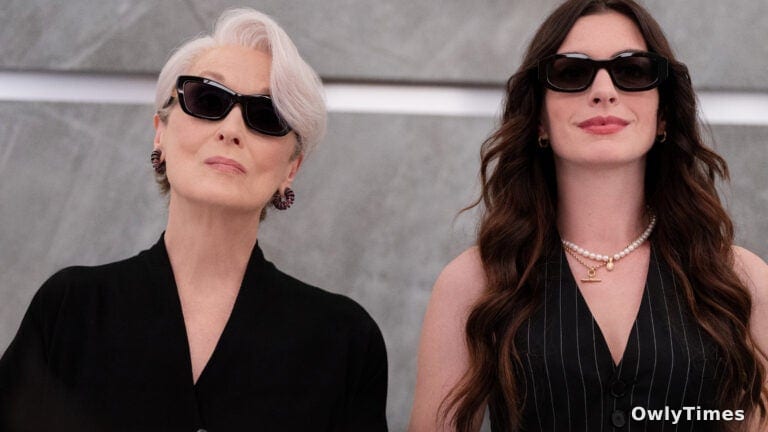

The sidewalk outside the theater wasn’t just crowded; it was a runway. As audiences flocked to the opening weekend of “The Devil Wears Prada 2,” the air felt less like a standard Friday night at the multiplex and more like a collective exhale of nostalgia meeting modern aspiration. Twenty years after the original film redefined the office-drama aesthetic, Andy Sachs and Miranda Priestly returned to the screen, proving that while the "Runway" magazine offices may be facing a depleted media landscape, the appetite for their specific brand of high-fashion combat remains insatiable.
A Box Office Takeover Driven by Devotion
The numbers paint a clear picture of who is fueling this resurgence. The Walt Disney Co.’s 20th Century Studios opened the sequel in 4,150 locations across North America, raking in $77 million domestically and $156.6 million internationally. Most tellingly, women accounted for roughly 76% of ticket buyers, according to PostTrak exit polls. This isn't just a casual trip to the cinema; it is a targeted cultural event. With 74% of those polled stating they would "definitely recommend" the film to friends, the sequel is thriving on the same word-of-mouth energy that turned the 2006 original into a permanent fixture of the cultural lexicon.
The financial stakes, however, have shifted dramatically. The film cost a reported $100 million to produce, a stark contrast to the $35 million budget of the first installment. Filmmaker David Frankel recently noted that despite this surge in production costs, much of the capital is swallowed by the premium of hiring world-class talent, leaving the actual creative execution budget surprisingly close to the original’s parameters.
The Evolution of the Summer Kickoff
The arrival of "The Devil Wears Prada 2" marks a pivot in how Hollywood defines a "blockbuster." Traditionally, the summer season—the 18-week corridor leading to Labor Day that historically drives 40% of the annual box office—is anchored by superhero spectacles. This year, the absence of a Marvel tentpole was met not with a vacuum, but with a double feature of personality-driven cinema. By bumping the Lionsgate musical biopic “Michael” to second place, the Prada sequel helped stabilize the industry's start to the season.
Paul Dergarabedian, head of marketplace trends for Comscore, highlighted that the combination of these two films effectively filled the void left by the typical superhero fare. In fact, the sequel outperformed last year’s summer kickoff, the Marvel film “Thunderbolts.” This suggests a broader shift in consumer behavior: audiences are increasingly seeking pure, escapist entertainment that relies on established character dynamics rather than just visual effects.
Why the Prada Effect Still Matters
The cultural magnetism of this release was carefully cultivated. The cast—Meryl Streep, Anne Hathaway, Emily Blunt, and Stanley Tucci—engaged in a global publicity tour that spanned Tokyo, London, and New York. Even Anna Wintour, the real-world figure who inspired the film’s icy editor-in-chief, stepped into the fold, appearing on the cover of Vogue with Streep and sharing the stage with Hathaway at the Oscars.
This level of synergy is rare and reflects a studio strategy that understands the value of legacy. Nielsen data shows that streaming viewership for the original The Devil Wears Prada jumped 428% between March and April 2026, signaling that audiences were actively priming themselves for the sequel’s arrival. As the annual box office continues to run about 14% ahead of last year with $2.8 billion in domestic ticket sales to date, the industry is watching closely. The next reading of these domestic ticket sales figures will determine if this momentum is a fleeting nostalgia trip or a sustained signal that mid-budget, character-driven dramas can carry the weight of a summer season.