
$1.2 Billion in Tourism Revenue at Risk as Violence Disrupts Puerto Vallarta
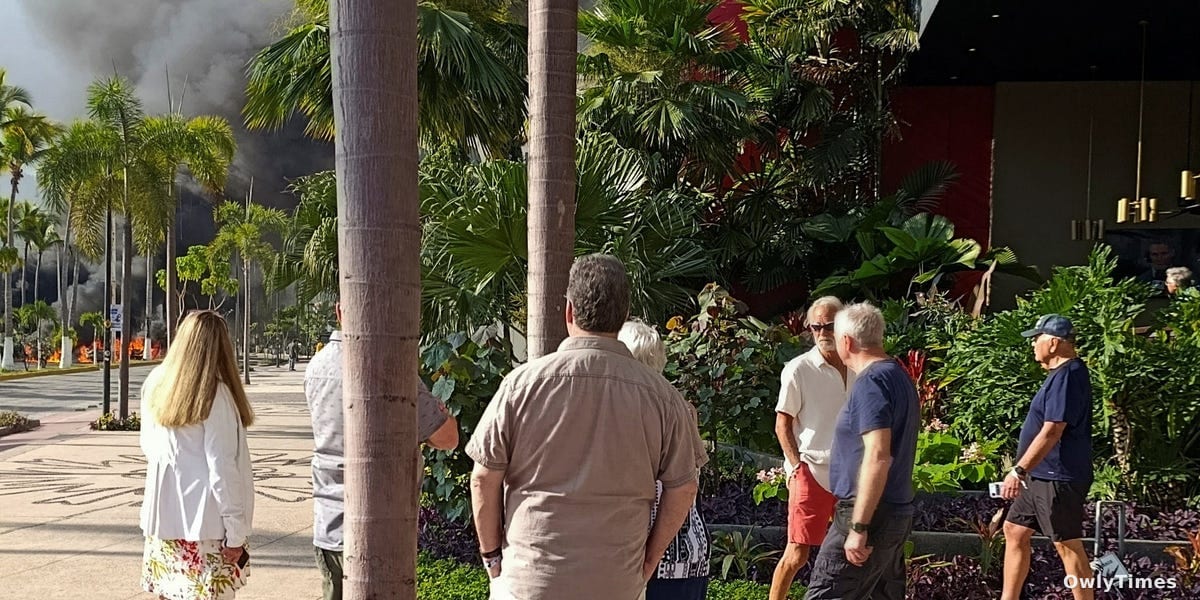
A U.S. Embassy shelter-in-place order, issued Monday afternoon for citizens in multiple Mexican states including Jalisco, signals a rapidly escalating crisis in Puerto Vallarta that threatens to disrupt a $1.2 billion tourism industry. The order, triggered by cartel-related violence following the killing of a local boss, isn’t simply a travel advisory; it’s a stark warning about the economic fragility of a destination increasingly popular with American tourists and retirees. While President Claudia Sheinbaum maintains a narrative of “peace, security and normalcy,” the reality on the ground – documented by satellite images showing fires, roadblocks, and burning cars – paints a drastically different picture.
The immediate impact is visible in flight disruptions. Dozens of flights have been diverted, creating logistical nightmares for travelers and highlighting the vulnerability of Puerto Vallarta’s infrastructure to localized instability. This isn’t an isolated incident; Jalisco, and increasingly other popular tourist destinations in Mexico, are experiencing a surge in cartel activity as groups vie for control of lucrative territories. The timing is particularly concerning, coinciding with peak season for North American travelers seeking respite from winter weather. In 2023, Puerto Vallarta welcomed approximately 5.5 million international visitors, generating an estimated $1.2 billion in revenue – a 15% increase year-over-year. A sustained disruption could erase those gains and inflict lasting damage on the local economy.
Based on the original Business Insider report.
The situation reveals a growing tension between the Mexican government’s messaging and the lived experiences of those on the ground. President Sheinbaum’s insistence on “normalcy” directly contradicts the U.S. State Department’s assessment, which necessitates a shelter-in-place directive. This divergence raises questions about transparency and the government’s ability – or willingness – to accurately assess and address the security challenges. The economic implications of this disconnect are significant. Foreign investment, already sensitive to security concerns, could dry up if investors perceive a lack of credible risk mitigation strategies.
However, the story isn’t solely about fleeing tourists. A growing number of Americans, like Steve Polito, 49, who splits his time between New York and Puerto Vallarta, have established deep roots in the city. Polito’s decision to remain and support the local community underscores a key demographic trend: the increasing number of Americans seeking a lower cost of living in retirement. For many, the financial benefits – particularly for those facing retirement insecurity and potentially needing to work into their 80s – outweigh the perceived risks. Linda Armijo, 70, a visitor of 25 years currently on a three-month stay, echoes this sentiment, expressing concern for the economic impact on local workers. Her perspective highlights a crucial point: the violence doesn’t just threaten tourism revenue; it directly impacts the livelihoods of those who depend on it.
The cancellation of trips, like that of the unnamed couple cited in reporting, represents a potential ripple effect. While some, like Polito and Armijo, are committed to staying, the uncertainty could deter future investment and long-term relocation. The question now is whether this is a temporary setback or the beginning of a more sustained decline in Puerto Vallarta’s appeal. Investors and potential retirees should closely monitor the Mexican government’s response to the crisis, specifically looking for concrete measures to address cartel violence and restore security. What this means for your wallet: if you’re considering a trip to Puerto Vallarta, or any similar destination in Mexico, factor in a significant risk premium – not just in terms of potential travel disruptions, but also the possibility of escalating violence and the long-term economic consequences for the local community.





