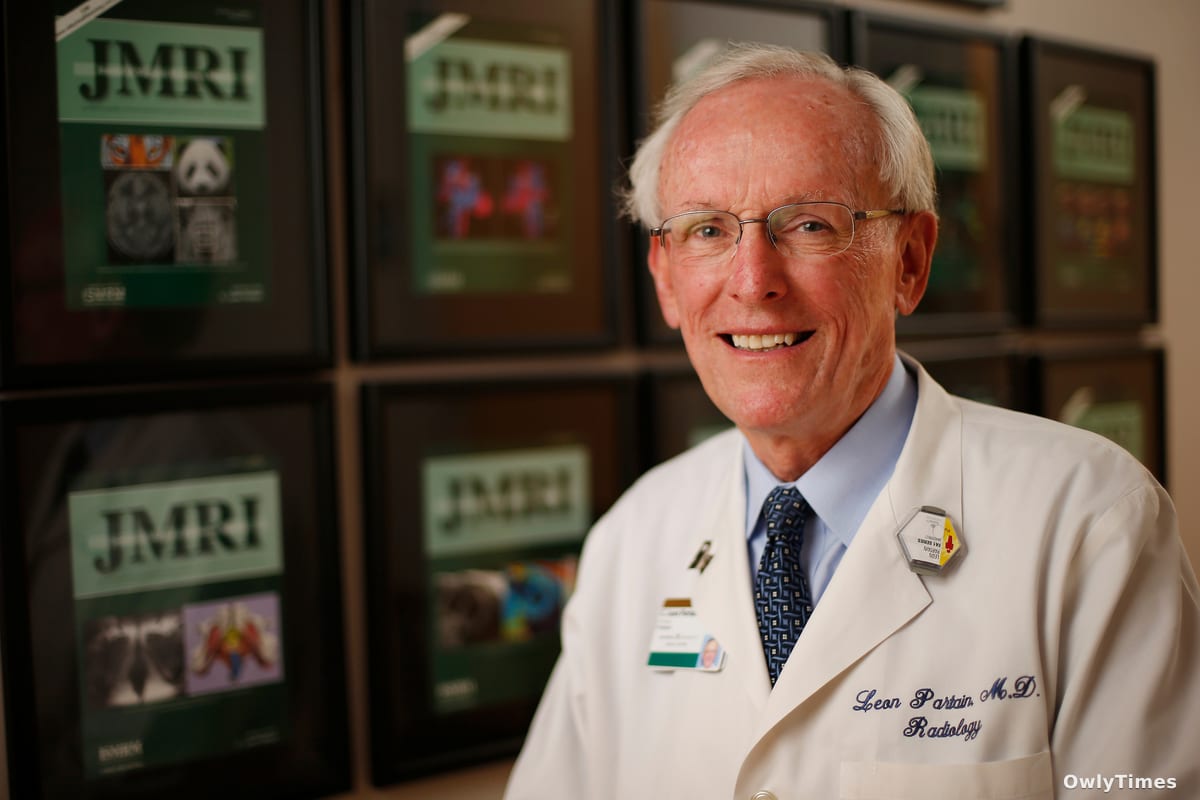

The passing of Clarence Leon Partain, MD, PhD, on January 28th marks not simply the loss of a physician, but the end of an era in academic radiology. While obituaries will rightly detail his impressive curriculum vitae – the degrees from the University of Tennessee, Purdue, and Washington University, the decades at Vanderbilt – the significance of Dr. Partain’s career lies in how he anticipated, and then actively built, the very foundations of modern medical imaging. It’s easy now to take for granted the ubiquity of MRI and PET/CT scans, but these weren’t inevitable advancements; they required champions willing to invest in nascent technologies and demonstrate their clinical value. Dr. Partain was such a champion, and his story reveals a crucial truth about medical progress: it’s driven not just by scientific discovery, but by the dedicated work of individuals translating those discoveries into tangible benefits for patients.
Dr. Partain’s trajectory began unconventionally for a figure who would become synonymous with diagnostic radiology. His initial training was in nuclear engineering at Oak Ridge National Laboratory, a background that proved surprisingly formative. This early work instilled a deep understanding of physics, instrumentation, and data analysis – skills directly transferable to the emerging fields of nuclear medicine and, later, magnetic resonance imaging. He joined Vanderbilt Radiology in 1980, quickly ascending to the role of Pendergrass Professor of Radiology and Radiological Sciences and department chair by 1992. This wasn’t a period of incremental change; under his leadership, clinical studies within the department surged from 180,000 to 260,000 cases annually. This increase wasn’t simply a matter of volume, but a reflection of growing confidence in the diagnostic power of these new imaging modalities. He oversaw the addition of angiography and fluoroscopy units, and crucially, spearheaded the acquisition of Vanderbilt’s first MRI and PET/CT machines.
This article draws on reporting from news.vumc.org.
The narrative often focuses on what Dr. Partain achieved – bringing cutting-edge technology to Vanderbilt – but less attention is paid to how he did it. He wasn’t merely adopting existing tools; he was actively shaping their development and application. His research, funded by millions in grant dollars, spanned radiopharmaceuticals, functional MRI, X-ray, and ultrasound, demonstrating a commitment to a broad understanding of imaging principles. This breadth of knowledge allowed him to identify the unique strengths of each modality and integrate them into a comprehensive diagnostic approach. His influence extended beyond the clinic and laboratory; he served as editor-in-chief of the Journal of Magnetic Resonance Imaging for thirteen years, and contributed to numerous textbooks and journal articles – effectively defining the field for a generation of radiologists.
It’s important to note that the widespread adoption of these technologies wasn’t guaranteed. Early MRI machines were expensive, slow, and produced images of limited quality. PET/CT faced similar hurdles, including concerns about radiation exposure and the cost of radiotracers. Dr. Partain’s work wasn’t just about demonstrating the potential of these technologies, but about systematically addressing these challenges through rigorous research and clinical validation. He served for twenty years as an examiner for the American Board of Radiology (ABR), ensuring that standards for training and certification kept pace with these rapid advancements. This commitment to quality control was essential for building trust in these new imaging methods.
However, even Dr. Partain’s considerable accomplishments exist within a complex landscape. The expansion of imaging services, while undeniably improving diagnostic capabilities, also contributed to rising healthcare costs. While he focused on the scientific and clinical aspects, the economic implications of advanced imaging – and the potential for overuse – remain a significant concern. Furthermore, the benefits of these technologies aren’t always equitably distributed, with access often limited by geographic location and socioeconomic status. These are systemic issues that extend beyond the scope of any single researcher’s work, but they are crucial considerations when evaluating the overall impact of advancements in medical imaging.
Looking ahead, the next generation of imaging research will likely focus on artificial intelligence and machine learning. These technologies promise to automate image analysis, improve diagnostic accuracy, and personalize treatment plans. But, as with MRI and PET/CT, realizing this potential will require dedicated individuals willing to bridge the gap between scientific discovery and clinical practice. The question now isn’t simply what new imaging technologies will emerge, but who will champion their responsible and equitable implementation, ensuring that the legacy of researchers like Clarence Leon Partain continues to benefit all patients. Will we see the same level of sustained, interdisciplinary effort to validate and refine these new tools, or will they be adopted prematurely, exacerbating existing inequalities in healthcare access? That is the critical challenge facing the field today.





