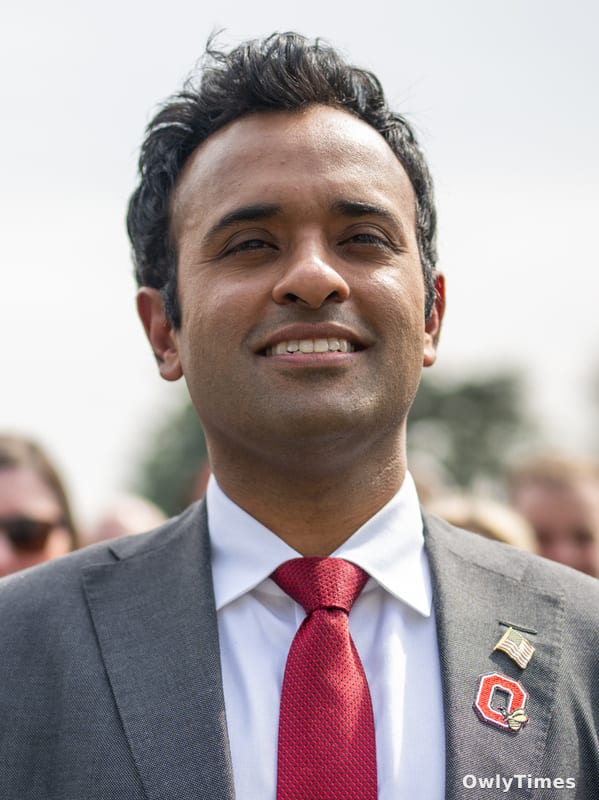

The consolidation of power within the Ohio Republican Party has reached a critical inflection point, as the party apparatus moves to streamline its primary process by backing a single, high-profile candidate for governor. By securing the early endorsements of President Donald Trump and the Ohio Republican Party, biotech billionaire Vivek Ramaswamy has effectively neutralized institutional resistance before a single vote is cast. This strategic alignment forced the exit of established figures like Attorney General Dave Yost and former Ohio State University football coach Jim Tressel, demonstrating how modern political machines leverage executive-level backing to clear paths for preferred candidates.
The Cost of Institutional Primaries
When a party establishment successfully pivots toward a consensus candidate, the primary process shifts from a contest of competing platforms to a demonstration of political loyalty. For the Republican gubernatorial nomination, this has left Casey Putsch, a northwest Ohio business owner and watchmaker, as the lone obstacle to Ramaswamy’s path. While Ramaswamy holds the institutional advantage, the race serves as a diagnostic test for the party’s base: does the electorate value the candidate vetted by the state GOP, or is there residual appetite for the outsider appeal Putsch represents?
The beneficiaries of this consolidation are clear: the Republican Party leadership gains a unified front heading into a general election against former Ohio Department of Health director Dr. Amy Acton. The losers, conversely, are the primary voters who are deprived of a multi-candidate debate among establishment figures. Much like the mid-century party conventions that often finalized nominees behind closed doors, the current Ohio landscape reflects a move toward pre-ordained outcomes that minimize intra-party friction at the expense of competition.
Senate Control and the Battle for the Middle
The stakes extend well beyond the statehouse. With Republicans currently holding a 53-47 majority in the U.S. Senate, the contest for the seat formerly held by JD Vance has become a national focal point. The appointment of U.S. Sen. Jon Husted by Gov. Mike DeWine in January 2025 set the stage for a high-stakes general election match-up against former U.S. Sen. Sherrod Brown.
The strategic importance of this seat is underscored by the Cook Political Report, which recently shifted the race from leaning Republican to a toss-up. This shift suggests that while the GOP has successfully tightened its grip on state-level nominations, the broader electorate remains volatile. The contradiction here is stark: while the party is consolidating at the top of the ticket, the Senate race reveals a state where independent and swing voters remain the decisive variable in determining national legislative control.
The Down-Ballot Power Struggle
The May 5 primary will also determine the stewards of Ohio’s legal and electoral machinery. The race for Secretary of State—the official responsible for overseeing the 88 county boards of elections—highlights a deep bench of candidates vying to manage the state’s voting integrity and business records. With incumbent Frank LaRose term-limited, the competition between Treasurer Robert Sprague and Marcell Strbich on the Republican side, and Rep. Allison Russo and physician Bryan Hambley for the Democrats, signals the high premium both parties place on control over electoral administration.
Similarly, the Ohio Supreme Court primary illustrates a party eager to dismantle the final Democratic stronghold in statewide office, currently held by Justice Jennifer Brunner. With four Republican candidates—Judges Andrew King, Jill Flagg Lanzinger, Ron Lewis, and former Judge Colleen O’Donnell—vying for the nomination, the lack of an official party endorsement suggests a rare moment of open competition.
The next reading of the Cook Political Report and subsequent polling data for the Senate toss-up will show whether the GOP’s top-down endorsement strategy successfully translates into general election momentum, or if the lack of competitive primary friction leaves the party vulnerable in November.