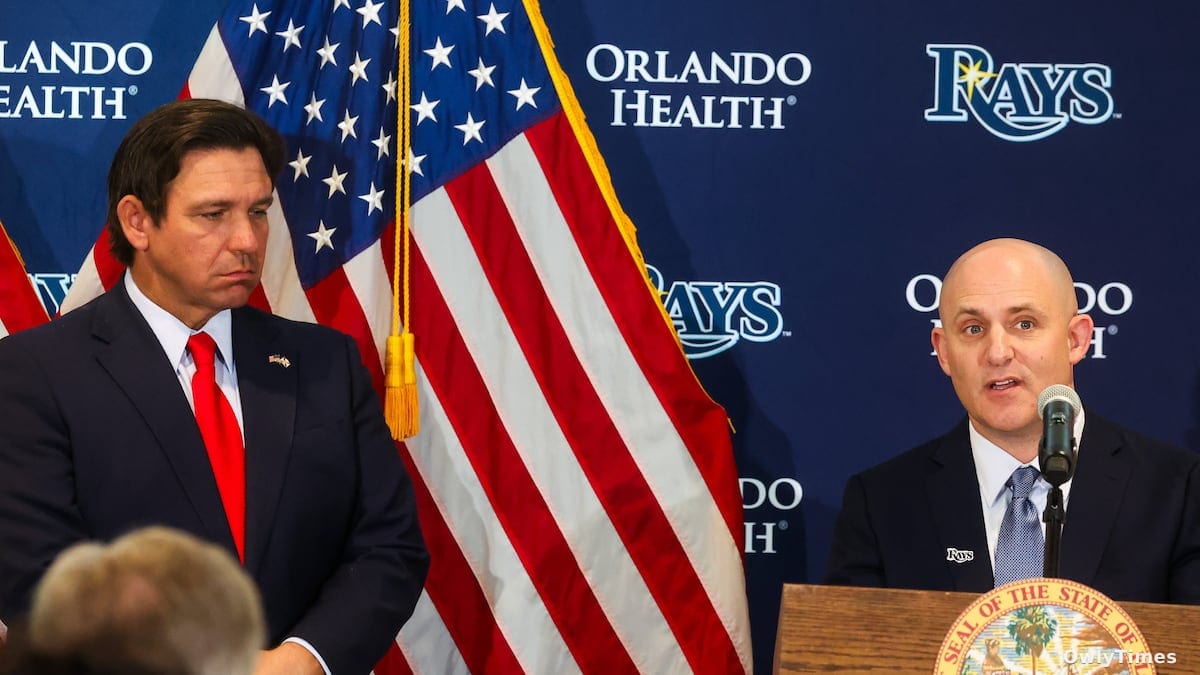

The late afternoon sun cast long shadows across the proposed stadium site at Hillsborough College on February 3rd, a carefully staged backdrop for Governor Ron DeSantis’ enthusiastic endorsement of a new ballpark for the Tampa Bay Rays. But while the cameras focused on smiles and promises of economic revitalization, a more sober question hung in the air, one quietly voiced by members of the Tampa Sports Authority: can Tampa – and Hillsborough County – actually afford this dream? It’s a question that cuts deeper than just dollars and cents, exposing a growing tension between Florida’s image as a booming, business-friendly state and the increasingly precarious financial realities faced by its local governments.
Doubts Emerge Beyond the Photo Op
The initial proposal, championed by Rays CEO Ken Babby, envisions a $892 million stadium funded through a complex mix of public and private contributions. The Rays organization would contribute roughly $350 million, leaving Hillsborough County and the City of Tampa to cover the remaining $542 million. This is where the cracks begin to show. During this week’s Tampa Sports Authority meeting, board members didn’t grill Babby on seating capacity or concession stand options; they zeroed in on the fundamental issue of funding. Specifically, they raised concerns about potential property tax reform, which could significantly reduce the county’s revenue stream, and existing budget shortfalls that are already straining local services. These aren’t hypothetical worries. Florida’s property insurance market is in crisis, driving up costs and creating uncertainty for homeowners and, consequently, for the tax base.
This piece references the tampabay.com report.
The Affordable Housing Factor
The stadium debate isn’t happening in a vacuum. Hillsborough County is grappling with a severe affordable housing crisis, with rents skyrocketing and homeownership increasingly out of reach for many residents. The county allocated $40 million to affordable housing initiatives in 2023, a figure that, while substantial, barely scratches the surface of the need. Critics argue that diverting hundreds of millions of dollars towards a stadium – a benefit largely enjoyed by a relatively affluent segment of the population – while residents struggle to find housing represents a deeply misplaced set of priorities. This isn’t simply a matter of fiscal responsibility; it’s a question of social equity. The optics of celebrating a new baseball stadium while families face eviction are particularly stark, and the Sports Authority members seem acutely aware of this.
A Pattern of Public Subsidies
This situation echoes a broader trend across the country, where professional sports teams leverage the promise of economic development to secure massive public subsidies for new stadiums. A 2021 study by the Brookings Institution found that, on average, these subsidies yield minimal economic benefits, often failing to deliver on promised job creation or increased tax revenue. In many cases, the primary beneficiaries are team owners and players, while taxpayers are left footing the bill. The Rays’ situation is further complicated by the team’s history. They’ve spent decades searching for a stable stadium solution, previously exploring options in St. Petersburg before shifting focus to Tampa. This history fuels skepticism about the long-term commitment of the organization and raises questions about whether the public is being asked to repeatedly subsidize a private enterprise.
Beyond the Headlines: A Florida Reality Check
The Tampa Bay Rays stadium debate isn’t just about baseball. It’s a microcosm of the challenges facing Florida as it navigates rapid growth, rising costs, and increasing economic inequality. The state’s allure as a tax-friendly haven for businesses and retirees is colliding with the realities of providing essential services and addressing the needs of a diverse population. Governor DeSantis’ enthusiastic support for the stadium project aligns with his broader pro-business agenda, but it risks alienating voters who are struggling with the rising cost of living. The Tampa Sports Authority’s cautious questioning signals a growing awareness that simply saying “yes” to development projects isn’t enough. They’re demanding a clear and realistic assessment of the financial implications, and a guarantee that the benefits will be shared more equitably. The question now isn’t just whether Tampa wants a new stadium, but whether it can afford to build one without exacerbating existing social and economic problems. Will Hillsborough County prioritize a ballpark experience or the basic needs of its residents? That’s the game everyone will be watching.