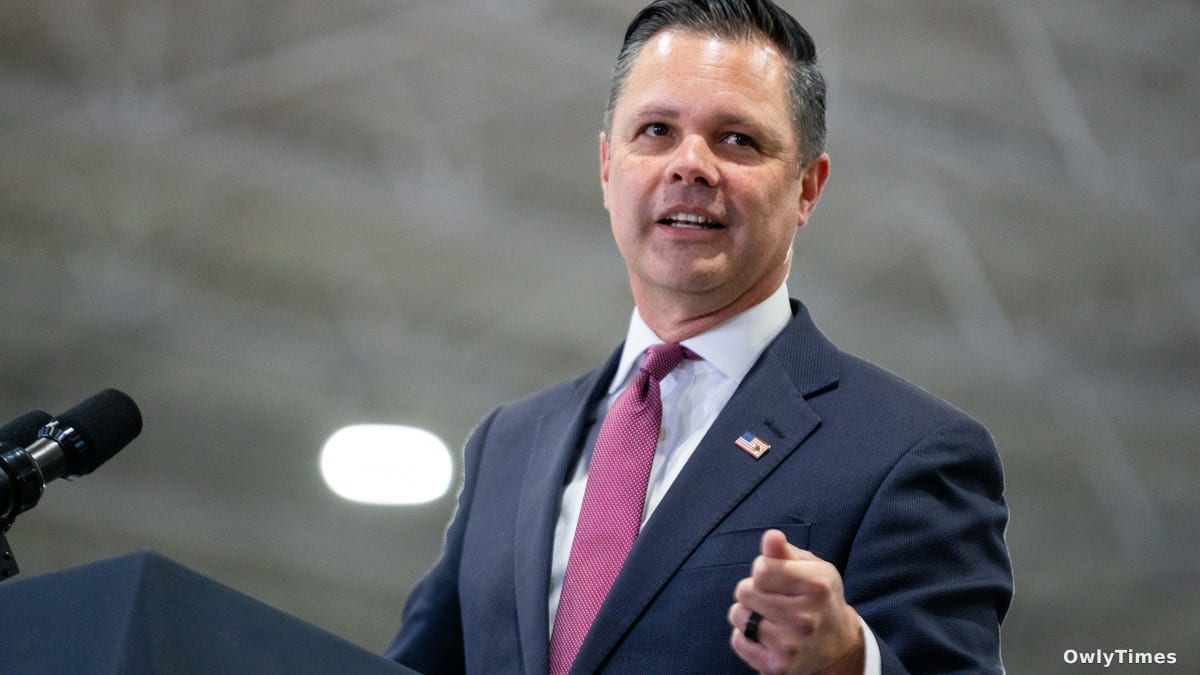

The strategic calculus behind U.S. Rep. Zach Nunn's recent remarks on the Iran conflict reveals a delicate balancing act: advocating for an "off-ramp" to a protracted war while sidestepping a direct challenge to presidential authority on military powers. This nuanced position, delivered amidst a highly competitive re-election bid, underscores the perennial tension between national security imperatives and localized political survival. As President Donald Trump declared the ceasefire with Iran "on massive life support," Nunn's call to avoid a "forever war" positions him as a pragmatic voice, yet his hesitation to support concrete legislative limits on executive power suggests a strategic deferral to avoid direct confrontation with the White House.
The Tightrope Walk on Iran
On Monday, May 11, Rep. Nunn, an Ankeny Republican, articulated a clear desire for the U.S. to find an "off-ramp" in its ongoing conflict with Iran, emphasizing the need to preserve American interests without expending resources abroad that are needed "right here locally." His remarks came during a visit to Des Moines Area Community College's Ankeny campus, where he announced $2 million in federal funding for a new Trades and Industry Center. This juxtaposition of foreign policy commentary with domestic investment speaks volumes about the priorities Nunn is signaling to his constituents.
The tension in Nunn's stance becomes evident when contrasted with President Trump's aggressive rhetoric. On the same day, Trump described the ceasefire as "unbelievably weak" and Iran's latest peace proposal as "a piece of garbage," stating it had "approximately a 1% chance of living" in the Oval Office. This followed a May 10 social media post where Trump deemed Iran's previous response "TOTALLY UNACCEPTABLE." While Nunn, a combat veteran with three tours of duty in the Middle East, voiced concerns about a "forever war" and preventing Iran from acquiring a nuclear weapon, he conspicuously demurred on supporting a proposal by Michigan Republican U.S. Rep. Tom Barrett that would impose an Authorization for Use of Military Force (AUMF). Barrett's measure sought to limit the scope of the war, giving Trump until July 30 to "demolish, degrade or defeat" Iran's nuclear program while prohibiting ground forces or efforts to establish governance.
Who benefits from Nunn's strategic ambiguity? For a candidate in a "tossup" district, as categorized by the nonpartisan Cook Political Report, avoiding a direct challenge to a powerful president while still appearing independent and fiscally responsible can be a political asset. He can claim to be against "forever wars" and for securing the "home front" without alienating the presidential base that insists on robust executive authority. The downside, however, is a lack of clear legislative action to match his rhetoric, potentially leaving the U.S. in a prolonged state of conflict that he claims to oppose. The broader public, particularly those weary of military engagements, might find his call for an "off-ramp" appealing, but the absence of specific policy backing could undermine his credibility on the issue.
Domestic Wins and Local Priorities
Nunn's focus on domestic issues offers a clearer picture of his immediate political strategy. The $2 million federal funding for the Des Moines Area Community College's Trades and Industry Center is a tangible win for his district, directly addressing local economic development and job training. This move aligns with his broader narrative of prioritizing resources "right here at home," a common refrain for candidates seeking to demonstrate their effectiveness in delivering for their constituents.
Beyond the college funding, Nunn has championed year-round access to E15 ethanol-blended gas, framing it as a measure to "give Iowans, but candidly the entire country, some relief at the pump." This initiative, which secured a House floor vote for Wednesday, May 13, after Nunn reportedly confronted Republican House Speaker Mike Johnson, highlights the political potency of agricultural issues in Iowa. The entire Iowa GOP congressional delegation, according to the Des Moines Register, has aggressively pushed for this, overturning what Nunn described as a "backroom deal in Washington." This victory allows Nunn to present himself as a fighter for local interests, directly benefiting Iowa farmers and consumers, an undeniable political boon in a state where ethanol production is paramount.
The political importance of these local issues was further underscored by Vice President JD Vance's May 5 visit to Des Moines' Ex-Guard manufacturing facility. While Iowa Democratic Party Chair Rita Hart suggested Vance's visit signaled GOP vulnerability, Nunn framed it as a "win" showcasing Iowa's advanced manufacturing sector, which he noted is "now the No. 1 economic growth factor for Iowa." These local economic narratives serve as a powerful counter-narrative to the complexities of foreign policy, allowing Nunn to pivot to areas of clear, demonstrable impact for his district.
Electoral Stakes and the Ethanol Play
The upcoming political chess moves are deeply intertwined with the electoral calendar. Rep. Nunn is slated to face Democrat Sarah Trone Garriott, a state senator from West Des Moines, in November, with his race considered a "tossup." The strategic emphasis on domestic achievements like the DMACC funding and the E15 vote serves as a critical bulwark against electoral challenges, providing concrete evidence of his effectiveness.
The immediate political maneuver to watch is the outcome of the year-round E15 vote scheduled for May 13. Its passage would reinforce Nunn's image as a champion for Iowa's agricultural and economic interests, providing a clear talking point for his campaign leading into the June 2 primaries and the general election. Beyond this, the ongoing rhetoric from President Trump regarding Iran, and any subsequent military actions or diplomatic overtures, will force Nunn to continuously recalibrate his strategic position, balancing national security concerns with the need to maintain a politically viable stance in his battleground district. The ongoing skirmishes in the Strait of Hormuz will ensure the Iran conflict remains a live issue, forcing Nunn to navigate this foreign policy tightrope carefully as the 2026 midterm elections draw closer.
The Des Moines Register article providing this context can be found here: U.S. Rep. Zach Nunn says the U.S. needs an 'off-ramp' in its war with Iran. For more on Rep. Nunn's background, see his Wikipedia page. Information on Des Moines Area Community College can be found at dmacc.edu.